🐚 Encyclopedia of Abalones (Haliotidae)
Comprehensive scientific encyclopedia on abalones: taxonomy, morphology, reproduction, aquaculture, larval development, Indo-Pacific distribution, and marine ecology

File: Haliotis_rugosa.jpg
License: Public Domain
Image Dimensions: 640 × 480 pixels
Attribution: View original file and full documentation at Wikimedia Commons
Usage Note: Image used in accordance with Public Domain designation, free for educational and research purposes.
Abalones (Family Haliotidae) are a highly specialized group of marine gastropod mollusks that occupy ecological niches throughout tropical and subtropical marine environments, particularly in the Indo-Pacific region. Despite their gastropod classification, abalones represent one of the most ecologically and economically important mollusk families, with shell morphology and feeding specializations distinct from typical snails and slugs, reflecting deep evolutionary divergence within Vetigastropoda.
The family is remarkable for its exceptional growth rates and rapid sexual maturation, with many species achieving reproductive competence within one year of larval settlement. This life history strategy, combined with success in artificial hatchery systems, has driven development of large-scale aquaculture operations throughout Southeast Asia and beyond. Abalones are abundant in shallow reef environments, rocky substrates, and kelp forests throughout their geographic range, serving as both keystone herbivores in marine ecosystems and valuable resources for wild fisheries and commercial farming.
- Fastest-growing abalone: Haliotis asinina exhibits the most rapid growth rate among all abalone species, reaching market size within 2–3 years under aquaculture conditions.
- Early sexual maturity: Many species achieve reproductive competence within one year of settlement—exceptional among mollusks—enabling rapid population recovery and commercial production cycles.
- Broadcast spawning: External fertilization in water column; synchronized spawning behavior triggered by environmental cues (seasonal temperature, lunar phase cycles).
- Larval feeding specialists: Planktotrophic larvae feed on microalgae including diatoms; settlement cues include specific benthic diatom species and biofilm composition.
- Herbivorous ecology: Primary algae grazers on coral reefs and rocky substrates; exhibit strong feeding preferences for specific algal taxa independent of protein content.
- Aquaculture dominance: Shift from wild fisheries to farming; aquaculture now accounts for >97% of global abalone production as wild populations depleted by overfishing.
Abalones represent one of the most economically valuable and biologically significant gastropod families, occupying critical roles in marine ecosystems and supporting major fisheries and aquaculture industries. Their significance extends across multiple disciplines:
- Marine ecology: Keystone herbivores controlling algal community structure through selective grazing; ecosystem engineers modifying habitat complexity.
- Evolutionary biology: Model organisms for understanding larval development, settlement mechanisms, and rapid life history evolution in marine gastropods.
- Aquaculture technology: Leading species for tropical mollusk farming; hatchery systems for mass production of larvae and juveniles.
- Conservation biology: Case study in fishery collapse and recovery; wild population depletion by overfishing driving shift to sustainable farming.
- Nutritional science: High protein content, omega-3 fatty acids, and bioactive compounds; traditional Asian medicine and contemporary haute cuisine applications.
Systematic Position
| Taxonomic Rank | Classification |
|---|---|
| Kingdom | Animalia |
| Phylum | Mollusca |
| Class | Gastropoda |
| Order | Vetigastropoda |
| Family | Haliotidae Rafinesque, 1815 |
Major Genera
- Haliotis: Primary genus (~50 species); globally distributed; includes fastest-growing species (H. asinina) and temperate kelp-forest specialists; high commercial and aquaculture value.
- Fissurella: Keyhole limpets; distinct conical shell with apical perforation; distinct phylogenetic position within gastropod radiation.
- Extinct lineages: Fossil record documents Paleozoic-Mesozoic diversity now largely extinct.
Shell Morphology
- Shape: Elongated, flattened, ear-like (morphological basis for common names); highly variable among species from round to acutely pointed.
- Surface texture: Smooth to sculptured; external coloration variable from olive-green to brown with triangular patches.
- Respiratory pores (tremata): Series of 5–7 open pores along left margin; progressive formation with growth; serve as mantle cavity water discharge apertures.
- Interior nacre: Iridescent pink-green mother-of-pearl (aragonitic crystalline structure); commercially valuable in some species.
Ontogenetic Changes
- Early juvenile (1–10 mm): Maroon background with cream oscillations and blue/orange ridge dots; elaborate camouflage pattern matching coralline red algae habitat.
- Intermediate juvenile (10–15 mm): Color pattern fading; shell becomes thicker; ridge-valley structure persisting.
- Adult (>15 mm): Smooth surface; irregular brown-green triangles on light brown background; ontogenetic habitat shifts drive pigmentation changes.
Functional Morphology – Feeding Apparatus
The radula (rasping tongue) and associated musculature enable specialized algae grazing. Abalone radulas contain hundreds of chitinous teeth optimized for scraping microalgae from rock surfaces. Ontogenetic changes in radula morphology reflect dietary shifts from diatom-feeding larvae to macroalgae-feeding adults.
Museum Collections & Morphological Documentation

H. asinina field documentation (6000×5216 px)

H. asinina mature specimen (589×530 px)

Natural population documentation (1944×1368 px)
Museum specimens provide critical baseline data for taxonomic revision, morphometric analysis, and validation of species identifications. Major repositories including the Naturalis Biodiversity Center (Netherlands) and regional museums maintain comprehensive abalone collections essential for systematic research and comparative studies.
Morphological & Developmental Studies

Early development stage (590×590 px)

>10 mm development (590×590 px)
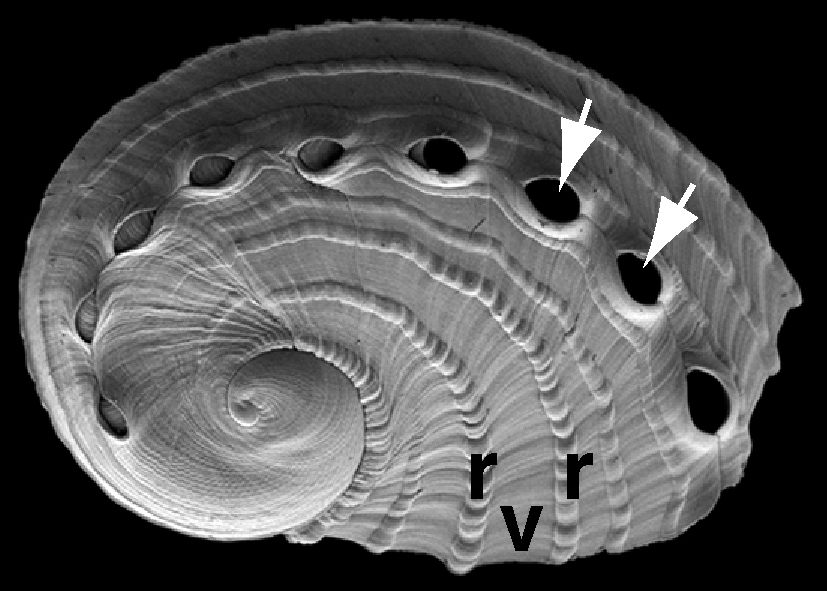
Fine structural analysis (827×591 px)
Contemporary morphological research employs integrated methodologies including scanning electron microscopy, larval imaging, and quantitative shell morphometrics to elucidate fine anatomical details, ontogenetic transitions, and functional design of feeding apparatus.
The Dominant Abalone Genus

Donkey’s ear exterior surface (2289×1073 px)

Mother-of-pearl detail (2581×1368 px)

Bottom shell surface showing muscle attachment (910×496 px)
Key Species Characteristics
- H. asinina (Donkey’s Ear): Fastest-growing abalone species; tropical Indo-Pacific distribution; maximum length 120 mm; sexual maturity at 1 year post-settlement; leading aquaculture species.
- Ecological breadth: Span from shallow intertidal rocky zones to coral reef subtidal habitats; nocturnal grazing behavior reducing predation exposure.
- Population dynamics: Broadcast spawning with year-round recruitment peaks; Allee effect vulnerability in depleted populations.
Reproductive Biology
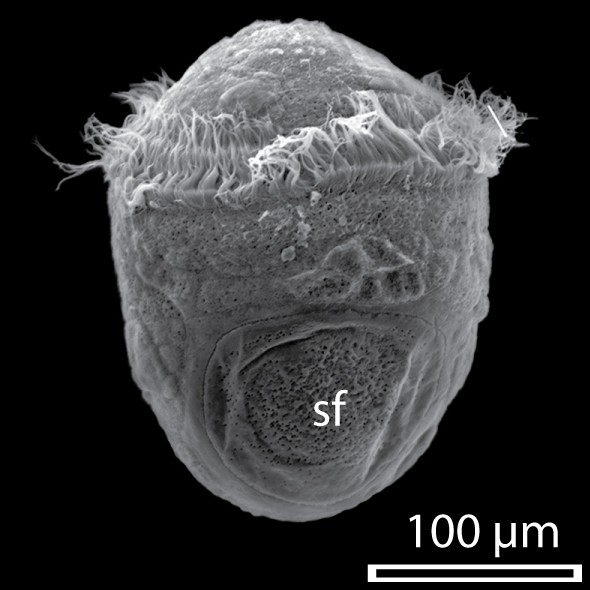
Development Timeline
- Fertilization & early embryogenesis: External fertilization in water column; eggs ~180 μm diameter.
- Trochophore larvae (5.2–5.6 hrs): Ciliated bands characteristic of early molluskan development.
- Veliger larvae (8 hrs): Functional velar complexes (swimming organs); larval shell (protoconch) differentiation.
- Competent larvae (2–3 days): Settlement capacity achieved; respond to benthic diatom settlement cues (Navicula, Amphora species).
- Early postlarvae (30 days): First respiratory pore visible; teleoconch (adult shell type) formation initiated.
- Sexual maturity (1 year): Rapid attainment; field observations show spawning at 4–5 cm shell length; laboratory specimens achieve smaller sizes.
Ontogenetic Shell Changes

Larval shell 11 hours (590×590 px)
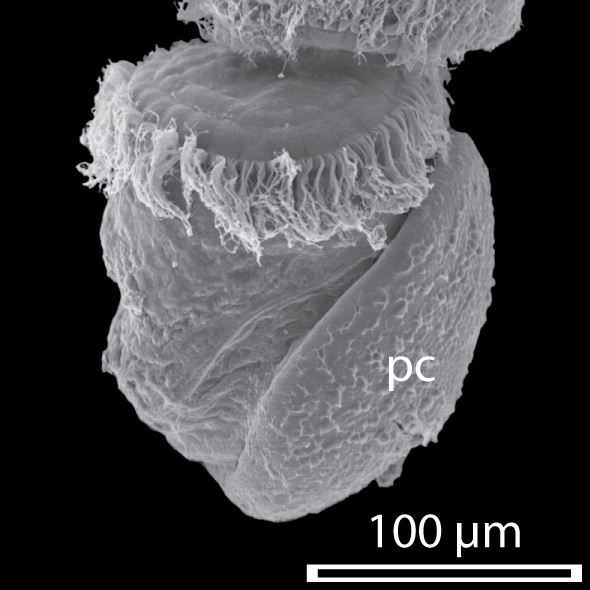
Integrated development view (590×590 px)

Settlement transition phase (216×216 px)
Regional Documentation
Philippines
Field specimen documentation (1944×1368 px)
Indonesia & Coral Triangle
Live specimen high resolution (6000×5216 px)
Indonesian adult (589×530 px)
Global Distribution

Shell surface morphology (2260×1105 px)
Biogeographic Patterns
- Tropical Indo-Pacific concentration: Highest diversity and abundance in Philippines, Indonesia, Malaysia, and Southeast Asia region.
- Indo-West Pacific range: Distribution from Eastern Indian Ocean through Central Pacific; documented from Andaman Islands to Japanese waters; Australian populations in Northern Territory, Queensland, Western Australia.
- Latitude gradients: Species richness highest in tropical waters; declines with latitude toward temperate zones.
- Habitat-specific distributions: Coral reef specialists concentrated in shallow subtidal zones; rocky intertidal generalists more widespread.
Wild Population Documentation

RMNH.MOL.132974 collection (Naturalis)

RMNH.MOL.132951 catalog (Naturalis)

ZMA.MOLL.300627 (Amsterdam)
Field Sampling Insights
Field documentation reveals that abalone populations exhibit complex microhabitat structuring driven by substrate complexity, algal community composition, predation pressure, and water hydrodynamics. Population densities vary seasonally with recruitment pulses, reaching highest abundances in Indonesia’s Sulawesi waters where demographic studies documented 75% juveniles reflecting successful hatchery enhancement programs.
Habitat Requirements
- Substrate specificity: Rocky substrates, coral rubble, coral reef microhabitats; preference for complex reef architecture with crevice shelter.
- Depth distribution: Intertidal to subtidal zones; maximum documented depth ~10 meters; shallow water specialists reflecting larval recruitment patterns.
- Water quality: Marine salinities; tolerant of wave action and moderate current regimes; preference for cool, nutrient-rich waters in some temperate species.
- Algal community: Dense coverage of turf algae, coralline red algae, and benthic diatoms essential for recruitment and juvenile growth.
Ecological Role
- Trophic position: Primary herbivorous consumers; selective algal grazers; key species controlling macroalgal community structure.
- Prey species: Primary prey for fish predators (wrasses, groupers), cephalopods (octopi), and larger crustaceans.
- Ecosystem engineering: Grazing pressure modifies algal community composition; shell carbonate production contributes to reef structure.
- Bioindicator value: Population presence/absence and density reflect reef health, algal productivity, and predation regimes.
Feeding Preferences
Abalones are specialized herbivores exhibiting strong and consistent feeding preferences for specific algal taxa independent of nutritional composition. Experimental feeding assays document preference hierarchies:
- Highly preferred: Red alga Hypnea pannosa and green alga Ulva flexuosa; consumption rates 2.65–3.37 g fresh weight per 100 g body weight daily in choice assays.
- No-choice consumption: Up to 14.01 g Hypnea and 8.86 g Ulva per 100 g body weight daily when alternatives unavailable.
- Natural diet sources: Turf algae, benthic diatoms (Synedra, Navicula, Amphora), microalgae, and periphyton communities.
- Size-dependent feeding: Positive correlation between body size and consumption rates; larger individuals consuming greater total food quantities.
Hatchery Operations
- Broodstock management: Mature specimens (8–10 cm shell length) collected from wild or hatchery-reared populations; maintained in flowing seawater or floating cages.
- Natural spawning: Spontaneous spawning in tanks with filtered seawater and aeration; success rates >90% with proper protocol adherence.
- Broodstock nutrition: Fresh green algae feeding (Ulva species supplemented with Gracilaria); enhanced nutritional conditions increase fecundity 260% above field-collected specimens.
- Stocking densities: 40–60 breeding individuals per tank at female-to-male ratios of 4:1.
Larval Culture & Settlement
- Temperature management: Optimal culture temperatures 27–30°C; critical for larval development rate.
- Larval stocking: 1,000–5,000 larvae per liter depending on water quality management capacity.
- Settlement induction: Benthic diatom-covered substrates; Navicula and Amphora species superior to Nitzschia for settlement success.
- Hatching rates: Average 90% with proper protocol adherence; larvae hatch 5–6 hours post-fertilization.
Nursery & Grow-Out Systems
- Nursery rearing: Early juveniles (10–15 mm) to advanced juveniles (25–30 mm); 75–90 days outdoor tank culture or 60–75 days in sea cage systems.
- Grow-out culture: Cage systems in open coastal waters; specialized culture tubes superior to recycled drums for growth rates.
- Complete cycle: Larval settlement to market-size juvenile (25–30 mm) requires 135–165 days depending on temperature and density.
- Feed options: Fresh seaweeds or formulated diets; diet selection affects growth rates and quality.
- Water quality: Dissolved oxygen levels and absence of hydrogen sulfide accumulation critical; serpulid worm infestation problematic with poor water conditions.
Proximate Composition
Abalones represent highly nutritious marine resources with substantial biochemical value:
- Protein content: 20 g per 100 g edible tissue; optimal amino acid composition including all essential amino acids for human nutrition.
- Polyunsaturated fatty acids: 94 mg n-3 long-chain PUFA per 100 g; substantially exceeds terrestrial sources (beef 70 mg, pork 26 mg, chicken 50 mg).
- EPA & DHA: High content of eicosapentaenoic acid and docosahexaenoic acid; cardiovascular and neurological health benefits.
- Bioactive compounds: Phenolic compounds, glycogen reserves, carbohydrates, minerals (iron, zinc, selenium), all offering health-promoting effects.
Culinary Applications
- Cooked preparations (grilling, steaming, sautéing)
- Raw consumption (sashimi, ceviche)
- Asian traditional medicine applications
- Contemporary haute cuisine ingredient
- Canned and processed products for commercial distribution
Population Depletion & Overfishing
Wild abalone populations have experienced severe depletion throughout the Indo-Pacific due to intensive overfishing driven by high market prices. Documented case:
- Siquijor Island, Philippines: Profitable fishery for decades collapsed by 2012; catch-per-unit-effort declined from 0.25±0.03 kg/person/hour to near-zero values within ~30 years.
- Global shift to aquaculture: Aquaculture now accounts for >97% of global abalone production (2021); only 7,334.37 tons harvested wild vs. peak catches of 11,529 tons (2001).
Mechanisms of Vulnerability
- Allee effect: Negative density-dependent reproductive success; depleted populations suffer recruitment failure despite fishing cessation.
- Destructive harvesting: Ganso (hooked iron implements) damages reef substrate; exposes juveniles to predation.
- Environmental threats: Ocean acidification threatens calcifying mollusks; elevated temperatures trigger mass mortality; habitat degradation reduces algal productivity.
Recovery Strategies
- Marine protected areas with effective enforcement
- Hatchery-based stock enhancement programs (millions of juveniles annually)
- Sustainable aquaculture expansion reducing wild collection pressure
- Catch quotas, size limits, gear restrictions, seasonal closures
- Genetic management of hatchery stocks to minimize divergence from wild populations
1. Why are abalones shaped like an ear?
The elongated, flattened ear-like morphology reflects adaptation to shallow reef environments. The curved shape reduces hydrodynamic drag in wave-exposed habitats and increases surface area for algal grazing contact.
2. What are the respiratory pores on abalone shells?
The 5–7 open pores (tremata) along the left shell margin serve as water discharge apertures from the mantle cavity. They form progressively as the shell grows and reflect individual growth history.
3. How do abalones reproduce?
Broadcast spawning with external fertilization in water column. Synchronized spawning triggered by environmental cues (temperature, lunar cycles). Females release 1–2 million eggs per spawning event.
4. What is the fastest-growing abalone?
Haliotis asinina (Donkey’s Ear Abalone) exhibits the most rapid growth rate among all abalone species, achieving reproductive maturity within one year and market size within 2–3 years under aquaculture.
5. How do larval abalones settle?
Competent larvae (2–3 days post-fertilization) respond to settlement cues from benthic diatoms, particularly Navicula and Amphora species. Settlement success depends on specific diatom composition.
6. Can abalones be farmed commercially?
Yes. Aquaculture dominates abalone production (>97% globally). Tropical species like H. asinina are particularly suited to farming due to fast growth and early sexual maturation.
7. What do abalones eat?
Primary herbivores grazing on benthic algae. Strong feeding preferences for red algae Hypnea and green alga Ulva; also consume turf algae, diatoms, and microalgae.
8. Are wild abalones endangered?
Many populations severely depleted by overfishing. Some species vulnerable to extinction through Allee effects. Recovery dependent on marine reserves, hatchery enhancement, and strict harvest regulations.
9. How nutritious are abalones?
High protein (20 g/100 g), omega-3 fatty acids (94 mg n-3 LC-PUFA/100 g), and bioactive compounds. Superior nutritional profile to terrestrial proteins.
10. What is nacre in abalone shells?
Mother-of-pearl; iridescent interior layer composed of aragonitic calcium carbonate tablets. Reflects pink-green light; commercially valuable in some abalone species.
- This encyclopedia is educational in nature and reflects current scientific understanding as of January 2026.
- Taxonomic classification and species distributions remain subject to ongoing revision through molecular phylogenetic studies.
- All images sourced from Wikimedia Commons with open licenses (CC BY-SA, CC0) with complete attribution provided for each image.
- Conservation assessments and threat evaluations based on best available published literature; readers should consult IUCN Red List for updates.
- For aquaculture and culinary questions, consult specialized marine biology and nutrition references and experienced practitioners.
Primary Scientific References
- SEAFDEC Aquaculture Department publications on spawning and larval development of tropical abalone Haliotis asinina
- ACIAR Report (2007): Hatchery development and culture of tropical abalone in Southeast Sulawesi
- FAO Fishery Statistics databases on global abalone production trends (2001–2021)
- Wikimedia Commons Archive – Haliotidae and associated taxa photographic documentation
Data Quality Assurance
This encyclopedia prioritizes copyright compliance through exclusive use of Wikimedia Commons images with appropriate licensing (CC BY-SA 3.0, CC BY 2.0, CC0 Public Domain) and complete attribution. Every image includes caption, file information, license type, dimensions, and ensures transparency and fair use compliance for educational purposes.
© 2026 – Haliotidae (Abalones) Encyclopedia
Marine biodiversity documentation with emphasis on taxonomy, larval development, aquaculture, and conservation | Updated: 17 January 2026