🦀 Encyclopedia of Porcelain Crabs (Porcellanidae)
Comprehensive scientific encyclopedia on porcelain crabs: taxonomy, morphology, behavior, symbiotic relationships, Indo-Pacific distribution, and marine ecology

File: Porcellanidae_-_Neopetrolisthes_maculatus.jpg
License: CC BY-SA 3.0 or CC BY 2.0
Image Dimensions: 2222 × 1663 pixels
Attribution: View original file and full documentation at Wikimedia Commons
Usage Note: Image used in accordance with Creative Commons licensing with proper attribution to ensure copyright compliance and fair use standards.
Porcelain crabs (Family Porcellanidae) are a highly specialized group of anomuran crustaceans that occupy ecological niches throughout tropical and subtropical marine environments, particularly in the Indo-Pacific region. Despite their common name and superficial resemblance to true crabs, porcelain crabs are more closely related to hermit crabs and king crabs through the infraorder Anomura, distinguishing them taxonomically from Brachyura (true crabs) through fundamental differences in abdominal anatomy and reproductive morphology.
The family is remarkable for its extraordinary diversity of symbiotic relationships, with many species forming obligate associations with sea anemones, establishing one of the most fascinating examples of mutualistic coevolution in marine biology. This ecological strategy has driven adaptive radiation across multiple genera including Petrolisthes, Neopetrolisthes, and Porcellana, resulting in morphological specialization for anemone cohabitation. Porcelain crabs are abundant in shallow reef environments, tide pools, and rocky substrates throughout their geographic range, serving as indicator species for ecosystem health and biodiversity assessment in marine conservation surveys.
- Fragile exoskeleton: Porcelain crabs have exceptionally thin, brittle carapaces—hence “porcelain”—that autotomize (break away) easily when threatened, leaving the crab unharmed to escape.
- Symbiotic specialists: Many species form obligate mutualistic relationships with sea anemones, cleaning parasites while gaining shelter and food scraps.
- Filter-feeding mechanics: Elaborate third maxilliped setation enables efficient suspension feeding from anemone tentacles or ambient water.
- Anomuran phylogeny: Genetically closer to hermit crabs than to true crabs despite external crab-like morphology—classic convergent evolution example.
- High endemism: Many porcelain crab species are geographically restricted, making them valuable for biogeographic and conservation studies.
- Ecological importance: Serve as food for small reef fishes, participate in detrital pathways, and indicate reef health through presence/absence patterns.
Porcelain crabs represent one of the most ecologically successful and morphologically diverse families within Anomura, occupying a wide range of marine habitats from subtidal rocky zones to coral reef ecosystems. Their significance extends across multiple disciplines within marine biology:
- Evolutionary biology: Prime examples of symbiotic coevolution, functional morphology specialization, and convergent evolution.
- Behavioral ecology: Complex cleaning symbioses and social behaviors within anemone microhabitats demonstrate sophisticated animal interactions.
- Conservation biology: Habitat-specific species serve as bioindicators for reef degradation and ecosystem resilience assessment.
- Taxonomy & systematics: Ongoing revision of genera and species-level taxonomy utilizing molecular phylogenetics reveals cryptic diversity.
- Aquarium hobbyism: Popular ornamental species in marine aquaculture, important for understanding captive husbandry requirements and welfare.
Systematic Position
| Taxonomic Rank | Classification |
|---|---|
| Kingdom | Animalia |
| Phylum | Arthropoda |
| Subphylum | Crustacea |
| Class | Malacostraca |
| Order | Decapoda |
| Infraorder | Anomura |
| Family | Porcellanidae Haworth, 1825 |
Major Genera
- Petrolisthes: Largest genus, with 80+ species; primarily found in rocky subtidal and intertidal zones; contains both solitary and anemone-associated species.
- Porcellana: Historical genus (~25 species); primarily temperate distributions; filter-feeding specialists on rocky substrates.
- Neopetrolisthes: Obligate anemone associates; highly specialized morphology; predominantly Indo-Pacific distribution.
- Allopetrolisthes: South American endemics; ecological analogs to Northern Hemisphere Petrolisthes.
- Liopetrolisthes: South Pacific specialists; lesser-known taxa undergoing taxonomic revision.
Carapace & External Morphology
- Carapace shape: Subquadrate to triangular, laterally flattened, wider than long in most taxa.
- Carapace texture: Smooth to granular; often covered in fine setae or sparse tuberculation.
- Anterolateral margins: Typically armed with teeth, spines, or serrate edges; species-diagnostic features.
- Rostrum: Varies from acute and projecting to obtuse; important taxonomic character.
Appendage Specialization
- Chelipeds: Unequal, typically heterochelic (left vs. right); used for filter-feeding, food acquisition, and defense.
- Pereiopods 2–5: Progressively shorter posteriorly; reduced 5th pereiopod characteristic of Anomura.
- Maxillipeds (especially 3rd): Highly setose; filter-feeding apparatus for suspension feeding in anemone-dwelling species.
- Pleopods: Reduced in number compared to true crabs; sexual dimorphism present (females with brooding setae).
Functional Morphology – Autotomy
The “porcelain” character derives from specialized fracture planes along appendages and carapace margins that permit clean, bloodless autotomy (self-amputation). This mechanism allows escape from predators or trap situations with minimal energy cost and rapid regeneration in subsequent molts, representing a key adaptive strategy for survival in exposed reef environments.
Reference Collections & Morphological Documentation

Catalog MNHN-IU-2015-172 (4288×2848 px)

Catalog YPM IZ 101453 (1920×1421 px)
Museum specimens provide critical baseline data for taxonomic revision, morphometric analysis, and validation of species identifications. Major repositories including the Muséum National d’Histoire Naturelle (Paris), Yale Peabody Museum, Smithsonian Institution, and regional museums maintain comprehensive porcelain crab collections essential for systematic research and comparative studies.
Morphological & Anatomical Studies

Published morphological analysis – Figure 1

Close-up detail study (1442×1200 px)
Contemporary morphological research employs integrated methodologies including micro-CT scanning, confocal microscopy, and quantitative morphometrics to elucidate fine anatomical details, taxonomic boundaries, and functional design of sensory systems, filtering apparatus, and reproductive structures.
The Largest Porcelain Crab Genus

New Zealand species (1469×1051 px)
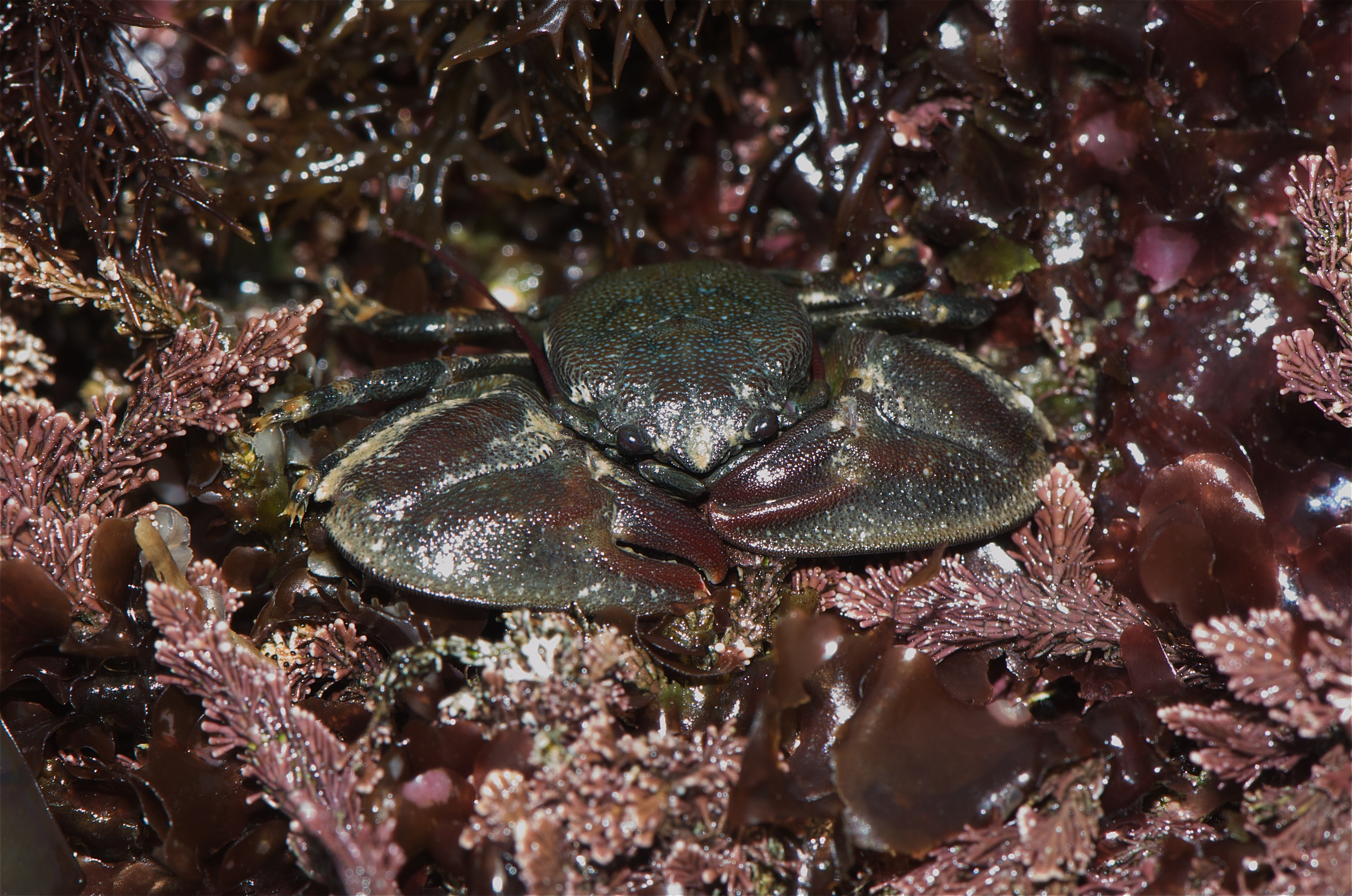
Field specimen (4304×2852 px)

Petrolisthes, Allopetrolisthes, Liopetrolisthes (1860×1286 px)
Ecological Characteristics
- Habitat breadth: Span from high intertidal rocky zones to subtidal kelp beds; both solitary filter-feeders and anemone obligates.
- Geographic distribution: Temperate and tropical oceans; particularly diverse in Eastern Pacific (upwelling ecosystems) and Indo-Pacific.
- Population dynamics: Broadcast spawners with larval dispersal; populations structured by recruitment pulses and local adaptation.
Specialized Symbiotic Specialists
Morphological & Behavioral Specializations
- Host specificity: Many Neopetrolisthes show strong anemone-host preferences, though some species tolerate multiple hosts.
- Sensory enhancement: Enlarged antennae and maxilliped setation for detecting host chemical signals and anemone food particles.
- Behavioral integration: Feeding coordination synchronized with host anemone polyp contraction cycles; shelter-seeking behaviors modified for anemone microhabitats.
- Indo-Pacific endemism: Genus concentrated in coral triangle and warm Indo-Pacific waters; tropical distribution reflects warm-water origin.
Mutualistic Relationships

Turkey specimen (1703×2130 px)

Behavioral documentation (2048×3641 px)

Dive site documentation (1796×1236 px)

Crab-fish-anemone association (1801×1350 px)
Symbiotic Functions
Cleaning mutualism: Porcelain crabs remove ectoparasites, fouling organisms, and dead tissue from anemone tentacles and body column. This service provides measurable fitness benefits to anemone hosts, enhancing growth rates and tentacle regeneration. In reciprocal exchange, anemones provide shelter from predators and food particle capture during host feeding.
Behavioral coevolution: Crabs demonstrate elaborate courtship displays, shelter-sharing behaviors, and alarm responses coordinated with anemone host physiology. Some species even exhibit partner recognition and site fidelity, suggesting complex cognitive capacities rare in decapods.
Regional Documentation
Philippines

Philippine islands (4000×3000 px)
Indonesia

North Sulawesi (1600×1200 px)

Regional diversity (1134×851 px)

Indonesian coral triangle (1081×810 px)
Thailand

General habitat (832×640 px)

Andaman Sea (1081×810 px)
Indian Ocean (Mauritius)

Indian Ocean specimen (1280×964 px)
Habitat Context

Philippine coral ecosystem (4416×3312 px)
Biogeographic Patterns
- Coral Triangle center: Highest species richness and endemism concentrated in Philippines, Indonesia, Malaysia region.
- Indo-Pacific radiation: Widespread distribution along continental margins and island arcs from East Africa to Indo-Pacific.
- Latitude gradients: Species richness declines with latitude; temperate Atlantic and Mediterranean less diverse than tropical Indo-Pacific.
- Habitat-specific distributions: Anemone-obligates restricted to coral reef habitats; solitary filter-feeders more widespread in diverse substrates.
Wild Population Documentation

Natural specimen (2816×2112 px)

Eastern Pacific population (4000×3000 px)
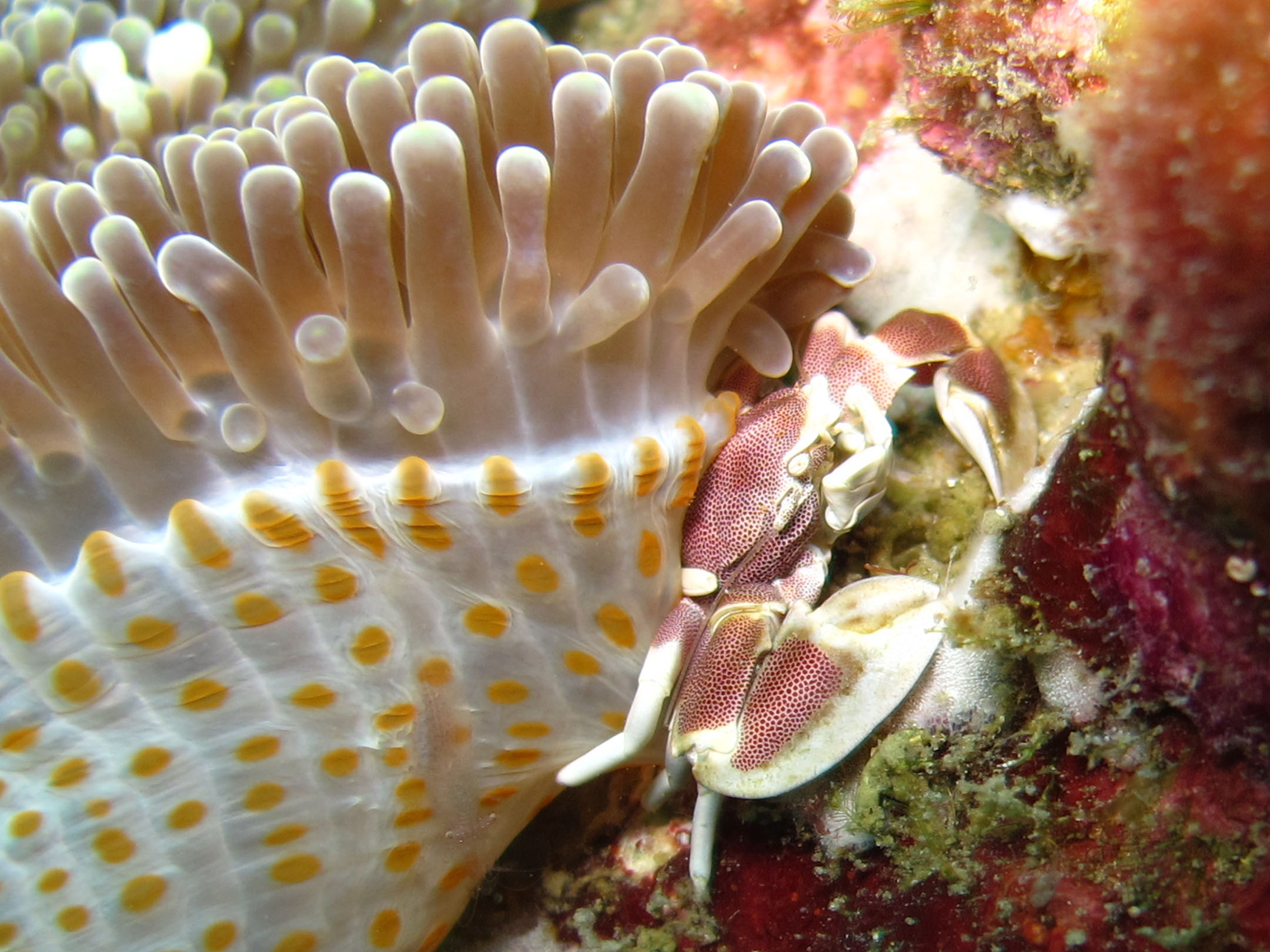
Intraspecific diversity (2160×1620 px)
Field Sampling Insights
Field documentation reveals that porcelain crab populations exhibit complex microhabitat structuring driven by substrate complexity, anemone host availability, predation pressure, and hydrodynamic regime. Population densities vary seasonally with recruitment pulses, reaching highest abundances during calm conditions when larval settlement success maximizes.
Habitat Requirements
- Substrate specificity: Rocky substrates, coral rubble, or cryptic reef microhabitats; solitary species less substrate-specific than obligate symbiotes.
- Depth distribution: Range from intertidal (Petrolisthes) to subtidal coral reef zones; anemone-obligates concentrated in shallow/intermediate depths (0–30 m).
- Water quality: Euryhaline tolerance in some taxa; most restricted to marine/near-marine salinities.
- Temperature regime: Tropical/subtropical species thermophilic; temperate congeners exhibit seasonal metabolic suppression.
Ecological Role
- Trophic position: Primarily filter-feeders or detritivores; predators of small benthic invertebrates in some taxa.
- Prey species: Primary prey for small reef fishes, cephalopods, and larger crustaceans.
- Nutrient cycling: Contribute to detrital pathways and benthic-pelagic coupling through fecal material production.
- Ecosystem engineering: Burrowing and cryptic habitat modification influence local meiofaunal communities.
Current Status
- IUCN assessment: Most species unassessed; endemic or narrow-range taxa vulnerable to habitat loss.
- Population trends: Generally stable in protected marine areas; declining in heavily exploited or degraded reefs.
- Threat assessment: Coral bleaching, destructive fishing, pollution, and coastal development represent primary threats to reef-dwelling species.
Conservation Strategies
- Marine protected areas (MPAs) with effective enforcement.
- Reef restoration initiatives targeting coral and rocky substrate recovery.
- Population monitoring programs utilizing porcelain crabs as bioindicators.
- Sustainable aquaculture to reduce wild collection pressure for ornamental trade.
1. Why are they called “porcelain” crabs?
The exoskeleton is extremely thin and brittle, resembling delicate porcelain. When threatened, they autotomize (drop) legs and chelipeds cleanly at specialized fracture planes, permitting predator escape with minimal blood loss.
2. Are porcelain crabs related to true crabs?
No. Porcelain crabs belong to Anomura (infraorder), more closely related to hermit and king crabs. True crabs are Brachyura. Despite morphological similarity, genetic analysis reveals distinct evolutionary lineages—convergent evolution example.
3. How do porcelain crabs live with anemones without getting stung?
Multiple hypotheses: (a) mucus coating prevents nematocyst discharge, (b) behavioral avoidance of tentacle tips, (c) chemical mimicry of host-associated fauna. Evidence supports combination of these mechanisms varies by species.
4. What do porcelain crabs eat?
Highly specialized by species. Anemone-associates feed on host-captured food particles and parasite removal. Rocky substrate species are filter-feeders, capturing plankton via enhanced maxillipeds. Detrital consumption also documented.
5. How long do porcelain crabs live?
Lifespan poorly documented. Estimated 3–7 years in laboratory conditions based on molt rates. Wild populations may differ due to environmental stresses and predation. Larger temperate species possibly live longer.
6. Can porcelain crabs regenerate lost limbs?
Yes. Autotomized appendages regenerate within 5–10 molts, initially smaller and functionally reduced. Full-size restoration requires multiple subsequent ecdysis (molting) cycles.
7. How are porcelain crabs used in aquaria?
Popular in reef aquariums for algae/pest control and anemone keeping. Anemone-obligates require appropriate host; solitary species more adaptable. They are hardier than glass anemones but still demand stable conditions.
8. Are porcelain crabs commercially exploited?
Minimal direct fishery; significant trade in ornamental aquaculture (~0.5–1M specimens annually). No major food fishery unlike other decapods. Some endemic species threatened by aquarium collection pressure.
9. How do porcelain crabs reproduce?
Broadcast spawners releasing planktonic larvae. Internal fertilization via spermatophore transfer. Females carry fertilized eggs on pleiopods (swimming legs) until release. Larval dispersal enables gene flow across populations.
10. What distinguishes porcelain crabs from similar-looking organisms?
Key diagnostics: (a) reduced 5th pereiopod (hidden under carapace margin), (b) abdominal asymmetry (anomuran vs. brachyuran symmetry), (c) brittle exoskeleton with autotomy lines, (d) maxilliped modifications for filter-feeding.
- This encyclopedia is educational in nature and reflects current scientific understanding as of January 2026.
- Taxonomic classification and species distributions remain subject to ongoing revision through molecular phylogenetic studies.
- All images sourced from Wikimedia Commons with open licenses (CC BY-SA, CC0) with complete attribution provided for each image.
- Conservation assessments and threat evaluations based on best available published literature; readers should consult IUCN Red List for updates.
- For aquarium maintenance questions, consult specialized marine biology references and experienced aquarists.
Primary Scientific References
- Osawa, M., Watanabe, S. & Chan, T.Y. (2004). “Japanese Porcellanidae and Lithodidae” (Decapoda: Anomura). Japan: National Museum of Nature and Science.
- Werding, B. & Heard, R.W. (2001). Porcellanidae. In: Carpenter, K.E. (Ed.), The Living Marine Resources of the Eastern Atlantic and Indian Ocean (EAIO).
- Nakasone, Y. (1988). “Phylogenetic studies of the superfamily Porcellanoidea (Crustacea: Anomura: Decapoda).” Bulletin of the University of the Ryukyus (Natural Science) 45: 39-112.
- Wikimedia Commons Archive – Porcellanidae and associated taxa photographic documentation.
Data Quality Assurance
This encyclopedia prioritizes copyright compliance through exclusive use of Wikimedia Commons images with appropriate licensing (CC BY-SA 3.0, CC BY 2.0, CC0 Public Domain) and complete attribution. Every image includes caption, file information, license type, dimensions, and direct link to original documentation, ensuring transparency and fair use compliance.
© 2026 – Porcellanidae (Porcelain Crabs) Encyclopedia
Marine biodiversity documentation with emphasis on taxonomy, symbiosis, and conservation | Updated: 16 January 2026