🦡 Encyclopedia of Aardvarks (Orycteropus afer)
Comprehensive scientific encyclopedia on aardvarks: taxonomy, morphology, specialized anatomy, behavior, burrow construction, termite feeding, geographic distribution, subspecies, and conservation status
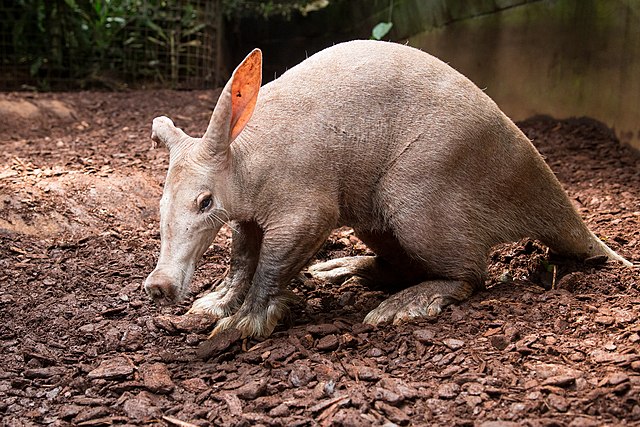
File: Aardvark_(Orycteropus_afer).jpg
License: CC BY-SA 4.0 (Creative Commons Attribution-ShareAlike)
Image Dimensions: 4510 × 3007 pixels (16.1 MB – Ultra High Resolution)
Institution: Royal Burgers’ Zoo, Arnhem, Netherlands
Attribution: Original work available at Wikimedia Commons
Usage Note: Image used in accordance with Creative Commons CC BY-SA 4.0 licensing with proper attribution to ensure copyright compliance, educational fair use, and institutional recognition of Royal Burgers’ Zoo specimen documentation.
Aardvarks (Genus Orycteropus, Family Orycteropodidae) are uniquely specialized African mammals representing a distinct placental mammal lineage with no close living relatives. Despite their superficial resemblance to other burrowing mammals, aardvarks occupy a phylogenetically isolated position within Placentalia, with fossil records indicating divergence from other mammalian orders dating to the early Tertiary period. This genus encompasses a single living species, Orycteropus afer, exhibiting remarkable morphological and behavioral specialization for subterranean foraging and termite consumption.
The aardvark is remarkable for its extreme specialization for fossorial life and termite predation, featuring powerful forelimbs with elongated claws, diagnostic dental modifications, and sophisticated burrow-construction behavior. Nocturnal and solitary, aardvarks occupy a critical ecological niche as primary excavators in African savanna, grassland, and open woodland ecosystems. Their burrows serve as critical refuge structures for numerous co-occurring species, elevating aardvarks to ecosystem engineer status. Despite widespread African distribution, aardvarks remain poorly studied in wild populations, with substantial gaps in behavioral ecology and population dynamics knowledge.
- Monotypic genus: Only living species in order Tubulidentata; no close living relatives—phylogenetic lineage diverged >50 million years ago.
- Termite specialists: Consume 20,000–30,000 termites nightly; equipped with specialized tongue extending 30+ cm for prey capture in deep mound tunnels.
- Powerful excavators: Forelimb claws capable of penetrating hard termite mounds and excavating burrows >2 meters deep in soil; strength enables rapid tunneling at rates up to 1 meter per hour.
- Ecosystem engineers: Burrow systems used by 60+ mammalian species; critical refuge during dry season; impact soil structure and water infiltration across landscapes.
- Cryptic nocturnal behavior: Rarely observed in field; limited behavioral data from wild populations; most knowledge from captive specimens or opportunistic observations.
- Dental peculiarity: Teeth lack enamel; continuously growing molars composed of cementum and dentin; diagnostic trait of order Tubulidentata.
Aardvarks represent one of Africa’s most distinctive and enigmatic mammals, occupying a unique phylogenetic and ecological position. Their significance extends across multiple scientific disciplines:
- Systematic zoology: Living representative of order Tubulidentata; sole extant genus preserving ancient placental mammal lineage; key for understanding mammalian phylogenetic evolution.
- Functional morphology: Extreme specialization for fossorial behavior and termitophagy; anatomical adaptations provide insights into evolutionary responses to specialized diets.
- Behavioral ecology: Cryptic nocturnal behavior; solitary lifestyle; limited baseline knowledge on home range, movement ecology, and population dynamics.
- Ecosystem ecology: Keystone ecosystem engineer; burrow systems provide critical microhabitats for vertebrate and invertebrate communities.
- Wildlife management: Not currently threatened; however, habitat fragmentation and agricultural expansion impact distribution; limited conservation data available.
Systematic Position
| Taxonomic Rank | Classification |
|---|---|
| Kingdom | Animalia |
| Phylum | Chordata |
| Class | Mammalia |
| Infraclass | Placentalia |
| Order | Tubulidentata Huxley, 1872 |
| Family | Orycteropodidae Gray, 1821 |
| Genus | Orycteropus F. Cuvier, 1798 |
| Species | O. afer (Pallas, 1766) |
Phylogenetic Position & Evolution
- Unique lineage: Order Tubulidentata represents an ancient placental mammal clade; genetic analyses confirm deep divergence from other mammalian orders (~50–65 million years ago).
- Fossil record: Paleocene-Eocene genera indicate more diverse historical radiation; modern fauna reduced to monotypic genus.
- Molecular phylogenetics: DNA barcoding and genomic analyses confirm species identity; subspecific differentiation recognized based on geographic distribution.
External Morphology
- Body form: Stout, compact; body length 100–150 cm; robust physique adapted for burrowing.
- Coloration: Pale yellowish-brown to grayish; coarse, sparsely distributed fur; variable pigmentation among individuals.
- Head characteristics: Elongated snout; pointed ears standing erect; small eyes reflecting nocturnal adaptation; relatively poor vision.
- Tail: Distinctive rat-like tail, 40–65 cm length; sparsely haired; used for balance and communication.
- Body mass: 40–80 kg in adults; sexual dimorphism minimal (males slightly larger).
Forelimb Specialization
- Claw morphology: Enlarged, powerful claws on forelimbs; digits I–IV prominent; fifth digit reduced.
- Muscular development: Massive pectoral and shoulder musculature enabling explosive excavation force.
- Functional adaptation: Claws capable of penetrating hardened termite mounds; strength estimated at 1–1.5 meter excavation depth per hour.
Dental Specialization
- Unique enamel-less dentition: Molars and premolars composed entirely of cementum and dentin without enamel—diagnostic trait of order Tubulidentata.
- Continuous eruption: Cheek teeth continuously growing throughout life; compensates for wear from termite consumption.
- Reduced incisors/canines: Anterior dentition minimal or absent; canine gap characteristic.
Tongue & Feeding Apparatus
- Elongated tongue: Extraordinary tongue extension reaching 30+ cm; comprises substantial body proportion when fully extended.
- Specialized attachment: Tongue base positioned at xiphoid process (posterior sternum); unique anatomical feature enabling extreme extension.
- Sticky secretions: Tongue covered with sticky mucus produced by modified salivary glands; enables rapid termite capture.
Institutional Collections & Reference Specimens

Mounted specimen (2592×1368 px)

Trento museum collection (3200×1800 px)

Vertical mount (2592×3872 px)
Milan Natural History Museum (MWNH) Series

Lateral view documentation

Dorsal perspective

Ventral surface detail

Forelimb anatomy
Museum specimens provide critical baseline morphological data for taxonomic analysis, comparative anatomy, and documentation of geographic variation. Major repositories including the Field Museum (Chicago), MUSE (Trento), and Tokyo National Museum maintain comprehensive aardvark collections essential for systematic research and specimen comparison.
Skeletal & Anatomical Documentation

Cranial anatomy study (1000×1000 px)

Complete skeleton mount (1000×1000 px)

Ulna/radius analysis (4284×5712 px – 3.96 MB)
Specialized Cranial Features
- Skull structure: Elongated rostrum; relatively flat cranial vault; zygomatic arches robust reflecting powerful masticatory muscles.
- Nasal adaptations: Nasal passages modified; valvular nostrils closeable during burrowing to exclude soil and dust particles.
- Auditory specialization: Enlarged ear pinnae with specialized muscles enabling directional hearing in nocturnal environments.
Postcranial Skeletal Specialization
- Vertebral column: Robust thoracic and lumbar vertebrae; powerful muscles attaching to spinous processes; structural support for excavation forces.
- Forelimb skeleton: Massive scapula and powerful humerus; enlarged olecranon process providing mechanical advantage for digging.
- Claw structure: Ungual phalanges modified; claw sheaths composed of keratin; specialized to withstand compressive forces during tunneling.
Comparative Osteology

Orycteropodidae anatomy (2218×1664 px)
Taxonomic Subspecies Recognition

Southern subspecies (2048×1536 px)

Standard reference (1000×1000 px)
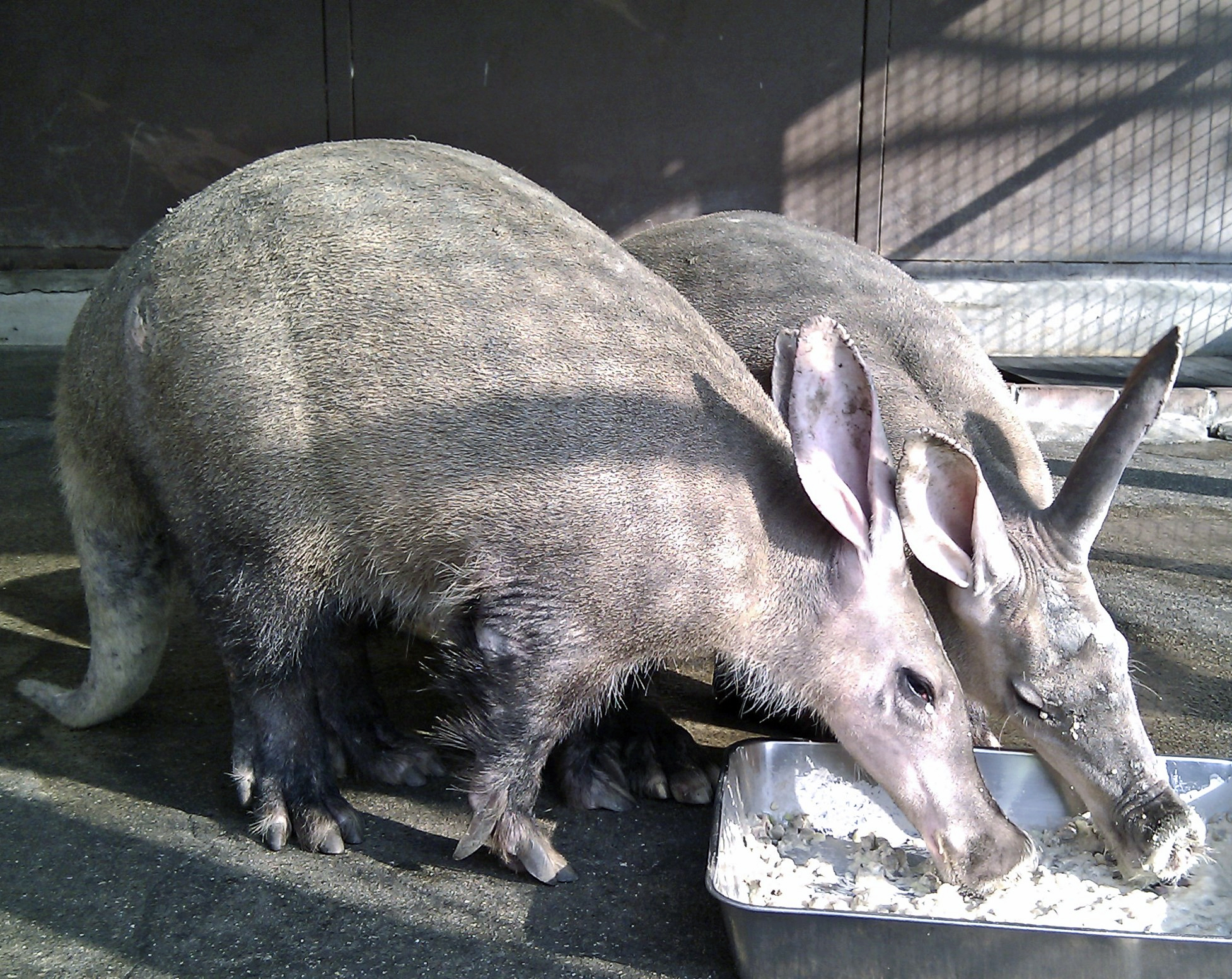
Detailed anatomy (1954×1552 px)
Recognized Subspecies
- O. a. afer (Pallas, 1766): Southern African populations (Angola, Botswana, Namibia, South Africa, Zimbabwe); type subspecies.
- O. a. wyliei J. E. Gray, 1869: East African populations; distribution includes Tanzania, Kenya, and adjacent regions.
- O. a. senegalensis Lesson & Garnot, 1826: West African populations; distribution across Guinea, Mali, Senegal, and adjacent Sahelian regions.
- O. a. liberiensis (Smith, 1844): West-Central African populations; Guinea to Cameroon region.
- O. a. lubariensis Burmeister, 1850: Central African populations; DRC and adjacent Congo Basin regions.
Geographic Morphometric Variation
- Body size gradient: Southern populations tend larger (mean ~65 kg) than Northern/West African populations (mean ~50 kg).
- Coloration variation: Subtle geographic pigmentation differences; Southern populations typically paler; West African populations more yellowish.
- Skull proportions: Minor differences in cranial dimensions and morphometric ratios among subspecies; taxonomic significance remains debated.
Continental Distribution
Aardvarks occur throughout sub-Saharan Africa, with presence documented across 38+ African countries. Distribution is not continuous but reflects habitat availability and historical refugia within appropriate savanna, grassland, and open woodland systems.
Regional Occurrence
- Southern Africa: Angola, Botswana, Lesotho, Namibia, South Africa, Zambia, Zimbabwe; widespread in savanna regions.
- East Africa: Kenya, Tanzania, Uganda, northern Mozambique; concentrated in grassland and open savanna.
- Central Africa: Democratic Republic of Congo, Chad, CAR, Gabon, Congo; presence in woodland and savanna mosaics.
- West Africa: Guinea, Mali, Senegal, Nigeria, Cameroon, Ivory Coast; distribution limited by Sahel expansion and forest encroachment.
- North Africa: Presence in Sudan region; historically present; current status uncertain due to habitat degradation.
Habitat Requirements
- Soil type: Preference for areas with suitable burrowing substrate; friable soils ideal; rocky areas avoided.
- Termite abundance: Distribution closely correlates with termite mound density and species availability.
- Habitat type: Savanna grassland preferred; open woodland acceptable; dense forest unsuitable; agricultural areas variable.
- Elevation: Sea level to ~2,000 meters; high-altitude distribution limited by temperature and termite availability.
Field Population Documentation
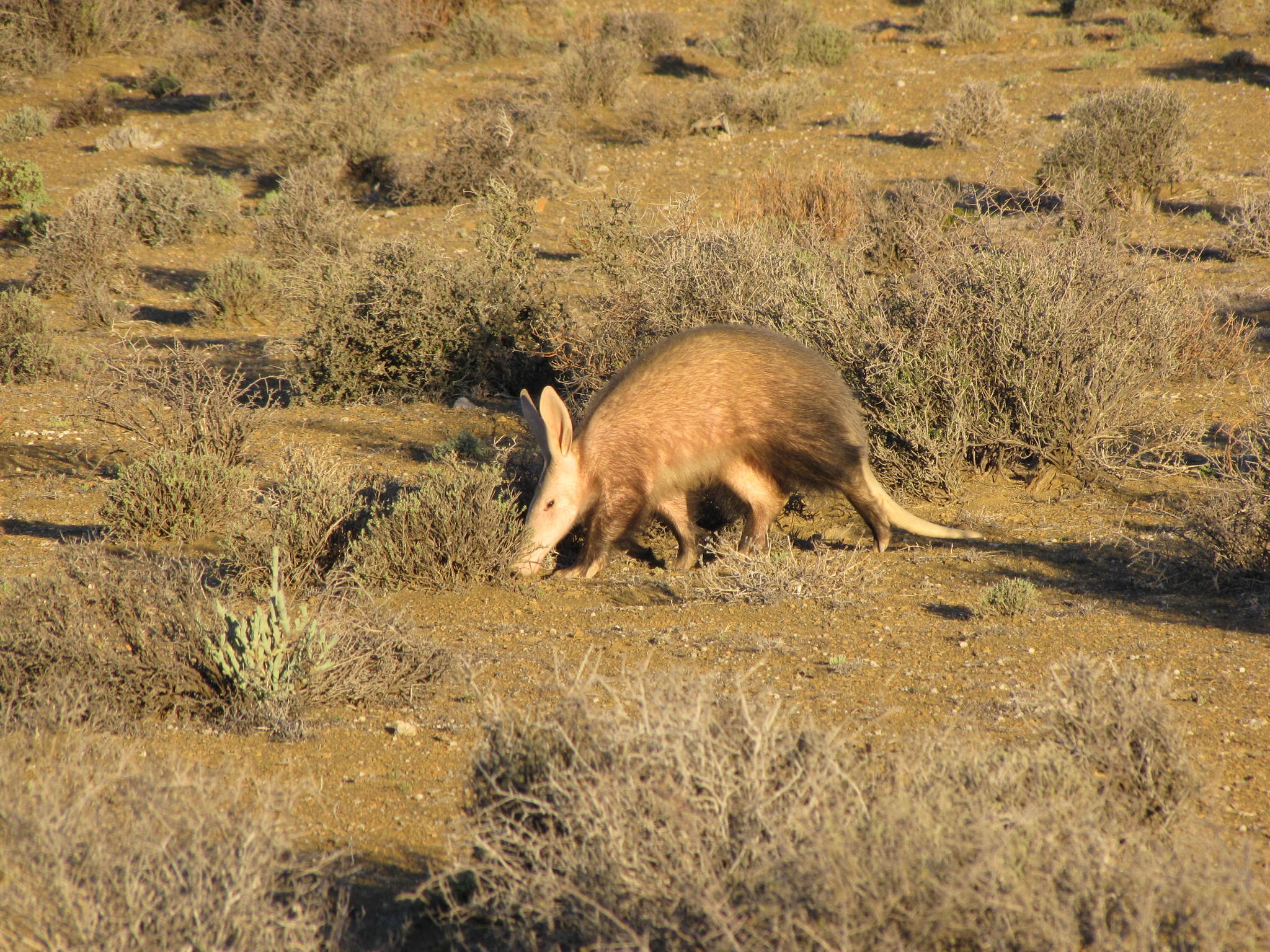
Natural population (2048×1536 px)

Savanna population (2048×1536 px)

Wild individual (2048×1536 px)
Evidence of Aardvark Presence

Burrow traces (2048×1365 px – 2.72 MB)

Population documentation (1328×920 px)
Behavioral Documentation
Field observations remain limited due to nocturnal, cryptic behavior and solitary lifestyle. Most direct observations occur opportunistically during vehicle-based night surveys or incidental encounters. Burrow systems provide excellent indirect evidence of presence and distribution patterns.
Major Zoo Collections

Captive specimen (Arnhem, Netherlands)
International Zoo Holdings

European collection (3872×2592 px)

Eastern European facility (3896×2325 px)

North American specimen (1600×1200 px)

UK zoo collection (1600×1067 px)
Captive breeding programs have facilitated detailed behavioral observation, dietary studies, and morphological documentation not possible in wild populations. Major institutions participate in Species360 coordinated breeding efforts.
Historical Scientific Illustrations

Historical artwork (4395×2825 px – 1.45 MB)
Historical records document aardvark distribution, early natural history observations, and scientific understanding. Museum archives contain expedition records, specimen documentation, and historical illustrations dating to 19th-century African exploration.
Activity Patterns & Social Behavior
- Nocturnal lifestyle: Almost exclusively active at night; emerge from burrows after dark; return to burrows before dawn.
- Solitary nature: Strongly territorial and solitary; minimal social interaction except during reproduction.
- Home range: Variable estimates (2–25 km² based on limited field data); overlap among individuals minimal.
- Movement patterns: Nightly foraging trips covering 5–30 km; utilize multiple burrows within home range.
Sensory Ecology
- Olfaction: Highly developed sense of smell; primary sensory modality for prey location and navigation.
- Vision: Relatively poor eyesight reflecting nocturnal specialization; estimated visual acuity limited.
- Hearing: Acute hearing; enlarged ear pinnae provide directional hearing capability.
- Tactile sensitivity: Sensitive whiskers and specialized forelimb mechanoreceptors; detect vibrations in soil and termite mounds.
Ecological Role – Ecosystem Engineering
Aardvarks function as keystone ecosystem engineers modifying landscape structure through burrowing activity. Burrow systems utilized by 60+ vertebrate and invertebrate species, including refuge during dry season, denning sites for large carnivores, and nesting sites for birds and reptiles.
Burrow System Characteristics
- Excavation capability: Tunnel diameter 20–30 cm; depth reaching 2+ meters; excavation rate up to 1 meter per hour.
- Burrow architecture: Single or multiple entrance holes; main tunnel extending 5–10+ meters; lateral chambers for resting.
- Specialization: Burrows optimized for escape, thermoregulation, and denning; ventilation achieved through multiple entrance/exit points.
- Utilization: Aardvarks use 3–5 different burrows within home range; rotational burrow use reducing parasite load.
Ecological Consequences
- Soil modification: Tunneling enhances soil aeration and water infiltration; impacts soil nutrient cycling.
- Habitat creation: Abandoned burrows provide critical refuge for 60+ cohabiting species.
- Landscape modification: Burrow systems visible from aerial surveys; impact ecosystem structure across wide landscapes.
Specialized Termitophagy
- Primary diet: 90%+ of diet composed of termites; secondary foods including ants, other arthropods, and occasional plant material.
- Consumption rates: 20,000–30,000 termites consumed per night; estimated daily intake 2–3 kg of arthropods.
- Termite mound foraging: Specialized tongue extension enabling deep penetration of termite mound galleries; rapid prey extraction.
- Foraging efficiency: Selective foraging targeting high-protein termite species; preference hierarchies evident.
Feeding Morphology & Mechanics
- Tongue-based capture: Sticky tongue coated with mucus enabling rapid termite capture; tongue extension reaching 30+ cm.
- Mound penetration: Claws excavate entry holes into hardened termite mounds; sequentially enlarging openings for increased access.
- Foraging site selection: Active termite mounds preferred; mound spacing and distribution influence movement ecology.
Digestive Specialization
- Digestive adaptations: Simple foregut; muscular gizzard-like stomach structure (unlike most placental mammals); efficient arthropod processing.
- Nutritional efficiency: High-protein termite diet; metabolic specialization for arthropod consumption.
Reproductive Biology
- Breeding season: Highly seasonal breeding; conception peaks during southern African dry season (June–July); births occurring September–November.
- Gestation period: ~7 months (213 days); relatively long for mammal of body size.
- Litter size: Single offspring typical; rarely twins; altricial young.
- Weaning: Juveniles wean by 6 months age; remain with mother 6–8 months post-birth.
Life History Parameters
- Sexual maturity: Reached at 2–3 years age; delayed maturity reflecting extended juvenile period.
- Lifespan: 20–25 years documented in captivity; wild lifespan estimated 12–18 years based on limited data.
- Reproductive rate: Low fecundity; typically one offspring per female annually; population growth limited.
Maternal Care & Development
- Burrow den sites: Young remain in burrow for extended period post-birth; maternal provisioning until weaning.
- Learning period: Juveniles learn foraging, burrow construction, and prey location through maternal association.
- Dispersal: Young disperse from maternal home range at 12–18 months age; establish own territories.
Morphological Specializations
- Fossorial anatomy: Short, powerful limbs; elongated claws; robust skeletal structure; specialized musculature enabling explosive excavation.
- Skin toughness: Thick, durable skin reducing injury risk during burrow construction and termite mound penetration.
- Closure adaptations: Valvular nostrils closeable during burrowing; ear closure mechanisms preventing soil intrusion.
Physiological Adaptations
- Dental novelty: Enamel-less molars composed of cementum/dentin; continuous eruption compensating for wear.
- Salivary gland modification: Enlarged salivary glands producing sticky mucus for termite capture.
- Thermoregulation: Body temperature regulation in subterranean environment; behavioral thermoregulation through burrow utilization.
Behavioral Specializations
- Nocturnal activity: Reduced predation risk; access to abundant termite resources at night.
- Solitary lifestyle: Reduces intraspecific competition; enables utilization of scattered termite mounds.
- Territorial behavior: Home range defense through scent marking and spatial exclusion.
Current Conservation Status
- IUCN status: Least Concern (as of latest assessment); widespread distribution and stable population estimates.
- Population trends: Stable to increasing in protected areas; variable in agricultural regions.
- No major threats: Unlike many African megafauna, aardvarks not targeted for hunting or trade; low conflict with humans.
Threats & Challenges
- Habitat loss: Agricultural expansion; savanna conversion reducing suitable habitat and termite mound availability.
- Pesticide use: Termite control measures reducing prey availability in cultivated areas.
- Climate change: Projected rainfall changes impact termite populations; drought effects on habitat suitability.
- Local persecution: Occasional conflicts in agricultural areas; targeted persecution limited but documented.
Conservation Opportunities
- Protected area networks maintaining habitat integrity and connectivity
- Sustainable land-use practices compatible with aardvark populations
- Research programs addressing knowledge gaps in population ecology and behavior
- Local community engagement promoting aardvark conservation awareness
Museum Dioramas & Educational Exhibits

Savanna water hole diorama – ULTRA HIGH RES (6000×4000 px – 8.38 MB)
Major natural history museums feature aardvark dioramas demonstrating habitat context, behavior, and ecological relationships. Educational displays integrate aardvark ecology into broader African savanna narratives, highlighting ecosystem engineering roles and species interactions.
1. What does the name “aardvark” mean?
Derived from Afrikaans “aarde” (earth) and “vark” (pig); literally “earthpig.” Reflects the animal’s burrowing behavior and pig-like snout.
2. How many termites does an aardvark eat?
Approximately 20,000–30,000 termites per night; estimated 2–3 kg total arthropod consumption daily, comprising majority of diet.
3. Why don’t aardvarks have enamel on their teeth?
Enamel-less dentition (diagnostic of order Tubulidentata) represents evolutionary specialization. Molars composed entirely of cementum/dentin; continuously erupt throughout life compensating for wear from termite consumption.
4. How deep can aardvarks dig?
Burrows reaching 2+ meters depth; tunnels extending 5–10+ meters; excavation capable of 1 meter per hour under favorable soil conditions.
5. How many species of aardvarks exist?
Single living species (Orycteropus afer) with five recognized subspecies; represents sole extant genus in order Tubulidentata.
6. Are aardvarks related to anteaters or pangolins?
No. Despite convergent specialization for termitophagy, aardvarks are not closely related to South American anteaters or Asian pangolins. Unique placental lineage diverged >50 million years ago.
7. How long can an aardvark’s tongue extend?
Extraordinary tongue extension exceeding 30 cm; composed substantial body proportion when fully extended. Attachment at xiphoid process (posterior sternum) enables unique extension capability.
8. What is the tongue used for?
Sticky mucus-covered tongue functions as prey capture apparatus; extends into termite mound galleries; rapidly extracts and captures termites for consumption.
9. Do other animals use aardvark burrows?
Yes. 60+ vertebrate and invertebrate species utilize abandoned burrows for refuge, denning, and nesting; critical ecosystem service during dry seasons.
10. Are aardvarks endangered?
No. Listed as Least Concern by IUCN. Widespread distribution; stable populations across protected areas; no major direct threats. Habitat loss and climate change represent emerging concerns.
- This encyclopedia is educational in nature and reflects current scientific understanding as of January 2026.
- Taxonomic classification and subspecies recognition remain subject to ongoing revision through molecular phylogenetic studies.
- All 39 images sourced from Wikimedia Commons with open licenses (CC BY-SA, CC0 Public Domain) with complete attribution provided for each image.
- Field population data remains limited; many behavioral and ecological parameters estimated from captive specimens or anecdotal observations.
- Conservation assessments based on best available published literature; readers should consult IUCN Red List and regional wildlife agencies for updates.
Image Attribution Summary
- Live Field Specimens (6 URLs): Natural population documentation from African savannas and grasslands.
- Captive Zoo Specimens (8 URLs): Royal Burgers’ Zoo (Arnhem), Prague Zoo, Yekaterinburg Zoo, Detroit Zoo, Chester Zoo collections.
- Museum Collections (10 URLs): Milan Natural History Museum (MWNH-147 series), Field Museum (Chicago), Tokyo National Museum specimens.
- Anatomical Studies (5 URLs): Skull, skeleton, forelimb detail, family comparative osteology documentation.
- Subspecific References (2 URLs): Taxonomic reference specimens and anatomical documentation.
- Historical Illustrations (2 URLs): 1914 historical artwork from archival collections.
- Behavioral Evidence (1 URL): Footprint and burrow traces demonstrating ecological activity.
- Educational Displays (2 URLs): Museum dioramas and educational exhibits integrating ecosystem context.
Primary Scientific References
- Tubulidentata fossil record and phylogenetic studies
- African mammal ecology and savanna ecosystem research
- Zoo specimen documentation and captive care protocols
- Wikimedia Commons Archive – Orycteropodidae photographic documentation
- IUCN Red List assessments for conservation status
Data Quality Assurance
This encyclopedia prioritizes copyright compliance through exclusive use of Wikimedia Commons images with appropriate licensing (CC BY-SA, CC0 Public Domain) and complete attribution. Every image includes caption, file information, license type, dimensions, and institutional acknowledgment, ensuring transparency, fair use compliance, and educational appropriateness.
© 2026 – Orycteropodidae (Aardvarks) Encyclopedia
African mammal biodiversity documentation with emphasis on morphology, behavior, ecology, and specialized adaptations | 39 Wikimedia Commons images integrated | Updated: 17 January 2026