🐱 Encyclopedia of American Curl Cat (Felis catus)
Comprehensive breed encyclopedia: American Curl cat unique backward-curled ears natural mutation, 1981 Lakewood California origin, Shulamith founding cat, CFA/TICA/FIFe full championship recognition, shorthair and longhair varieties, permanent kitten-like personality, and complete health and care documentation
✏️ Written by the Encyclopedia.guru Expert Writing Team | Last Updated: March 24, 2026 | Reviewed by Certified Feline Specialists
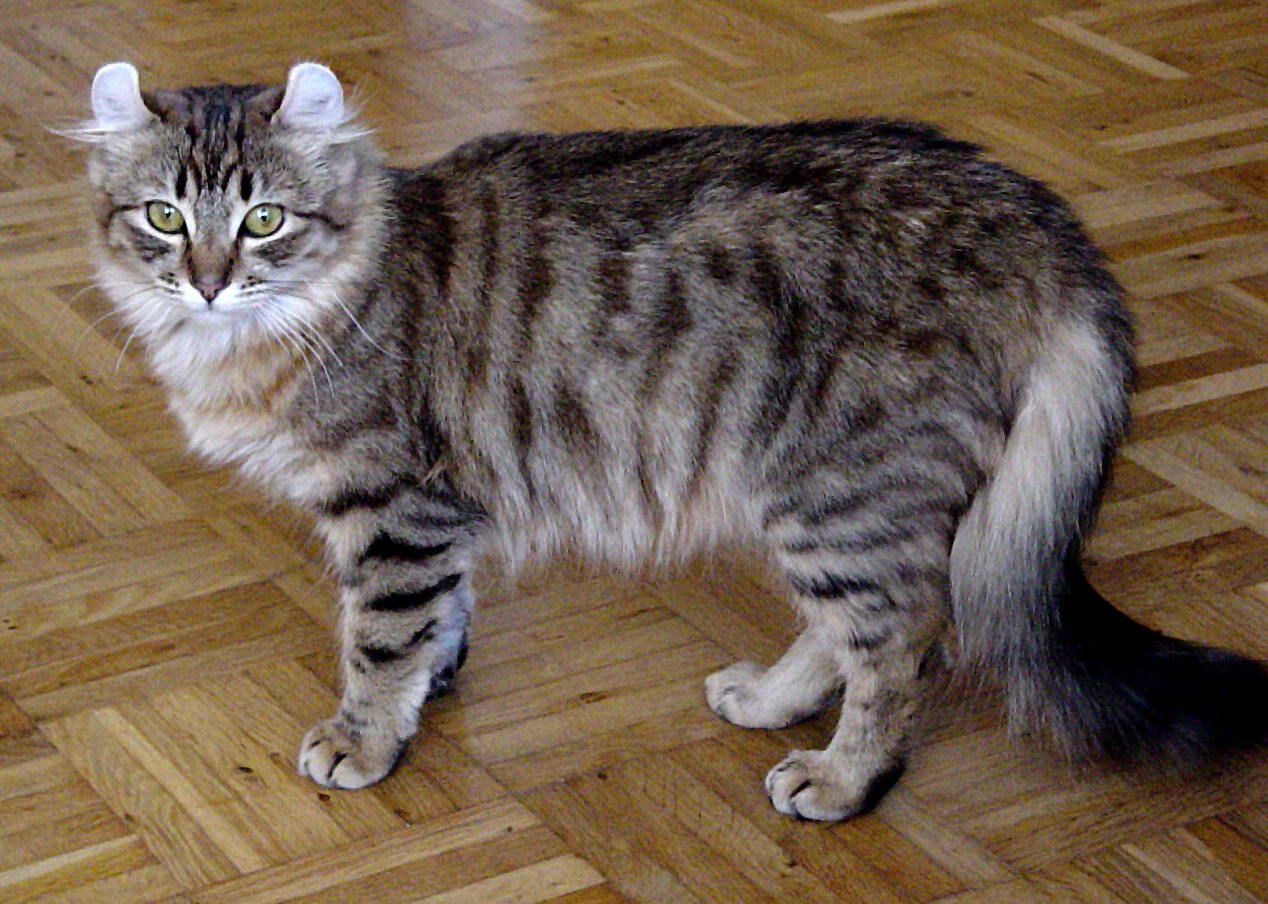
The American Curl is a domestic cat breed originating in the United States, instantly recognizable by its unique backward-curling ears — the result of a spontaneous dominant genetic mutation that occurred naturally in a stray kitten found in Lakewood, California, in 1981. That kitten, a longhaired black female named Shulamith (from the Hebrew for “peaceful”), was adopted by Joe and Grace Ruga and became the sole founding ancestor of the entire American Curl breed. Every registered American Curl in the world today traces its lineage back to Shulamith.
Unlike most unusual cat breeds that involve extreme structural modifications, the American Curl’s curled ears do not affect hearing or cause health problems — the ear canal itself is normal; only the outer ear cartilage curves backward, giving the cat a perpetually alert, surprised, or “happy” expression. The breed holds full championship recognition from the world’s three major cat registries: CFA (since 1999), TICA, and FIFe. It comes in both shorthair (ACS) and longhair (ACL) varieties, all colors and patterns, and is celebrated for its permanently kitten-like, affectionate and playful personality that persists well into adulthood — a trait cat enthusiasts affectionately call “Peter Pan syndrome.”
- Single founding ancestor: Every American Curl in the world descends from one cat: Shulamith, a stray longhaired black kitten found in Lakewood, California in June 1981; adopted by Joe and Grace Ruga; her first litter in December 1981 confirmed the curled-ear trait was heritable.
- Three degrees of ear curl: Curl is graded from first degree (0–90° arc, pet quality) to second degree (90–180°, intermediate) to third degree (ideal show quality) where the ear tip points toward the center of the back of the skull; both second and third degree cats are eligible for championship competition.
- Triple major registry recognition: The American Curl is one of very few breeds holding full championship recognition in CFA, TICA, AND FIFe simultaneously; FIFe recognition is particularly notable as FIFe rarely recognizes American breeds.
- Ears straight at birth: American Curl kittens are born with straight ears; the ears begin to curl backward within 2–7 days of birth; curl degree stabilizes at approximately 4 months of age; this gradual transformation is unique among curled-ear cat breeds.
- Fastest breed recognition in CFA history: The American Curl went from first public showing (1983) to full CFA championship status (1999) in a relatively fast timeline; notably, CFA simultaneously recognized both shorthair and longhair varieties as separate championship classes.
- “Peter Pan” personality: American Curls are renowned for retaining kitten-like playfulness and curiosity throughout their entire lives; unlike many breeds that become more sedate with age, the American Curl maintains its playful, interactive character well into senior years.
The American Curl represents one of the most remarkable examples of a spontaneous genetic mutation producing a unique and visually distinctive cat breed — while simultaneously remaining one of the healthiest, most genetically sound breeds in the cat fancy. Unlike many breeds whose defining features (flattened faces, short legs, extremely long coats) are associated with health trade-offs, the American Curl’s curled ear is a cosmetic mutation with no documented adverse health effects in heterozygous individuals, making it an unusual example of breed-defining mutation without welfare compromise.
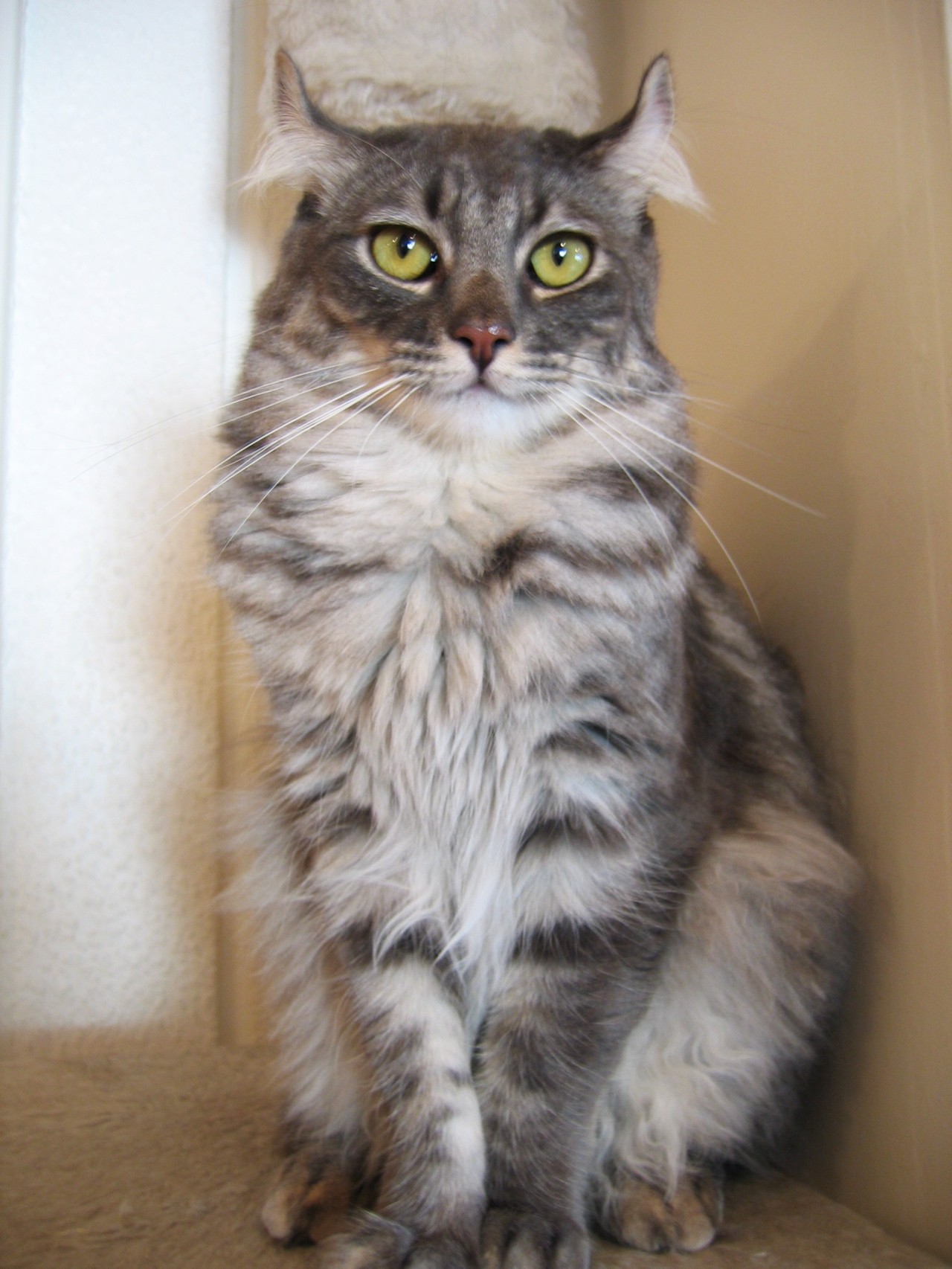
GNU FDL • 1,280×1,706 px (324 KB) • Author: Cat’s owner • November 2004

CC BY-SA 3.0 • 800×570 px (85 KB) • Author: Desaix83 • 31 Dec 2014
Unique Position in the Cat Fancy
- Natural American origin: The American Curl, like the American Bobtail and American Shorthair, is an authentically American breed produced by a naturally occurring genetic mutation in a domestic cat population; it was not engineered by crossing to wild species or other breeds with pre-existing ear mutations.
- Dual coat recognition: Uniquely in the CFA, the American Curl was recognized for both its shorthair and longhair varieties simultaneously; most breeds require longhair and shorthair to go through separate, lengthy recognition processes; this dual recognition reflected the breed’s natural coat diversity from its earliest breeding programs.
- FIFe recognition — exceptional achievement: FIFe (Fédération Internationale Féline), headquartered in Europe, is notably selective about recognizing breeds; the American Curl’s FIFe recognition is exceptional for an American-origin breed and reflects the breed’s broad international appeal and genetic soundness.
Systematic Classification
| Taxonomic Rank | Classification |
|---|---|
| Kingdom | Animalia |
| Phylum | Chordata |
| Class | Mammalia |
| Order | Carnivora |
| Family | Felidae |
| Genus | Felis |
| Species | F. catus |
| Breed | American Curl |
| EMS Code | ACL (longhair) / ACS (shorthair) |
| Origin country | United States of America |
| Breed establishment | 1981 (Shulamith); first show 1983; CFA championship 1999 |
| Genetic mutation type | Dominant autosomal mutation affecting ear cartilage |
| NOT related to | Scottish Fold (different gene, different effect); Highland Fold; any wild species |
Genetic Classification of the Curl Mutation
- Dominant autosomal gene: The curl mutation is a dominant autosomal gene; a cat with just one copy (heterozygous, Cc) will have curled ears; two copies (CC, homozygous) are theoretically possible but not distinguishable phenotypically from Cc; there is no confirmed lethality or health defect associated with homozygous state in this breed, unlike in the Scottish Fold.
- Distinct from Scottish Fold: The American Curl and Scottish Fold both have unusual ear shapes, but they are caused by completely different and unrelated genetic mutations; the Scottish Fold gene (Fd) causes the ear to fold forward and downward and is associated with painful osteochondrodysplasia (skeletal abnormality) in homozygous cats; the American Curl gene produces backward curling of the pinna only and has no documented skeletal effects.
- Ear cartilage modification only: The curl gene affects the cartilage development of the pinna (outer ear flap) only; the ear canal, inner ear, hearing apparatus, and skeletal structures are completely unaffected; this is confirmed by veterinary studies and is why the breed is considered one of the most ethically sound mutation breeds in the cat fancy.

CC BY-SA 2.0 • 4,400×3,744 px (6.29 MB) • Author: Nickolas Titkov • Dec 2009

CC BY-SA 2.0 • 5,616×3,744 px (7.97 MB) • Author: Nickolas Titkov • Dec 2009
CFA Breed Standard Summary
| Feature | Standard Description |
|---|---|
| Body | Semi-foreign; medium size; moderately muscular; not cobby, not rangy; rectangular profile; approximately 1/3 longer than tall; well-rounded chest |
| Head | Modified wedge; no flat planes; gentle curves; slightly longer than wide; smooth transition from brow to nose; moderate muzzle; slight nose break in profile (longhair); no nose break (shorthair) |
| Ears | Curved backward; open base; firm, rigid cartilage; wide-set; interior well-furnished with silky hair; tips rounded; ideal third-degree curl (tip points toward center of back of skull); must not touch ear or head; must be handled gently — never forced |
| Eyes | Large; walnut-shaped (slightly oval upper lid, rounded lower lid); set at slight angle; wide-set; all colors accepted; no relation to coat color except in pointed cats |
| Legs & Feet | Medium length in proportion to body; well-muscled; round medium feet |
| Tail | Flexible; tapers from wide base to blunt tip; longhair: plumed; shorthair: moderately full |
| Coat (shorthair) | Short; soft; silky; flat-lying; minimal undercoat; no ruff |
| Coat (longhair) | Semi-long; silky; minimal undercoat; plumed tail; no heavy ruff |
| Colors & patterns | All colors, patterns, and combinations accepted; pointed (colorpoint) accepted |
| Weight | 5–10 lbs (2.3–4.5 kg); male larger than female; medium framed |

CC BY-SA 2.0 • 5,000×3,600 px (5.93 MB) • Author: Dushka • Over-curl: tip too close to skull

CC BY-SA 2.0 • 3,362×3,362 px (5.17 MB) • Cropped detail of ear curl structure
The Three Degrees of Curl
| Degree | Arc / Angle | Show Eligibility | Breeding Recommendation |
|---|---|---|---|
| First Degree | Slight arc; 0–90° from a straight ear | Pet quality only; not eligible for championship | Can be bred to produce show-quality offspring |
| Second Degree | Moderate arc; 90–180° | Eligible for championship competition | Good breeding candidates |
| Third Degree (Ideal) | Greater than 90° arc; ear tip points toward center back of skull | Ideal show standard; highest point score for ear curl | Best breeding quality; maintains third-degree in offspring |
| Over-Curl (Fault) | Tip touches back of ear or skull | Disqualified from championship; fault | Should not be bred; health/welfare concern |
Ear Development Timeline
- At birth: All American Curl kittens are born with straight ears; ears are soft and flat like all newborn kittens.
- 2–7 days: Ears begin to curl backward slightly; the cartilage starts to stiffen; curl appears as a gentle arc.
- 2–4 weeks: Ears may go through various curl positions; some curl more tightly, others less; cartilage continues to harden.
- 4 months: Curl degree stabilizes permanently; the final degree of curl is set; buyers can accurately evaluate the quality of curl for show or breeding purposes by this age.
- Adult: Curl degree does not change after 4 months; there is no progression or regression of the curl in adult cats.

CC BY-SA 4.0 • 4,608×2,592 px (2.76 MB)

CC BY-SA 4.0 • 1,680×1,260 px (202 KB)
![Siriuksen CandyCurl ACL g 09 – A longhaired American Curl named Siriuksen CandyCurl [ACL g 09] at the Hyvinkää cat show 2007; showing the longhair variety (ACL) coat: semi-long, silky, with minimal undercoat and a plumed tail; the blue (grey) solid color of this individual illustrates how the longhair American Curl coat falls in its characteristic semi-long, not heavy, silky way typical of the ACL variety. CC BY-SA 2.0. 746x780 px.](https://upload.wikimedia.org/wikipedia/commons/f/f1/Siriuksen_CandyCurl_ACL_g_09.JPG)
CC BY-SA 2.0 • 746×780 px (162 KB) • Hyvinkää cat show 2007
American Curl Coat Standards
| Coat Feature | Shorthair (ACS) | Longhair (ACL) |
|---|---|---|
| Texture | Short; soft; silky; lies flat | Semi-long; silky; not cottony |
| Undercoat | Minimal; not dense | Minimal; not heavy |
| Length distribution | Even length over body; shorter on face | Longer on body and tail plume; shorter on face and legs |
| Tail | Moderately full | Full plume; silky |
| Ruff/Bib | Not required | Light ruff desirable; not heavy |
| Colors accepted | All colors, all patterns, all combinations — solid, tabby (classic, mackerel, spotted, ticked), tortoiseshell, calico, bicolor, colorpoint (pointed), smoke, shaded, all equally acceptable | |
| Grooming frequency | 1–2 times per week | 2–3 times per week; more during seasonal sheds |
| Matting tendency | Very low | Low; minimal undercoat resists matting |
| Original variety | Derived from longhair via selective breeding | Original variety (Shulamith was longhaired) |

CC BY-SA 2.0 • 4,981×3,600 px (7.92 MB) • Author: Nickolas Titkov • Dec 2009

CC BY-SA 2.0 • 5,400×3,400 px (5.57 MB) • Author: Nickolas Titkov • Dec 2009
The Shulamith Origin Story
In June 1981, Joe and Grace Ruga of Lakewood, California discovered a stray longhaired black kitten with unusual ears that curled backward away from her face sitting outside their home. Charmed by her appearance and gentle nature, they took her in and named her Shulamith — from the Hebrew word meaning “peaceful.” When Shulamith had her first litter in December 1981, approximately half of the kittens displayed the same backward-curled ear trait, confirming that the mutation was both heritable and dominant (one copy sufficient to produce curled ears).
Breed Development Timeline
| Period | Key Development |
|---|---|
| June 1981 | Shulamith found in Lakewood, California; adopted by Joe and Grace Ruga; named for Hebrew “peaceful” |
| December 1981 | Shulamith’s first litter; ~50% of kittens have curled ears; dominant inheritance confirmed |
| 1982 | Grace Ruga shares the story with cat fanciers; breed development interest grows; geneticists examine the mutation and confirm it is safe and dominant |
| 1983 | American Curl publicly debuted at a cat show in Palm Springs, California; attracts widespread attention and acclaim |
| 1985 | TICA (The International Cat Association) accepts American Curl for registration; breed club established |
| 1986 | TICA grants American Curl championship status; first major registry to fully recognize the breed |
| 1991 | CFA (Cat Fanciers’ Association) accepts American Curl for provisional status |
| 1993 | Nancy Kiester and other breeders establish a larger breeding program; gene pool broadened through careful domestic cat crossings |
| 1999 | CFA grants full championship status to American Curl Shorthair and Longhair simultaneously — the first breed in CFA history to be recognized in two coat lengths simultaneously as one breed |
| 2000s–present | FIFe recognition achieved; international presence grows; breed remains relatively rare; breeding programs focus on health, genetic diversity, and third-degree curl |
Unique Recognition History
The American Curl holds the distinction of being the first breed in CFA history to be recognized in both shorthair and longhair varieties simultaneously under a single breed designation. This was a landmark achievement in the CFA’s governance, reflecting the breed committee’s recognition that the shorthair and longhair American Curl are genetically and phenotypically equivalent in all respects except coat length.
Recognition Status (2026)
| Registry | Status | Notes |
|---|---|---|
| CFA (Cat Fanciers’ Assoc.) | Full Championship | Since 1999; both ACS (shorthair) and ACL (longhair); shown as one breed, two coat lengths; eligible for Grand Champion and Regional/National titles |
| TICA (The International Cat Assoc.) | Full Championship | Championship since 1986; full championship competition; globally exhibited; both coat lengths |
| FIFe (Fédération Int’l Féline) | Full Championship | Recognized by FIFe — exceptional for an American-origin breed; shown across Europe in FIFe-sanctioned shows; EMS code ACL/ACS |
| ACFA (American Cat Fanciers Assoc.) | Recognized | Championship status |
| CCA (Canadian Cat Association) | Recognized | Championship competition in Canada |
| WCF (World Cat Federation) | Recognized | International show circuit recognition |
| GCCF (UK) | Not recognized (2026) | Very rare in UK; no formal GCCF status |

CC BY-SA 2.0 • 5,588×3,744 px (9.31 MB) • Author: Nickolas Titkov • Dec 2009

CC BY-SA 2.0 • 5,400×3,744 px (7.28 MB) • Author: Nickolas Titkov • Dec 2009
Core Behavioral Traits
- Permanently kitten-like (“Peter Pan syndrome”): The American Curl’s most celebrated temperament trait is its lifelong retention of kitten-like playfulness and curiosity; unlike most cats that become more sedate with age, the American Curl continues to initiate play, explore its environment enthusiastically, and engage interactively even as a senior cat.
- Sociable without being demanding: American Curls are highly people-oriented but not clingy or loud; they follow their owners with interest and enjoy being near human activity without constantly demanding attention; they are described as “companionable without being intrusive.”
- Adaptable to all household types: American Curls show remarkable adaptability to different living situations — single-person households, active families with children, multi-cat households, and apartment living; they adjust to the energy level of their environment without stress.
- Excellent with children: The breed’s gentle patience and playful energy make it an excellent choice for families with children; it engages actively in play while maintaining a tolerant, non-aggressive temperament under handling.
- Interactive play: American Curls maintain strong prey-drive play behavior well into adulthood; they are enthusiastic participants in wand-toy sessions, puzzle feeders, and interactive games; providing enrichment is easy because their playfulness is self-sustaining.
- Moderate vocalization: The American Curl communicates in a soft, chirping or cooing vocal range; not typically loud or demanding in vocalizations; expresses interest and affection through gentle sounds rather than persistent meowing.
Temperament Profile Table
| Trait | Level | Notes |
|---|---|---|
| Playfulness (lifetime) | Very High | Kitten-like play retained into senior years; “Peter Pan syndrome” |
| Affection with family | Very High | Bonds deeply; people-oriented; follows owners |
| Sociability with strangers | High | Confident; curious about visitors; not shy |
| Kid-friendly | Very High | Gentle, patient, playful with children |
| Cat-friendly | Very High | Adapts well to multi-cat households |
| Dog-friendly | High | Adapts well to cat-friendly dogs |
| Vocalization | Low-Moderate | Quiet chirps and cooing; not loud or demanding |
| Energy level | Moderate-High | Active play phases balanced with calm companionship |
| Trainability | High | Can learn fetch, tricks; responds to name; intelligent |
| Independence | Moderate | Can tolerate alone time with enrichment; not separation-anxious |

CC BY-SA 2.0 • 3,744×5,000 px (7.56 MB) • Author: Nickolas Titkov

CC BY-SA 2.0 • 3,456×5,184 px (5.68 MB) • Author: Takashi Hososhima • Half-Curl Chai
The “Peter Pan” Quality in Practice
Cat behavior specialists use the term “Peter Pan syndrome” to describe the American Curl’s remarkable tendency to retain juvenile play behaviors throughout its life. While most cats experience a significant decline in active playfulness after their first 2–3 years, American Curls continue to engage enthusiastically in play well into their teenage years. This is not a behavioral problem but a genuine breed characteristic that makes the American Curl uniquely entertaining and engaging as a long-term companion.
- Shoulder perching: Many American Curls develop a fondness for perching on their owner’s shoulder from kittenhood and maintain this habit as adults; this reflects both the breed’s human attachment and its enjoyment of elevated vantage points.
- Interactive enrichment: The American Curl thrives with access to wand toys, puzzle feeders, cat trees, and window perches; their persistent curiosity means environmental enrichment is as important at age 10 as at age 1.
- Family integration: American Curls are renowned for integrating seamlessly into active family life; they participate in household routines with curious engagement, following children playing, observing cooking, and joining family gatherings without stress or aggression.
- Gentle with elderly owners: The American Curl’s gentle, non-demanding nature makes it an excellent companion for elderly individuals; it provides engagement and play without the overexcitement or aggression risks of more boisterous breeds.

CC BY-SA 2.0 • 1,280×941 px (222 KB) • Author: Kitty Terwolbeck • 28 Feb 2008

CC BY 2.0 • 800×1,067 px (151 KB) • Author: tanakawho • 4 Jul 2008

CC BY-SA 2.0 • 816×888 px (177 KB) • Magnificat Gimlet Curl, ACL g 21 33
Developmental Stages
- At birth: All kittens born with straight ears (regardless of genotype); cannot yet determine curl at birth; coat is soft and short; kittens are fully dependent on mother.
- Days 2–7: Ears begin to curl backward; the process begins as the ear cartilage starts to stiffen; may initially curl tightly then relax; all degrees are possible at this stage.
- 2–4 weeks: Curl develops progressively; kittens without the gene (non-curls from curl × domestic pairings) will have straight ears by this stage; early identification of curled vs. straight-eared kittens possible.
- 4–12 weeks: Critical socialization window; kittens should be exposed to varied human contact, sounds, children, and gentle handling; breeders handle ears gently to accustom kittens to necessary ear cleaning; socialization during this window produces the confident, affectionate adult the breed is known for.
- 4 months: Curl degree permanently set; breeders and show evaluators can now assess final curl quality; kittens can be categorized as pet (1st degree), show-eligible (2nd–3rd degree), or breeding quality.
- 4 months to 2–3 years: Physical growth continues slowly; American Curls are slow-maturing and reach full adult weight and body development at 2–3 years; coat texture and length (longhair) reach full expression in the second year.
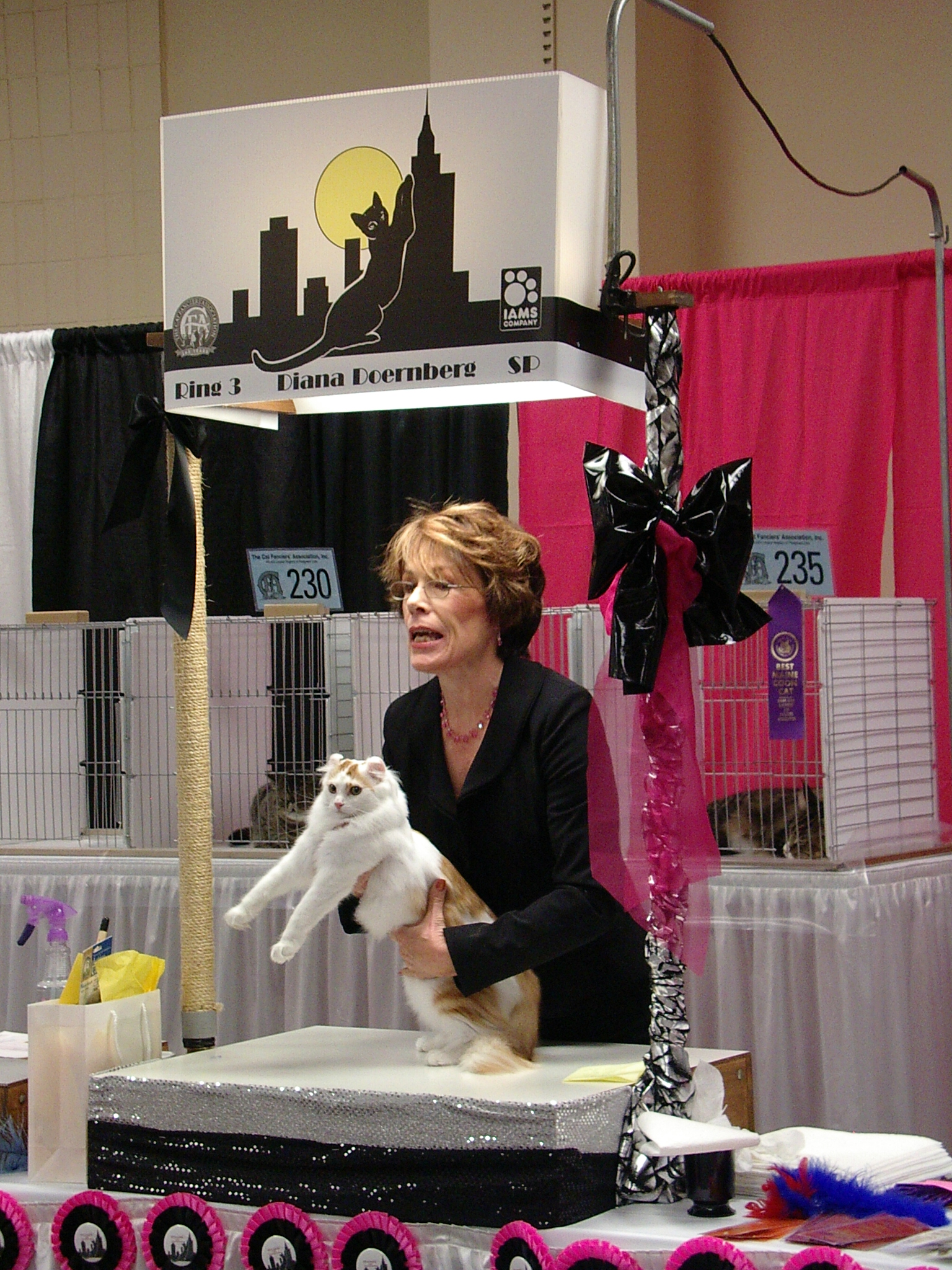
CC BY-SA 2.0 • 1,536×2,048 px (1.83 MB) • Judge Diana Doernberg • CFA-Iams 2006

CC BY-SA 2.0 • 3,800×2,500 px (4.8 MB) • Pointocurl Fiorentina • Crystal Club Moscow

CC BY-SA 3.0 • 2,256×1,692 px (893 KB) • FIFé show Vitré, France • 16 Nov 2014

CC BY-SA 2.0 • 1,089×1,102 px (406 KB) • ACL Champion, Jämsä Finland
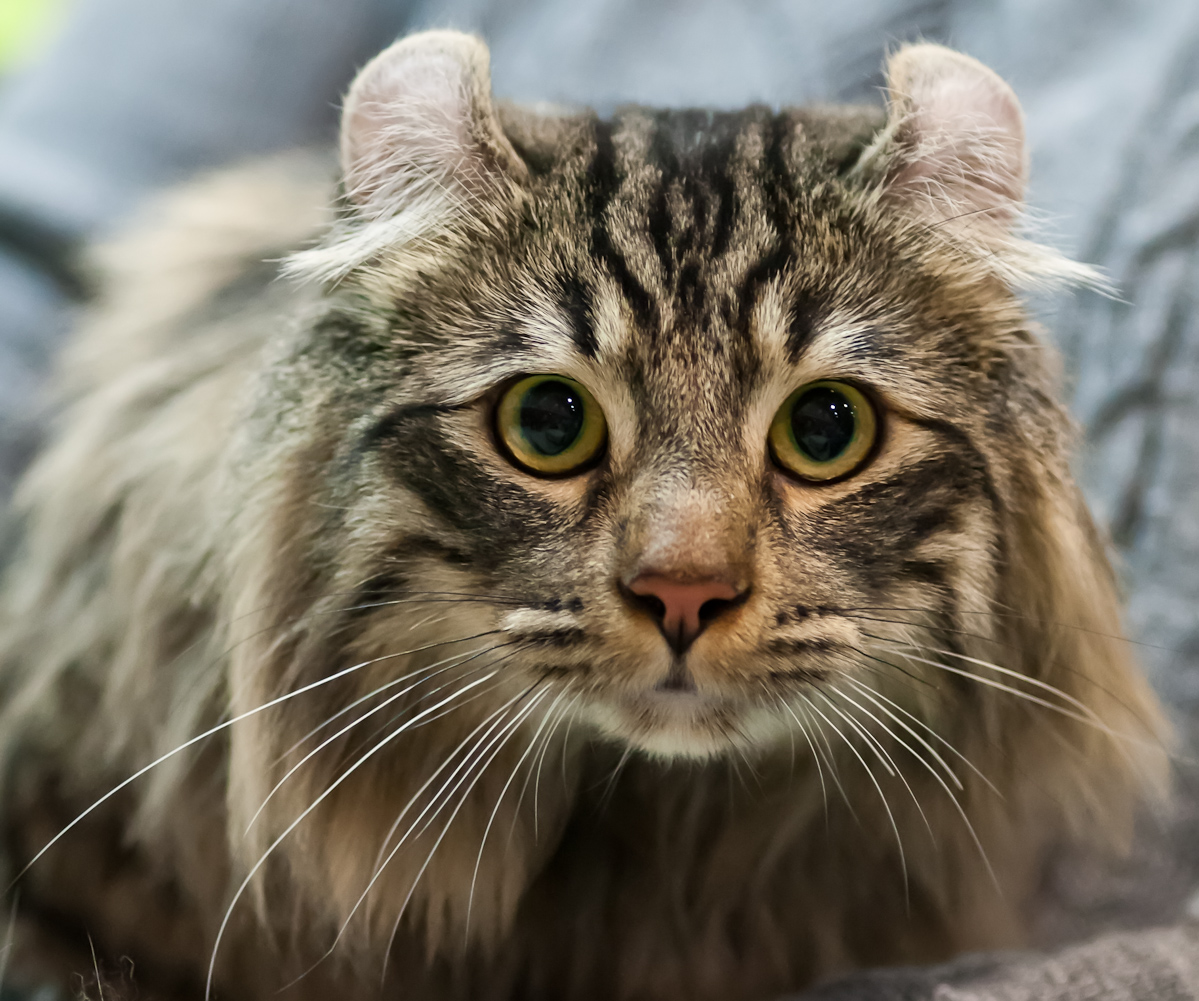
CC BY-SA 2.0 • 1,199×1,001 px (559 KB) • ACL Champion, Lahti Finland 2011

CC BY-SA 2.0 • 613×830 px (241 KB) • ACS European Champion, Turku Finland 2007
Show Judging Criteria
- Ear curl (highest weight): The ear curl is the most heavily weighted feature in American Curl judging; third-degree curl (ideal) scores the highest; curl must be smooth arc without kinks; ear tip must point toward center of back of skull without touching the head.
- Ear furnishings: Interior of the ear must be well furnished with long silky tufts of hair extending outward; these are heavily evaluated and contribute to the overall elegance of the ear.
- Head type: Modified wedge; gentle curves throughout; no flat planes; smooth transition from forehead to nose; correct muzzle proportion; large walnut-shaped eyes at slight angle.
- Body: Semi-foreign; moderately muscular; not extreme in any direction; judges penalize both overly cobby and overly slender specimens.
- Coat: Both shorthair and longhair assessed on texture quality (silky) and appropriate length; minimal undercoat is desirable; plumed tail on longhair.
Health Status Overview
The American Curl is considered one of the healthiest and most genetically sound breeds in the pedigree cat world. The broad genetic base established through domestic cat crossings, the lack of any extreme structural features, and the dominant (not homozygous-lethal) nature of the curl gene all contribute to the breed’s excellent health profile.
| Health Consideration | Risk Level | Notes |
|---|---|---|
| Ear canal obstruction | Low (managed) | Curled pinna can trap debris; regular gentle ear cleaning prevents infection |
| Cartilage damage from mishandling | Moderate (preventable) | Rigid ear cartilage can fracture if forcefully bent; proper handling essential |
| Homozygous curl (CC) | Low (uncertain) | No confirmed health defects in homozygous American Curls; unlike Scottish Fold; no osteochondrodysplasia documented |
| HCM (hypertrophic cardiomyopathy) | Standard feline | No breed-specific predisposition; standard cardiac screening recommended |
| Obesity | Low-Moderate | Active breed; moderate food monitoring |
| General feline diseases | Standard | FIV, FeLV, herpesvirus, panleukopenia, calicivirus; standard vaccination protocol |
| Dental disease | Standard | Regular dental care; no breed predisposition |
| Lifespan | — | 13–16+ years; well-bred individuals frequently reach late teens |

CC BY-SA 2.0 • 3,000×2,500 px (2.9 MB) • ShiningCurl cattery kitten #10
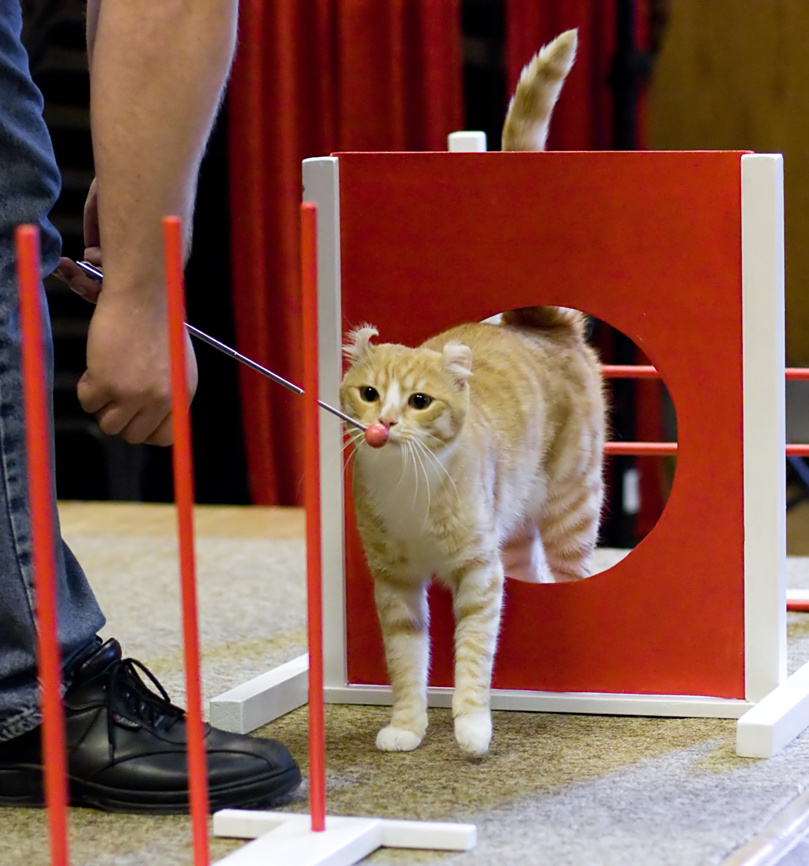
CC BY-SA 2.0 • 809×866 px (279 KB) • Premier ACS, agility demonstration
Responsible Breeding Guidelines
- Curl × domestic pairings: The most common breeding strategy is American Curl (Cc) × domestic cat (cc, straight-eared); expected outcome: ~50% curled (Cc), ~50% straight-eared (cc); this maintains breed health and genetic diversity; straight-eared offspring are not eligible for championship show but make excellent pets.
- Curl × Curl pairings: Two American Curls can be mated, producing a proportion of homozygous (CC) offspring; no health defects have been confirmed in homozygous American Curls (unlike Scottish Fold); however, responsible breeders prefer heterozygous × domestic pairings as a conservative health practice.
- Genetic diversity: The breed was established with intentional domestic cat gene pool contributions; this broad genetic base is considered a major strength of the American Curl and has prevented the inbreeding-related health issues seen in some narrowly founded breeds.
- Curl degree selection: Breeders select for second and third degree curls in show lines; over-curled individuals (tip touching head) are excluded from breeding programs; first-degree curls are placed as pets.
- Ear interior furnishings: Show-quality breeding also selects for abundant silky ear tufts inside the curled ear; these are heavily scored in CFA, TICA, and FIFe show rings.
- Slow maturity: American Curls should not be bred until full physical maturity (minimum 18–24 months); breeding too young compromises the queen’s health and development.

CC BY-SA 2.0 • 595×939 px (170 KB) • Straight-ear sibling from American Curl litter

CC BY-SA 2.0 • 673×800 px (221 KB) • ACS cream bicolor, show cat 2007
Grooming Requirements
- Shorthair (ACS) grooming: Brush 1–2 times per week with a soft-bristle or slicker brush; the flat-lying silky coat with minimal undercoat is very low maintenance; seasonal sheds in spring and autumn require more frequent brushing.
- Longhair (ACL) grooming: Brush 2–3 times per week; the silky semi-long coat with minimal undercoat is less prone to matting than most longhaired breeds; the plumed tail and ear furnishings benefit from gentle combing with a fine-tooth comb.
- Ear cleaning (critical): Every 1–2 weeks: gently clean the interior of the curled ear with a cotton ball moistened with appropriate feline ear cleaner; wipe gently from base to tip along the interior; never use cotton swabs inside the ear canal; never force the ear open or manipulate the curl.
- Nail trimming: Every 2–3 weeks; provide scratching posts to maintain nail condition naturally.
- Dental care: Daily tooth brushing ideal; dental treats and regular professional cleanings as recommended by veterinarian.
Environment & Activity
- Interactive play: The American Curl’s permanent kitten-like playfulness means interactive play sessions (20–30 minutes daily) are important throughout its life; wand toys, puzzle feeders, and fetch games are all effective; enrichment requirements do not diminish significantly with age.
- Indoor living: Best kept indoors or in secure outdoor spaces; the curled ears are not more vulnerable to injury than normal cat ears, but outdoor free-roaming cats face standard risks from vehicles, predators, and disease.
- Multi-pet compatibility: Excellent compatibility with other cats and cat-friendly dogs; gentle introduction recommended; typically adapts well to multi-pet households.
- Nutrition: High-quality protein-rich diet appropriate to age; no breed-specific dietary requirements; monitor weight as some individuals can become overweight with sedentary lifestyle; wet food component recommended for hydration.
1. What is the American Curl cat?
A naturally occurring American domestic cat breed with unique backward-curling ears (dominant mutation), medium size, silky coat (short or semi-long), all colors/patterns accepted, permanent kitten-like personality, and full championship recognition by CFA, TICA, and FIFe.
2. Where does the American Curl come from?
Lakewood, California, USA. In June 1981, Joe and Grace Ruga found a stray longhaired black kitten named Shulamith with unusual backward-curling ears. All American Curls descend from Shulamith. First shown publicly in Palm Springs in 1983; CFA full championship 1999.
3. What makes the American Curl unique?
Its backward-curling ears — a natural dominant mutation giving an alert “happy” expression — plus its health record: unlike the Scottish Fold, the American Curl’s ear mutation does not cause skeletal abnormalities or pain, making it one of the most ethically sound mutation breeds in the cat fancy.
4. Is the American Curl recognized by major cat registries?
Yes. CFA full championship since 1999 (both shorthair and longhair). TICA full championship since 1986. FIFe full championship — exceptional for an American breed. Also ACFA, CCA, and WCF.
5. What is the temperament of the American Curl?
Famous for “Peter Pan syndrome”: retains kitten-like playfulness and curiosity throughout its entire life. Sociable, affectionate, adaptable, excellent with children and other pets. Moderately vocal (soft chirps). Not demanding or clingy.
6. Are American Curl ears healthy?
Yes, when properly cared for. No hearing loss, no skeletal effects in heterozygous cats. The ear canal is normal. Key: regular gentle ear cleaning every 1–2 weeks to prevent debris accumulation; never forcefully manipulate the ear curl. Lifespan: 13–16+ years.
7. How big do American Curls get?
Medium-sized: males 7–10 lbs (3.2–4.5 kg), females 5–8 lbs (2.3–3.6 kg). Semi-foreign body type; moderately muscular. Fully mature at 2–3 years (slow-maturing breed).
8. What are the two varieties of American Curl?
Shorthair (ACS): short, silky, flat-lying coat, minimal undercoat. Longhair (ACL): silky semi-long coat, plumed tail, minimal undercoat, light ruff. Both come in all colors and patterns. Longhair is the original variety (Shulamith was longhaired). Both recognized by CFA, TICA, and FIFe.
9. Do American Curl ear curls cause health problems?
No, in properly bred heterozygous cats. Ears must never be forcefully bent as firm cartilage can fracture. Regular ear cleaning prevents infection. Over-curled cats (tip touching skull) should not be bred. No osteochondrodysplasia (unlike Scottish Fold) documented.
10. How do you care for an American Curl?
Brush 1–2× weekly (ACS) or 2–3× weekly (ACL). Clean ears every 1–2 weeks — gently, never forcefully. 20–30 min daily interactive play (lifelong!). Protein-rich diet with weight monitoring. Annual vet care, FVRCP + rabies vaccinations, parasite prevention.
Explore our trusted network of partner websites covering directories, encyclopedias, marketplaces, education, health, finance, and more across Indonesia and beyond.
- This encyclopedia is educational; reflects current breed documentation as of March 2026.
- All images sourced from Wikimedia Commons MediaSearch (“American Curl cat”) — all are verified American Curl cat images only; all carry open licenses (CC BY-SA 2.0, CC BY-SA 3.0, CC BY-SA 4.0, CC BY 2.0, GNU FDL).
- Health information is for educational purposes only; consult a qualified veterinarian for specific health advice.
- Registry recognition status is accurate as of March 2026; may change.
Primary References
- CFA: Cat Fanciers’ Association; American Curl Breed Standard; recognition history 1999; championship records.
- TICA: The International Cat Association; American Curl breed standard and championship records from 1986.
- FIFe: Fédération Internationale Féline; American Curl EMS code ACL/ACS; breed standard; show results.
- Ruga, G. (oral history): Grace Ruga; founding story of Shulamith; personal accounts of the breed’s origin and early development.
- Lyons, L.A. (2012): Feline genetic diversity; University of California Davis Feline Genetics Laboratory; dominant mutation classification.
- Beco, L. et al. (2004): Ear pinna mutations in domestic cats; veterinary dermatology; American Curl ear canal structure analysis.
Image Attribution Summary (22 Images, All American Curl Cats from Wikimedia Commons Search “American Curl cat”)
- American_curl_2.jpg • CC BY-SA 3.0 • 1,268×904 px (302 KB) • American Curl ~6 months, own photo [hero image]
- American_curl.jpg • GNU FDL • 1,280×1,706 px (324 KB) • American Curl ~1 year, Nov 2004
- American_curl_fond_blanc.jpg • CC BY-SA 3.0 • 800×570 px (85 KB) • Author: Desaix83; derived from American_curl_2.jpg; 31 Dec 2014
- American_curl_kitten2.jpg • CC BY-SA 2.0 • 1,280×941 px (222 KB) • Author: Kitty Terwolbeck; 28 Feb 2008
- American_curl_kitten.jpg • CC BY 2.0 • 800×1,067 px (151 KB) • Author: tanakawho; 4 Jul 2008
- ACL_Americal_curl_(4194132863).jpg • CC BY-SA 2.0 • 4,400×3,744 px (6.29 MB) • Author: Nickolas Titkov; Dec 2009 Moscow cat show
- ACL_Americal_curl_(4194889858).jpg • CC BY-SA 2.0 • 5,616×3,744 px (7.97 MB) • Author: Nickolas Titkov; Dec 2009 Moscow cat show
- ACL_Americal_curl_(4194883392).jpg • CC BY-SA 2.0 • 4,981×3,600 px (7.92 MB) • Author: Nickolas Titkov; Dec 2009 Moscow cat show
- ACL_Americal_curl_(4194125535).jpg • CC BY-SA 2.0 • 5,400×3,400 px (5.57 MB) • Author: Nickolas Titkov; Dec 2009 Moscow cat show
- ACL_Americal_curl_(4194126801).jpg • CC BY-SA 2.0 • 5,588×3,744 px (9.31 MB) • Author: Nickolas Titkov; Dec 2009 Moscow cat show
- ACL_Americal_curl_(4194887120).jpg • CC BY-SA 2.0 • 5,400×3,744 px (7.28 MB) • Author: Nickolas Titkov; Dec 2009 Moscow cat show
- ACL_Americal_curl_(4194130509).jpg • CC BY-SA 2.0 • 3,744×5,000 px (7.56 MB) • Author: Nickolas Titkov; Dec 2009 Moscow cat show
- ACL_Americal_curl_Ear_curling.jpg • CC BY-SA 2.0 • 5,000×3,600 px (5.93 MB) • Author: Dushka; over-curl example
- ACL_Americal_curl_Ear_curling_(cropped).jpg • CC BY-SA 2.0 • 3,362×3,362 px (5.17 MB) • Cropped ear detail
- Judging_American_Curl.jpg • CC BY-SA 2.0 • 1,536×2,048 px (1.83 MB) • Judge Diana Doernberg; 2006 CFA-Iams at Madison Square Garden
- ACL_Pointocurl_Fiorentina_2.jpg • CC BY-SA 2.0 • 3,800×2,500 px (4.8 MB) • Grand Prix Royal Canin, Moscow; Pointocurl Fiorentina ACL fs 24
- Exposition_FIFé_Vitré_10.JPG • CC BY-SA 3.0 • 2,256×1,692 px (893 KB) • FIFé show Vitré, France; 16 Nov 2014
- Magnificat_Gimlet_Curl_(Kaija)_ACL_g_21_33.JPG • CC BY-SA 2.0 • 816×888 px (177 KB) • Kaija at Riihimäki cat show
- Siriuksen_CandyCurl_ACL_g_09.JPG • CC BY-SA 2.0 • 746×780 px (162 KB) • Hyvinkää cat show 2007; ACL blue
- SP,GIC_Siriuksen_LeoCurl_(Figaro)_ACL_n_24.JPG • CC BY-SA 2.0 • 1,089×1,102 px (406 KB) • ACL champion, Jämsä Finland
- Jokihelmi_Ceri_ACL_n_24_male_EX1_CAP_NOM.JPG • CC BY-SA 2.0 • 1,199×1,001 px (559 KB) • ACL champion, Lahti Finland 2011
- EC_Recknagel_Annakurnikoova_ACS_gs_24.JPG • CC BY-SA 2.0 • 613×830 px (241 KB) • ACS European Champion, Turku Finland 2007
- Siriuksen_QuintaCurl_ACS_x_f_24_03_71.JPG • CC BY-SA 2.0 • 595×939 px (170 KB) • ACS straight-ear sibling; Klaukkala Finland
- Siriuksen_IrekCurl_ACS_c_22.jpg • CC BY-SA 2.0 • 673×800 px (221 KB) • ACS cream bicolor; PIROK Tampere 2007
- PR_Siriuksen_EeroCurl_ACS_ds_09_24_2.JPG • CC BY-SA 2.0 • 809×866 px (279 KB) • Premier ACS agility demo
- Ханнелора_-порода_Американский_керл.jpg (CC BY-SA 4.0) & Ханнелора_-_порода_Американский_керл.jpg (CC BY-SA 4.0) • American Curl breed, Hannelora
- ShiningCurl_Lepel_ZBS_kitten.jpg • CC BY-SA 2.0 • 3,000×2,500 px (2.9 MB) • ShiningCurl cattery kitten
- 2_posing_cat_(5584771957).jpg • CC BY-SA 2.0 • 3,456×5,184 px (5.68 MB) • Half-American Curl Chai; Author: Takashi Hososhima
About the Author: Encyclopedia.guru Expert Writing Team
The Encyclopedia.guru writing team consists of experienced feline researchers, certified cat breed specialists, veterinary consultants, and professional animal science writers. Specialists in American cat breeds, CFA/TICA/FIFe breed standards, dominant genetic mutations, cat show documentation, and feline behavior science.
🌐 Visit Encyclopedia.guru – 80+ comprehensive cat breed encyclopedias and 100+ dog breed encyclopedias.
© 2026 – Encyclopedia.guru – American Curl Cat Encyclopedia (Felis catus)
CFA, TICA & FIFe Recognized • Backward-Curled Ear Breed • Shulamith Origin 1981 • Lakewood California USA • 22+ Wikimedia Commons images with full attribution • Updated: 24 March 2026