🐎 Ultimate Horse Breed Encyclopedia A–Z
The most comprehensive online horse breed reference — 99 horse and pony breeds from every continent, with origins, types, disciplines, and key characteristics.
🐎 What is a Horse Breed?
A horse breed is a group of horses with consistent characteristics — including conformation, color, performance ability, and genetic traits — that are heritable and have been selected by humans over generations. Today, the world recognizes over 350 distinct horse breeds, ranging from the tiny Falabella miniature (25–34 inches) to the towering Shire horse (up to 19 hands). The domestication of horses began approximately 5,500 years ago on the Eurasian steppe, and selective breeding has produced an extraordinary diversity of types suited for war, agriculture, racing, sport, and companionship.
Modern classification divides horses into six primary categories: Light / Hotblood breeds (Arabian, Thoroughbred) bred for speed and endurance; Warmblood breeds (Hanoverian, KWPN) developed for Olympic sport; Draft breeds (Clydesdale, Shire) for heavy work; Pony breeds (Shetland, Welsh) standing under 14.2 hands; Gaited breeds (Tennessee Walker, Icelandic) with specialty ambling gaits; and Wild / Feral populations (Mustang, Przewalski’s) living free of human domestication.
This encyclopedia covers 99 horse and pony breeds from across all continents, compiled from AQHA, FEI, FAO DAD-IS, Jockey Club records, major studbook organizations, and Wikipedia breed registries — providing the most authoritative and comprehensive online equine reference available at Encyclopedia.Guru/horse-breed/.
 © Wikimedia Commons (CC)
Akhal-Teke
Light / HotThe ‘Golden Horse’ with metallic coat sheen. Exceptional endurance with only ~6,600 worldwide. Won Olympic dressage gold in 1960.
Akhal-Teke → © Wikimedia Commons (CC)
American Cream Draft
DraftThe only draft breed developed in the U.S. with stunning gold champagne coat. Critically rare and endangered heritage breed.
American Cream Draft → © Wikimedia Commons (CC)
American Paint Horse
Light / HotColorful coat patterns combined with Quarter Horse build and calm temperament. #3 most popular in North America with ~50,000 new registrations per year.
American Paint Horse → © Wikimedia Commons (CC)
American Quarter Horse
Light / HotThe #1 breed in North America with 42.1% population share and 6M+ registered. Explosive sprint speed and muscular hindquarters.
American Quarter Horse → © Wikimedia Commons (CC)
American Saddlebred
GaitedThe ‘Peacock of the Horse World’ — five-gaited show horse with animated high-step trot and elegant presence in the show ring.
American Saddlebred → © Wikimedia Commons (CC)
American Warmblood
WarmbloodOpen registry combining various warmblood lines for Olympic-level competition across dressage, jumping, and eventing disciplines.
American Warmblood → © Wikimedia Commons (CC)
Andalusian (PRE)
Light / HotBaroque horse heavily muscled yet agile. Bred for royalty and classical dressage, known for powerful collection and presence.
Andalusian (PRE) → © Wikimedia Commons (CC)
Appaloosa
Light / HotSpotted coat breed originated with the Nez Perce tribe. Sure-footed, versatile, and #12 in North America with 1.9% population share.
Appaloosa → © Wikimedia Commons (CC)
Arabian
Light / HotThe oldest modern breed with 3,500+ years of history. Foundation of virtually all modern riding breeds. Known for endurance and refined head.
Arabian → © Wikimedia Commons (CC)
Ardennais
DraftOne of the oldest draft breeds in existence. Extremely heavy-boned and powerful, used historically as warhorses and farm workers.
Ardennais → © Wikimedia Commons (CC)
Australian Brumby
Wild / FeralFeral horses descended from horses released by early settlers. Subject to controversial population management across Australia.
Australian Brumby → © Wikimedia Commons (CC)
Australian Stock Horse
Light / HotDeveloped for the demanding conditions of the Australian outback. Athletic, tough, and intelligent with excellent cattle-working ability.
Australian Stock Horse → © Wikimedia Commons (CC)
Bashkir Curly
Light / HotRare breed with a uniquely hypoallergenic curly coat. Calm temperament and hardy constitution make them ideal for allergy-suffering riders.
Bashkir Curly → © Wikimedia Commons (CC)
Belgian Draft
DraftThe most common heavy draft in North America. Powerfully built at 1,800–2,200 lbs with a thick, muscular body ideal for pulling.
Belgian Draft → © Wikimedia Commons (CC)
Belgian Warmblood (BWP)
WarmbloodRising star in international show jumping. Athletic and talented but needs an experienced rider and firm hand.
Belgian Warmblood (BWP) → © Wikimedia Commons (CC)
Boulonnais
DraftKnown as the ‘White Marble Horse’ for its elegant appearance. One of the most refined draft breeds despite its power.
Boulonnais →
© Wikimedia Commons (CC)
Brumby
Wild / FeralAustralia’s iconic feral horse population descended from escaped colonial-era horses. Hardy survivors of extreme outback conditions.
Brumby → © Wikimedia Commons (CC)
Camargue
Wild / FeralSemi-feral white horses of the Rhône Delta. An ancient breed that lives in the marshy wetlands and is central to regional culture.
Camargue → © Wikimedia Commons (CC)
Canadian Horse
Light / HotNational breed of Canada, known as the ‘Little Iron Horse’ for incredible toughness and versatility despite its modest size.
Canadian Horse → © Wikimedia Commons (CC)
Carolina Marsh Tacky
Light / HotColonial Spanish heritage breed adapted to the marshy lowcountry of South Carolina. Small, agile, and historically significant.
Carolina Marsh Tacky → © Wikimedia Commons (CC)
Caspian Horse
PonyOne of the oldest horse breeds in the world, standing only 10–12 hands. Rediscovered in 1965 after being thought extinct for centuries.
Caspian Horse → © Wikimedia Commons (CC)
Chincoteague Pony
PonyFamous feral ponies of Assateague Island, known worldwide from the book ‘Misty of Chincoteague.’ Annual pony swim draws thousands.
Chincoteague Pony → © Wikimedia Commons (CC)
Cleveland Bay
Light / HotThe oldest English horse breed, always bay in color. Versatile carriage horse with royal connections to the British Crown.
Cleveland Bay → © Wikimedia Commons (CC)
Clydesdale
DraftIconic bay draft with white feathered legs at 16–18 hands and 1,700–2,200 lbs. World-famous as the Budweiser hitch horses.
Clydesdale → © Wikimedia Commons (CC)
Comtois
DraftMedium-sized French draft with a distinctive chestnut coat and flaxen mane. One of the most popular draft breeds in France.
Comtois → © Wikimedia Commons (CC)
Connemara Pony
PonyIreland’s only indigenous breed with exceptional jumping ability relative to size. Standing 13–14.2 hands, excels in junior competitions.
Connemara Pony → © Wikimedia Commons (CC)
Criollo
Light / HotCompact and incredibly hardy Gaucho mount bred for harsh South American conditions. One of the greatest endurance breeds worldwide.
Criollo → © Wikimedia Commons (CC)
Dales Pony
PonyNorthern English breed historically used as lead-mining pack ponies. Now popular for driving and riding at 14–14.2 hands.
Dales Pony → © Wikimedia Commons (CC)
Danish Warmblood
WarmbloodNewer studbook with excellent results in international dressage and show jumping competitions. Rapidly gaining worldwide recognition.
Danish Warmblood → © Wikimedia Commons (CC)
Dartmoor Pony
PonyHardy moorland breed standing up to 12.2 hands. Historically used to breed polo ponies and now popular as children’s riding ponies.
Dartmoor Pony → © Wikimedia Commons (CC)
Dutch Draft
DraftPowerful Dutch heavy draft breed at 15.2–16.2 hands. Popular in competitive pulling events and agricultural work.
Dutch Draft → © Wikimedia Commons (CC)
Dutch Warmblood (KWPN)
WarmbloodThe most common dressage competitor globally and Olympic favorite. Athletic, calm, and excels across dressage and show jumping.
Dutch Warmblood (KWPN) → © Wikimedia Commons (CC)
Eriskay Pony
PonyCritically rare — the last surviving purely native Scottish pony breed. Hardy and gentle with a waterproof double coat.
Eriskay Pony → © Wikimedia Commons (CC)
Exmoor Pony
PonyOne of the oldest and rarest British native breeds. Thick-coated moorland ponies now used as conservation grazers.
Exmoor Pony → © Wikimedia Commons (CC)
Falabella
PonyOne of the smallest horse breeds in the world at just 25–34 inches. Proportionally structured miniature with full horse conformation.
Falabella → © Wikimedia Commons (CC)
Fell Pony
PonyNorthern English breed standing 13–14 hands. Strong, sure-footed, and versatile for both driving and riding in rugged terrain.
Fell Pony → © Wikimedia Commons (CC)
Florida Cracker Horse
Light / HotColonial Spanish heritage breed — small, agile cattle horse adapted to Florida’s humid climate and rough terrain.
Florida Cracker Horse → © Wikimedia Commons (CC)
Frederiksborger
Light / HotHistoric Danish court horse dating to the 16th century. Once prized for haute école dressage and royal carriage use.
Frederiksborger → © Wikimedia Commons (CC)
French Trotter
Light / HotOne of Europe’s top harness racing breeds. Bred for speed and endurance at the trot with a strong competitive record.
French Trotter → © Wikimedia Commons (CC)
Friesian
DraftMajestic all-black breed with flowing mane and feathered feet at 15–17 hands. Agile for a draft and increasingly popular in dressage.
Friesian → © Wikimedia Commons (CC)
Garrano
Wild / FeralSemi-feral mountain pony of Iberian heritage. Lives in the rugged highlands of northern Portugal and is culturally protected.
Garrano → © Wikimedia Commons (CC)
Gelderland
WarmbloodDutch carriage and riding horse that contributed to the Dutch Warmblood. Known for high-stepping action and kind temperament.
Gelderland → © Wikimedia Commons (CC)
Gotland Pony
PonyAncient Scandinavian breed from the island of Gotland. One of the oldest pony breeds, standing 11.2–13 hands.
Gotland Pony → © Wikimedia Commons (CC)
Gypsy Vanner (Cob)
DraftCompact and strong with heavy feathering and striking piebald or skewbald coat patterns. Originally bred by Romani travelers.
Gypsy Vanner (Cob) → © Wikimedia Commons (CC)
Hackney
Light / HotHigh-stepping carriage horse known for brilliant trot action. Showring star in harness classes with flashy knee action.
Hackney → © Wikimedia Commons (CC)
Haflinger
PonyGolden chestnut with distinctive flaxen mane and tail. Versatile, gentle, and classified as horse despite pony size at 13.2–15 hands.
Haflinger → © Wikimedia Commons (CC)
Hanoverian
Warmblood25+ Olympic gold medals across all disciplines. Reliable, athletic, and the benchmark warmblood for dressage and show jumping.
Hanoverian → © Wikimedia Commons (CC)
Highland Pony
PonyThick-coated Scottish native standing 13–14.2 hands. Sturdy, cold-adapted, and traditionally used as a deer-stalking pony.
Highland Pony → © Wikimedia Commons (CC)
Holsteiner
WarmbloodDominant force in show jumping worldwide. Excellent temperament, power, and scope make it the top choice for international jumping.
Holsteiner → © Wikimedia Commons (CC)
Hungarian Warmblood
WarmbloodBred from Hungarian foundation stock including Gidran, Nonius, and Shagya Arabian lines for sport and competition.
Hungarian Warmblood → © Wikimedia Commons (CC)
Icelandic Horse
GaitedThe only breed with five natural gaits including the tölt and flying pace. Hardy, cold-adapted, and pure-bred for 1,000+ years in isolation.
Icelandic Horse → © Wikimedia Commons (CC)
Irish Draught
DraftFoundation of the Irish Sport Horse. A lighter draft build at 15.2–17 hands, bred for farm work and now crossed for sport.
Irish Draught → © Wikimedia Commons (CC)
Irish Sport Horse
WarmbloodThoroughbred × Irish Draught cross. Brave, strong, and exceptional stamina makes it an eventing star at the highest levels.
Irish Sport Horse → © Wikimedia Commons (CC)
Jutland
DraftDanish heavy draft breed with a compact, powerful build. Historically used for agricultural work and now for draft shows and driving.
Jutland → © Wikimedia Commons (CC)
Kaimanawa Horse
Wild / FeralFeral horse population managed by the New Zealand government. Descended from various domestic breeds released over centuries.
Kaimanawa Horse → © Wikimedia Commons (CC)
Kathiawari
Light / HotIndian breed from the Kathiawar peninsula with distinctive inward-curving ear tips. Hardy desert horse used in ceremonies and sport.
Kathiawari → © Wikimedia Commons (CC)
Kentucky Mountain Saddle Horse
GaitedNatural ambling gait with calm temperament. Similar to the Rocky Mountain Horse, bred for easy riding on mountain trails.
Kentucky Mountain Saddle Horse → © Wikimedia Commons (CC)
Kiger Mustang
Wild / FeralSpanish Colonial sub-type with dun coloring. Genetically distinct from mixed mustangs, they descend from original Spanish horses.
Kiger Mustang → © Wikimedia Commons (CC)
Knabstrupper
Light / HotSpotted coat like an equine Dalmatian. A rare Danish breed known for its striking leopard-complex coat patterns.
Knabstrupper → © Wikimedia Commons (CC)
Konik
PonyPolish primitive pony believed to descend from the extinct Tarpan. Used in rewilding and conservation grazing projects across Europe.
Konik → © Wikimedia Commons (CC)
Lipizzan
Light / HotThe famous white horses of the Spanish Riding School of Vienna. Masters of classical Baroque dressage haute école movements.
Lipizzan → © Wikimedia Commons (CC)
Lusitano
Light / HotClassical dressage specialist and bullfighting horse. An Iberian warmblood sharing ancestry with the Andalusian.
Lusitano → © Wikimedia Commons (CC)
Mangalarga Marchador
GaitedBrazil’s most popular breed with unique four-beat marcha gaits (batida and picada). Versatile and comfortable for long-distance riding.
Mangalarga Marchador → © Wikimedia Commons (CC)
Marwari
Light / HotDistinctive inward-curving ear tips unique among horse breeds. Indian desert breed used in ceremonies and prized for beauty.
Marwari → © Wikimedia Commons (CC)
Miniature Horse
PonyStanding under 8.5 hands, the #4 breed in North America (5.1%). Popular as companion animals, therapy horses, and in driving shows.
Miniature Horse → © Wikimedia Commons (CC)
Missouri Fox Trotter
GaitedSmooth diagonal ‘fox trot’ four-beat gait makes this an ideal trail horse. Popular for competitive trail riding and endurance.
Missouri Fox Trotter → © Wikimedia Commons (CC)
Mongolian Horse
PonySmall but incredibly tough — central to Mongolian nomadic culture for millennia. The backbone of Genghis Khan’s cavalry.
Mongolian Horse → © Wikimedia Commons (CC)
Morgan
Light / HotThe earliest American breed and Vermont state animal. Versatile, willing, and sturdy with ~90,000 living registered horses.
Morgan → © Wikimedia Commons (CC)
Murgese
Light / HotItalian breed from the Murge region of Apulia. Primarily black, versatile for riding and light agricultural work.
Murgese → © Wikimedia Commons (CC)
Mustang
Wild / FeralFree-roaming feral horses descended from Spanish horses brought in the 15th century. Protected by federal law since 1971.
Mustang → © Wikimedia Commons (CC)
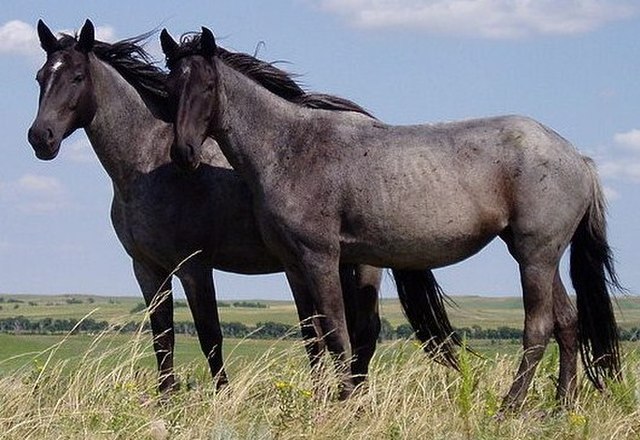
Nokota Horse
Wild / FeralRare semi-feral horses descended from Sitting Bull’s Lakota Sioux horses. Bred on the Theodore Roosevelt National Park.
Nokota Horse → © Wikimedia Commons (CC)
Noriker
DraftAncient alpine draft horse from the Austrian Alps. Bred for mountain terrain work since Roman times.
Noriker → © Wikimedia Commons (CC)
Norwegian Fjord
PonyOne of the world’s oldest and purest breeds with distinctive dun color and bi-color mane. Vikings used these horses.
Norwegian Fjord → © Wikimedia Commons (CC)
Oldenburg
WarmbloodOne of the largest warmblood registries. Powerful, elastic mover excellent in dressage and show jumping at the highest levels.
Oldenburg → © Wikimedia Commons (CC)
Orlov Trotter
Light / HotMost famous Russian breed created by Count Orlov in 18th century. Dominant in Russian harness racing.
Orlov Trotter → © Wikimedia Commons (CC)
Paso Fino
GaitedNatural smooth four-beat lateral gait at three speeds: fino, corto, and largo. 500+ year history with distinctive ‘brio’ (spirit).
Paso Fino → © Wikimedia Commons (CC)
Percheron
DraftVersatile heavy draft originally bred as warhorses at 15.2–17 hands and 1,500+ lbs. The best mover among all draft breeds.
Percheron → © Wikimedia Commons (CC)
Peruvian Paso
GaitedInherited smooth lateral gait called paso llano descended from Spanish Jennets. The smoothest riding horse in the world.
Peruvian Paso → © Wikimedia Commons (CC)
Pony of the Americas
PonyAppaloosa-type markings on a children’s sport pony at 11.2–14 hands. Specifically developed as a youth riding mount.
Pony of the Americas → © Wikimedia Commons (CC)
Przewalski’s Horse
Wild / FeralThe only truly wild horse never domesticated, with 33 chromosome pairs vs 32 for domestic horses. Successfully reintroduced from captive breeding.
Przewalski’s Horse →
© Wikimedia Commons (CC)
Quarter Horse
Light / HotMost registered breed in the world. Named for its unbeatable speed over a quarter-mile distance.
Quarter Horse → © Wikimedia Commons (CC)
Quarab
Light / HotArabian and Quarter Horse cross. Combines Arabian refinement with Quarter Horse athleticism for versatile sport and trail use.
Quarab → © Wikimedia Commons (CC)
Racking Horse
GaitedAlabama state horse performing a fast single-foot rack gait. Combines speed with exceptional smoothness for the rider.
Racking Horse → © Wikimedia Commons (CC)
Rocky Mountain Horse
GaitedNatural chocolate coat with flaxen mane and smooth single-foot ambling gait. Gentle and ideal for mountain trail riding.
Rocky Mountain Horse → © Wikimedia Commons (CC)
Selle Français
WarmbloodFrance’s top warmblood sport horse. Excellent show jumper producing consistent international-level competition horses.
Selle Français → © Wikimedia Commons (CC)
Shetland Pony
PonyThe most popular pony breed worldwide. Tiny at 7–11.2 hands but incredibly strong — can pull twice its own body weight.
Shetland Pony → © Wikimedia Commons (CC)
Shire Horse
DraftThe tallest horse breed at 16–19 hands and weighing 1,800–2,400 lbs. Holds world records for size and pulling power.
Shire Horse → © Wikimedia Commons (CC)
Spanish Mustang
Wild / FeralColonial Spanish horse descended from Iberian stock brought by conquistadors. Genetically distinct heritage breed.
Spanish Mustang → © Wikimedia Commons (CC)
Standardbred
Light / HotWorld’s fastest harness racing horse. Bred specifically for trotting and pacing at speed on the track.
Standardbred → © Wikimedia Commons (CC)
Suffolk Punch
DraftAlways chestnut — the only British draft breed with only one coat color. Critically endangered with fewer than 500 worldwide.
Suffolk Punch → © Wikimedia Commons (CC)
Swedish Warmblood
WarmbloodConsistently strong Olympic performer in all three disciplines. Known for excellent rideability and balanced temperament.
Swedish Warmblood → © Wikimedia Commons (CC)
Tennessee Walking Horse
GaitedSmooth four-beat running walk makes it the most popular gaited breed in North America (4.5%). Gentle and ideal for pleasure riding.
Tennessee Walking Horse → © Wikimedia Commons (CC)
Thoroughbred
Light / HotThe fastest breed over distance with top speed of 43.97 mph. #2 in North America (7.1%) and the foundation of modern flat racing.
Thoroughbred → © Wikimedia Commons (CC)
Trakehner
WarmbloodThe lightest warmblood breed excelling in dressage, eventing, and jumping. Great stamina from Thoroughbred-Arabian pedigree.
Trakehner → © Wikimedia Commons (CC)
Vladimir Heavy Draft
DraftSoviet-era heavy draft at 15.1–16.1 hands. Strong, tractable, and developed for agriculture and heavy hauling in Russia.
Vladimir Heavy Draft → © Wikimedia Commons (CC)
Welsh Pony (Sections A–D)
PonyExtremely versatile British breed in four sections by size from 11–15 hands. Grace, endurance, and intelligence define this iconic pony.
Welsh Pony (Sections A–D) → © Wikimedia Commons (CC)
Westphalian
WarmbloodFamous Olympic-level show jumper with one of the largest warmblood studbooks in Germany alongside the Hanoverian.
Westphalian → © Wikimedia Commons (CC)
Zebra
Wild / FeralThe iconic striped wild equid of Africa — not a horse breed, but a horse relative. Three species: plains, mountain, and Grevy’s.
Zebra → © Wikimedia Commons (CC)
Zemaitukas
PonyAncient Lithuanian forest pony, one of the oldest breeds in Europe. Hardy, small, and critically endangered.
Zemaitukas →❓ Frequently Asked Questions — Horse Breeds
What is the most popular horse breed in the world?
The American Quarter Horse is the most registered breed worldwide with over 6 million horses on record. In North America it accounts for 42.1% of the horse population. Globally, it is celebrated for its explosive quarter-mile speed, calm temperament, and extraordinary versatility in Western disciplines.
What is the oldest horse breed still alive today?
The Arabian horse is widely recognized as the oldest modern horse breed, with a documented history spanning over 3,500 years on the Arabian Peninsula. It is the foundation sire breed for virtually all modern light horse breeds, including the Thoroughbred, Morgan, and Standardbred.
What is the tallest horse breed?
The Shire Horse (England) is the world’s tallest horse breed, standing 16–19 hands (64–76 inches) and weighing 1,800–2,400 lbs. The world record for tallest horse is held by a Shire named Sampson (later renamed Mammoth), who stood 21.25 hands in 1850.
What is the only truly wild horse?
Przewalski’s Horse is the only true wild horse never domesticated by humans. Unlike feral Mustangs or Brumbies (which are descended from domestic horses), Przewalski’s Horse has 33 chromosome pairs vs 32 in domestic horses. It was declared extinct in the wild in 1969, but successful captive breeding and reintroduction programs have restored wild populations in Mongolia and Central Asia.
What is the difference between a pony and a horse?
The primary distinction is height: a pony stands 14.2 hands (58 inches) or shorter, while a horse stands taller. However, some breeds like the Haflinger and Icelandic Horse are technically ponies by height but are called “horses” by tradition. Ponies also tend to have proportionally thicker necks, shorter legs, and denser coats than horses.
🐎 Featured Horse Breeds

Arabian
Read More →
Thoroughbred
Read More →
Friesian
Read More →
Mustang
Read More →
Hanoverian
Read More →
Icelandic Horse
Read More →
Shetland Pony
Read More →
Clydesdale
Read More →
Appaloosa
Read More →
Andalusian (PRE)
Read More →
🐎 Ultimate Horse Breed Encyclopedia
© 2026 Encyclopedia.Guru/horse-breed/ — 99 horse breeds documented — All rights reserved.
Images © Wikimedia Commons under Creative Commons licenses — Optimized via wsrv.nl API