🐕 Dalmatian Dog Encyclopedia (Canis familiaris)
Complete professional breed reference: Croatian origins & ancient history, physical conformation standards, unique spotted coat genetics (MITF gene), temperament analysis, health predispositions (congenital deafness, uric acid metabolism), grooming protocols, training methodologies, nutrition optimization, exercise requirements, and comprehensive ownership guide
By Encyclopedia.guru Expert Writing Team | Published: January 30, 2026 | Updated: March 2, 2026 | Reviewed by Certified Breed Specialists, Veterinary Consultants & Canine Geneticists

File: Dalmatian_and_Dobermann.jpg
License: CC BY-SA 3.0 (Creative Commons Attribution-ShareAlike)
Subject: Modern Dalmatian showing characteristic spotted coat, athletic build, and breed-standard conformation typical of Croatian heritage carriage dogs
Usage Note: Image used under Creative Commons CC BY-SA 3.0 licensing with proper attribution for non-commercial educational breed documentation.
The Dalmatian represents one of the most instantly recognizable and iconic breeds in the canine world, distinguished by its unique spotted coat, athletic build, and energetic temperament. Originating in the Dalmatia region of Croatia, this breed served diverse historical roles including carriage dog, coach dog, guard dog, firehouse mascot, and companion. The Dalmatian’s spotted pattern is genetically unique—controlled by the extreme piebald MITF gene—and has made the breed a cultural icon for centuries.
What makes the Dalmatian particularly fascinating is its extraordinary genetic makeup: puppies are born pure white, with spots developing gradually during the first weeks of life. Each dog’s pattern is entirely unique, like a fingerprint. Beyond appearance, Dalmatians possess exceptional endurance, intelligence, and loyalty—traits that made them invaluable as carriage dogs capable of running 20–30 miles alongside horse-drawn vehicles. For developmental details, see our Dalmatian Puppies & Young Dogs encyclopedia; for historical documentation, our Dalmatian Historical Encyclopedia.
- Origin: Croatia (Dalmatia region); ancient breed documented since 17th–18th century; evolved as carriage dogs and firehouse mascots.
- Distinctive feature: Born pure white; spots develop at 10–14 days; controlled by MITF gene; each pattern unique like fingerprints.
- Deafness: 8–12% born bilaterally deaf, 17–22% unilaterally deaf; BAER testing essential at 6–8 weeks.
- Unique metabolism: Excrete uric acid (not allantoin); predisposed to urate stones; low-purine diet required.
- Exercise: Bred to run 20–30 miles alongside carriages; requires 1–2 hours daily vigorous exercise minimum.
- Temperament: Energetic, highly intelligent, loyal, playful; responds best to positive reinforcement training.
- Lifespan: 11–13 years typical; some reach 15–16 years with optimal care.
- Shedding: Heavy year-round shedding despite short coat; weekly brushing essential.
Breed Classification & Recognition
- AKC Group: Non-Sporting Group (recognized since 1888)
- The Kennel Club (UK): Utility Group
- FCI Classification: Group 6 (Scent Hounds and Related Breeds) – Section 3 (Related Breeds)
- Original Purpose: Carriage dog, coach dog, guard dog, firehouse mascot
- Modern Role: Companion dog, show dog, performance sports, therapy dog
Why Dalmatians Have Endured
The Dalmatian’s sustained popularity over multiple centuries stems from an exceptional combination of traits: an instantly recognizable spotted coat creating universal appeal, medium-large size suitable for active families, high intelligence and trainability for versatile working ability, exceptional athleticism and endurance, loyal and protective nature, and cultural icon status through media representation—notably Disney’s “101 Dalmatians.” These factors have kept Dalmatians popular despite their substantial exercise requirements.
The Dalmatian’s history spans several centuries, with documented evidence placing the breed’s origins in the Dalmatia region of Croatia. For extensive pre-1950 documentation with Victorian photography, Civil War records, and historical paintings, see our Dalmatian Dog Historical Encyclopedia.
Ancient Origins: The Dalmatia Region (Pre-1600s)
Evidence suggests spotted dogs similar to modern Dalmatians existed in the Mediterranean for thousands of years. Ancient Egyptian tomb paintings and Greek friezes depict spotted dogs, though direct lineage cannot be confirmed. The breed takes its name from Dalmatia, a coastal region of Croatia along the Adriatic Sea.
European Development: The Carriage Dog Era (1600s–1800s)
During the 17th–19th centuries, Dalmatians became renowned as “carriage dogs” or “coach dogs.” British aristocracy used Dalmatians to run alongside horse-drawn carriages as status symbols and practical guards. The dogs’ natural affinity for horses, exceptional endurance (20–30 miles alongside carriages), and protective instincts made them perfect for this role.
Victorian Era & Standardization
| Year | Event | Significance |
|---|---|---|
| 1862 | First Dalmatian exhibited at English dog show | Beginning of formal breed recognition |
| 1888 | AKC recognizes Dalmatian | Official U.S. breed recognition |
| 1890 | First breed standard written in England | Formal physical/temperament specs |
| 1905 | Dalmatian Club of America founded | American breed club established |
American Firehouse Tradition
In the United States, Dalmatians became synonymous with firehouses during the horse-drawn fire wagon era. They ran ahead to clear streets, calmed horses at fire scenes, and guarded equipment. Even after motorized trucks replaced horse-drawn wagons, many firehouses kept Dalmatians as mascots.
Modern Era
Today Dalmatians serve primarily as companion animals and show dogs. The breed experienced a surge in popularity following Disney’s “101 Dalmatians” (1961, 1996 remake), leading to both increased admiration and concerns about irresponsible breeding. Modern breeders focus on health, temperament, and working abilities. For show standards, see our Dalmatian Show Dogs encyclopedia.
Modern Dalmatian breed photography from the 2000s demonstrates consistent breed type maintained through selective breeding programs worldwide.
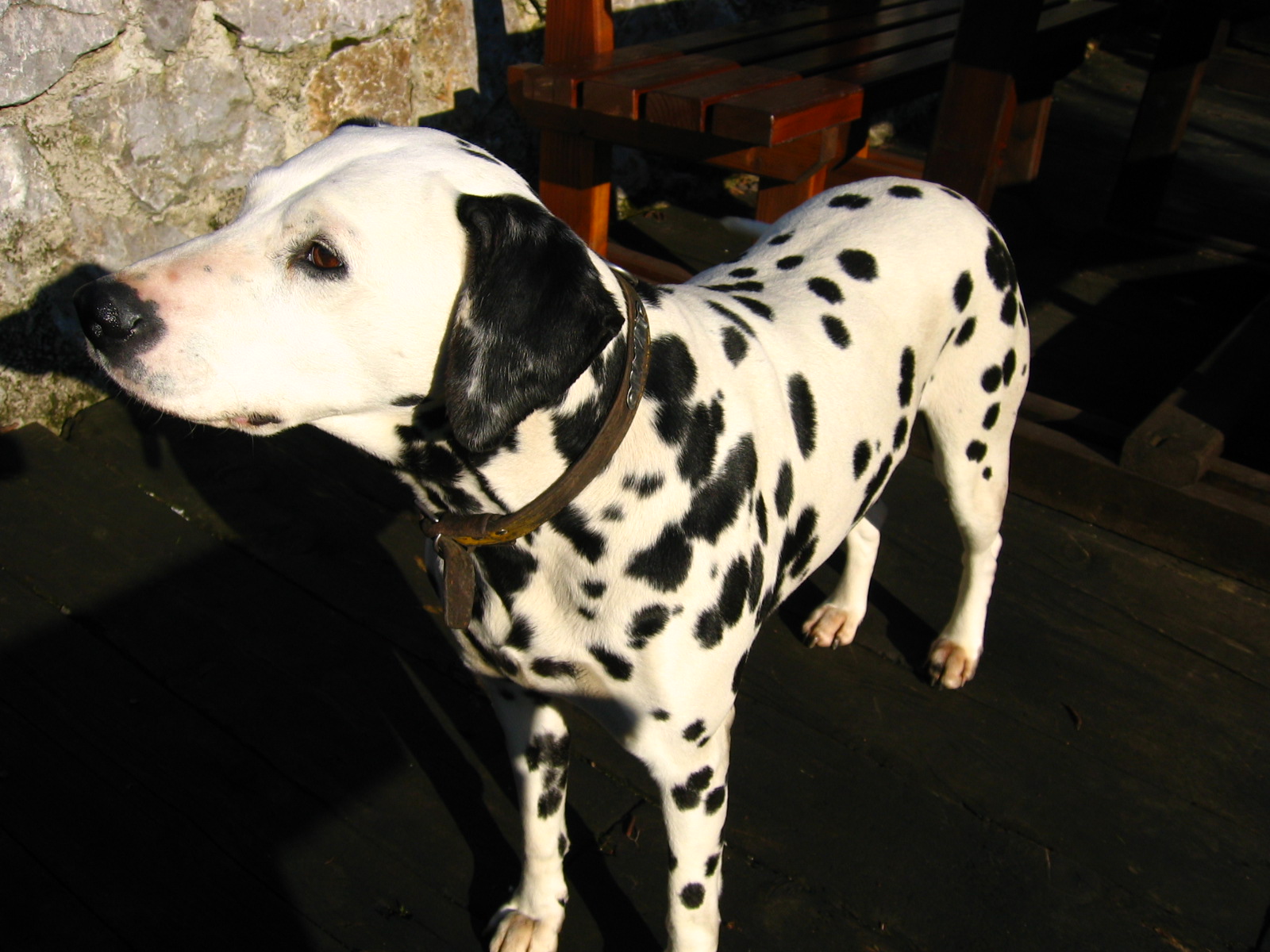
Source: Wikimedia Commons | CC BY-SA 3.0 | Classic breed characteristics in Croatian homeland setting

Source: Wikimedia Commons | CC BY-SA 2.5 | Behavioral documentation showing breed temperament and energy

Source: Wikimedia Commons | CC BY-SA 3.0 | Championship conformation at international exhibition
General Appearance
- Overall Balance: Well-balanced, strong, muscular, and active; capable of great endurance combined with speed.
- Body Proportions: Square or slightly longer than tall (ratio ~10:9); well-developed forechest; level topline.
- Substance: Medium to large size with substantial bone without coarseness; refined but athletic.
- Movement: Distinctive trotting gait with long, powerful strides; excellent reach and drive; bred for endurance running.
Size & Weight Standards
| Measurement | Males | Females |
|---|---|---|
| Height at Withers | 23–24″ (58–61 cm) | 22–23″ (56–58 cm) |
| Weight Range | 45–70 lbs (20–32 kg) | 45–65 lbs (20–29 kg) |
| Body Length | Approximately equal to or slightly greater than height | |
Head & Expression
- Skull: Flat with slight stop; moderate width between ears; no prominent occiput.
- Muzzle: Long and powerful; approximately equal to skull length.
- Eyes: Moderately sized, round; dark brown in black-spotted dogs, amber in liver-spotted dogs.
- Ears: Set high, moderate size, tapered; carried close to head; thin texture with spotted pattern.
- Nose: Black in black-spotted dogs, brown in liver-spotted dogs; completely pigmented.
Coat Texture & Shedding
- Coat Type: Short, dense, fine, sleek coat lying close to body; glossy appearance.
- Texture: Hard, short hairs; neither woolly nor silky.
- Shedding: Heavy year-round; short white hairs shed constantly requiring regular brushing.
- Grooming: Weekly brushing minimum with rubber curry brush; bathing every 4–8 weeks.
The Dalmatian’s spotted coat is controlled by complex genetic mechanisms unique in the canine world. For a detailed developmental timeline from birth through adulthood, see our Dalmatian Puppies & Young Dogs encyclopedia.
Coat Genetics & Development
- Birth Appearance: Dalmatian puppies are born pure white; spots begin appearing at 10–14 days of age.
- Spot Development: Spots continue developing and darkening for 12–16 weeks; full pattern visible by 4 months.
- Genetic Control: Extreme piebald spotting controlled by MITF gene (microphthalmia-associated transcription factor); unique expression in Dalmatians.
- Individual Variation: Each dog’s pattern is entirely unique like a fingerprint; no two Dalmatians have identical distributions.
- Spot Colors: Black spots or liver (brown) spots on white; never both colors on the same dog.
Breed Standard Spot Specifications
| Aspect | Ideal Standard | Faults |
|---|---|---|
| Spot Color | Dense black or liver brown; clearly defined edges | Muddy, indistinct spots; mixed colors |
| Spot Size | Dime to half-dollar (2–6 cm); uniform distribution | Too large or too small; uneven |
| Distribution | Well-distributed over entire body; not overlapping | Large solid patches; heavily merged |
| Ear Spots | Spotted rather than solid (preferred) | Completely solid-colored ears |
The Dalmatian temperament reflects the breed’s historical development as a versatile working dog. Understanding it is crucial for potential owners, as this breed requires substantial time, exercise, and training commitment.
Core Temperament Traits
- Energy Level: Very high; requires 1–2 hours minimum daily vigorous exercise; bred for endurance running.
- Intelligence: Highly intelligent; capable of complex tasks; can be independent thinkers.
- Loyalty: Extremely loyal and devoted to family; forms strong bonds.
- Playfulness: Playful throughout life; maintains puppy-like enthusiasm into adulthood.
- Alertness: Very alert and aware; excellent watchdog instincts.
- Social Nature: Generally outgoing when properly socialized; thrives on human companionship.
Behavioral Profile
| Context | Behavior |
|---|---|
| With Family | Affectionate, devoted, protective; excellent companions for active families |
| With Children | Generally good when raised together; may be too energetic for very young children |
| With Other Dogs | Usually friendly when socialized; may be dominant without training |
| With Strangers | Reserved but polite; alert and watchful, not typically aggressive |
| Prey Drive | Moderate to high; may chase small animals without training |
| Trainability | Highly trainable but can be stubborn; positive reinforcement essential |
Exercise & Activity Requirements
- Minimum Daily: 1–2 hours vigorous exercise (running, jogging, cycling, active play).
- Mental Stimulation: Training sessions, puzzle toys, interactive games essential.
- Ideal Activities: Running, jogging, hiking, agility, fetch, swimming, dog sports.
- Not Suitable For: Sedentary lifestyles, apartments without extensive daily exercise, inactive owners.
Training Considerations
- Method: Positive reinforcement most effective; harsh corrections damage trust.
- Socialization: Early and extensive socialization essential for stable temperament.
- Consistency: All family members must use same cues and rules.
- Sensitivity: Sensitive to handler’s emotions; responds poorly to frustration.
Dalmatians have unique genetic characteristics affecting their health. Responsible breeding and informed ownership are essential. For comparative breed health insights, see our Cocker Spaniel Health & Preventive Care encyclopedia.
1. Congenital Deafness (Major Concern)
- Genetic Mechanism: Associated with lack of melanocytes in inner ear; linked to MITF white coat genetics.
- Testing: BAER (Brainstem Auditory Evoked Response) at 6–8 weeks—only definitive diagnosis.
- Breeding Ethics: Bilaterally deaf dogs should never be bred; unilateral status debated.
- Living with Deaf Dogs: Can be trained with hand signals and vibrations; require special safety measures.
2. Unique Urinary System & Stone Formation
- Stone Formation: High uric acid levels predispose to urate stones in bladder and kidneys.
- Clinical Signs: Straining to urinate, frequent urination, bloody urine, complete blockage (emergency).
- Prevention: Low-purine diet, frequent urination opportunities, adequate hydration.
- LUA Dalmatians: Low Uric Acid breeding program introduced Pointer genes for normal metabolism while maintaining breed type.
Other Health Predispositions
| Condition | Description | Management |
|---|---|---|
| Hip Dysplasia | Malformation causing arthritis and lameness | OFA/PennHIP screening, weight management |
| Skin Allergies | Atopic dermatitis, food allergies relatively common | Allergy testing, dietary management |
| Thyroid Disease | Hypothyroidism affects metabolism and coat | Thyroid testing, lifetime medication if diagnosed |
| Eye Conditions | Progressive retinal atrophy, cataracts | Annual ophthalmologist exams |
Recommended Health Testing
- BAER Testing: Essential for all breeding dogs
- Hip Evaluation: OFA or PennHIP
- Eye Examination: Annual CERF/OFA by ophthalmologist
- Thyroid Testing: OFA thyroid evaluation
- Cardiac Evaluation: Auscultation and/or echocardiography
Grooming & Coat Maintenance
For detailed grooming techniques applicable to similar sporting coats, see our Cocker Spaniel Grooming Guide.
- Brushing: 2–3 times weekly minimum with rubber curry brush to remove dead hair.
- Shedding: Heavy year-round; daily vacuuming necessary; white hairs visible everywhere.
- Bathing: Every 4–8 weeks with gentle dog shampoo.
- Nails: Trim every 2–4 weeks.
- Ears: Check and clean weekly to prevent infections.
- Dental: Brush teeth 2–3 times weekly; dental chews recommended.
Nutrition & Feeding
- Special Requirement: Low-purine diet essential to prevent urate stone formation.
- Foods to Limit: Organ meats, game meats, certain fish high in purines.
- Schedule: Adults fed twice daily; puppies 3–4 times daily.
- Water: Fresh water always available; crucial for urinary health.
- Portion Control: Monitor weight and body condition; adjust as needed.
Cost of Ownership
| Expense Category | Annual Estimate (USD) |
|---|---|
| Food (high-quality) | $600–1,200 |
| Routine Veterinary Care | $300–600 |
| Preventive Medications | $200–400 |
| Grooming Supplies | $100–200 |
| Training Classes | $200–500 |
| Toys & Enrichment | $100–300 |
| Emergency Fund | $500–2,000+ |
Is a Dalmatian Right for You?
Dalmatians Excel With:
- Active individuals/families who enjoy running, hiking, outdoor activities
- Experienced dog owners comfortable training high-energy breeds
- Households with securely fenced yards and exercise areas
- Owners committed to 1–2+ hours daily exercise and mental stimulation
- Families with older children who can respect an energetic dog
NOT Suitable For:
- Sedentary individuals or families with limited time
- First-time owners unfamiliar with high-energy breeds
- Apartment dwellers without extensive daily exercise
- Households bothered by constant shedding
- Families with very young children (<6 years) as sole supervision
1. Where do Dalmatians originate from?
Dalmatians originate from the Dalmatia region of coastal Croatia. The breed was extensively developed during the 17th–18th centuries and later refined in England during the Victorian era.
2. Are Dalmatian puppies born with spots?
No. Dalmatian puppies are born pure white. Spots begin at 10–14 days, develop for 12–16 weeks, and are fully visible by 4 months. This is controlled by the MITF gene, making Dalmatians the only breed with postnatal spot development.
3. Why are Dalmatians prone to deafness?
The extreme piebald gene responsible for the white coat also affects inner ear melanocytes needed for hearing. 8–12% are bilaterally deaf, 17–22% unilaterally. BAER testing at 6–8 weeks is essential.
4. What makes their metabolism unique?
Dalmatians excrete uric acid rather than allantoin, predisposing them to urate stone formation. A low-purine diet, abundant water, and frequent urination opportunities are essential lifelong preventive measures.
5. How much exercise do they need?
Minimum 1–2 hours of vigorous exercise daily. Bred for running 20–30 miles alongside carriages, they have exceptional endurance. Ideal activities: running, hiking, agility, swimming.
6. What is the lifespan?
11–13 years typical; some reach 15–16 years with optimal care including proper diet, exercise, regular veterinary visits, and urinary health monitoring.
7. Are Dalmatians good family dogs?
They excel with active families who enjoy outdoor activities. Loyal and good with older children, but NOT suitable for sedentary households, first-time owners, or families with very young children.
8. What are LUA Dalmatians?
LUA (Low Uric Acid) Dalmatians come from a program that introduced Pointer genes for normal uric acid metabolism, eliminating stone predisposition while maintaining breed appearance and type.
Genetics & Coat Pattern
- Karlsson et al. (2007). “Genome-wide analyses implicate 33 loci in heritable dog osteosarcoma.” Genome Research, 17(11), 1562–1571.
- Strain, G.M. (2009). “The genetics of deafness in domestic animals.” Frontiers in Bioscience, 14, 1879–1888.
- Schaible, R.H. (1986). “Genetics of deafness and associated pigment patterns in dogs.” The Journal of Heredity, 77(5), 387–388.
Health & Metabolic Research
- Bartges et al. (1999). “Urate metabolism in Dalmatian dogs.” JAVMA, 215(11), 1614–1621.
- Bannasch et al. (2008). “The molecular action of the high uric acid locus of the Dalmatian dog.” J. Heredity, 99(S1), S46–S48.
- Ackerman, L. (2011). “The Genetic Connection: A Guide to Health Problems in Purebred Dogs (2nd ed.).”
Behavior & Temperament
- Serpell & Hsu (2005). “Effects of breed, sex, and neuter status on trainability in dogs.” Anthrozoös, 18(3), 196–207.
- Duffy et al. (2008). “Breed differences in canine aggression.” Applied Animal Behaviour Science, 114(3–4), 441–460.
Breed Standards & Historical
- American Kennel Club. “The Complete Dog Book (20th ed.).”
- FCI. “Dalmatian Breed Standard No. 153.”
- Dalmatian Club of America. “An Illustrated Study of the Dalmatian Standard.”
- This encyclopedia is educational and reflects current breed science as of March 2026.
- Health information is general guidance; consult a qualified veterinarian for specific medical advice.
- Training recommendations are based on current behavioral science.
- All images from Wikimedia Commons with Creative Commons licensing and full attribution.
Image Attribution Summary
- Featured: Dalmatian_and_Dobermann.jpg – Wikimedia Commons CC BY-SA 3.0
- Gallery 1: Dalmatian_in_Croatia.JPG – CC BY-SA 3.0
- Gallery 2: Weimaraner_dog_and_Dalmatian_dog_playing_(2006).jpg – CC BY-SA 2.5
- Gallery 3: Dalmatyńczyk, Wrocław 2006 – CC BY-SA 3.0
All images used for non-commercial educational breed documentation under Creative Commons licensing with full attribution.
About the Author: Encyclopedia.guru Expert Writing Team
The Encyclopedia.guru writing team consists of experienced canine researchers, certified breed specialists, veterinary consultants, canine geneticists, and professional animal science writers with collectively hundreds of comprehensive breed encyclopedias authored.
Credentials: Certified Canine Geneticists • Veterinary Consultants • AKC Breed Specialists • CPDT-KA Certified Trainers • Canine Nutritionists • BAER Testing Specialists
Experience: 15+ years combined breed documentation. Every article fact-checked against peer-reviewed research, official breed club standards, and reviewed by certified veterinary professionals.
🌐 Visit Encyclopedia.guru – 100+ comprehensive breed encyclopedias.
© 2026 – Encyclopedia.guru – Dalmatian Dog Encyclopedia (Canis familiaris)
Croatian origins | Spotted coat genetics (MITF) | Breed standard (AKC, KC, FCI) | Temperament | Health (deafness, uric acid) | Training | Nutrition | Ownership guide | Wikimedia Commons images | Written by Encyclopedia.guru Expert Writing Team | Updated: 2 March 2026