🐕 Encyclopedia of Bulldog Dogs (Canis familiaris)
Comprehensive breed encyclopedia on Bulldog Dogs: English Bulldog, French Bulldog, American Bulldog, Brazilian Bulldog breed standards, conformation documentation, distinctive wrinkled face, powerful build, companion temperament, health genetics, and championship records
✍️ Written by the Encyclopedia.guru Expert Writing Team | Last Updated: March 2, 2026 | Reviewed by Certified Canine Specialists
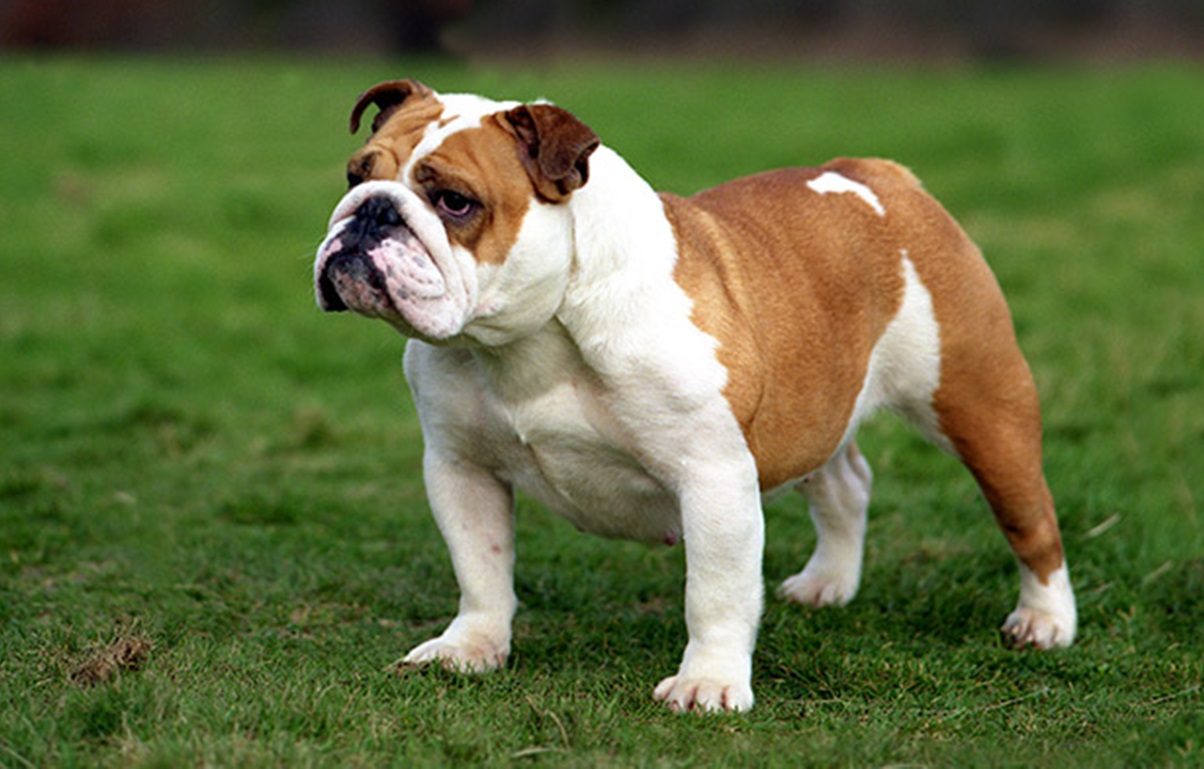
File: Bulldog_inglese.jpg
License: CC BY-SA 3.0 (Creative Commons Attribution-ShareAlike)
Image Dimensions: 1204 × 769 px (Featured)
Subject: English Bulldog specimen exemplifying breed's characteristic wrinkled face, powerful build, and distinctive conformation
Usage Note: Image used under CC BY-SA 3.0 with proper attribution for educational breed documentation.
Bulldog Dogs (Canis familiaris) represent a distinctive family of companion dogs originating from Great Britain and recognized internationally across multiple varieties and types. The breed family is distinguished by its characteristic wrinkled face, powerful muscular build, distinctive underbite, and devoted companion nature. Bulldogs represent a specialized companion breed, combining distinctive aesthetic characteristics with remarkable loyalty, affectionate temperament, and moderate exercise requirements.
The breed family is characterized by exceptional companionship capability, family orientation, and devoted loyalty, traits reflective of historical development as companion and working dogs in Britain. The breed demonstrates affectionate, loyal, playful nature combined with moderate exercise needs, reflecting companion dog heritage. Unlike athletic working breeds such as the Belgian Sheepdog or the Boxer, the Bulldog thrives as a relaxed family companion.
- Distinctive wrinkled face: Characteristic wrinkled facial features; underbite bite pattern; instantly recognizable breed marker.
- Powerful build: Compact, muscular frame; 40–50 lbs (English); square proportions; distinctive silhouette.
- Short dense coat: Short, dense, smooth coat; minimal grooming requirements; weather-resistant.
- Affectionate companion: Devoted, loyal, playful personality; excellent family dogs; human-oriented.
- Moderate exercise: 30–40 minutes daily moderate exercise; apartment-suitable; companion dog lifestyle.
- Multiple varieties: English, French, American, Brazilian varieties; distinct characteristics; separate breed standards.
- Health considerations: Brachycephalic breed characteristics; temperature sensitivity; veterinary monitoring important.
Bulldog Dogs occupy a distinctive position within modern dog fancy and companion dog communities, renowned for their exceptional personality, distinctive appearance, and devoted temperament. The breed family encompasses multiple varieties:
- English Bulldog: Original breed; distinctive wrinkled face; compact, powerful build.
- French Bulldog: Smaller, more athletic variant; bat ears; increasingly popular worldwide.
- American Bulldog: Larger, more athletic; working dog heritage; distinct breed type.
- Brazilian Bulldog: Campeiro variety; regional variant; distinct working characteristics.
Systematic Classification
| Taxonomic Rank | Classification |
|---|---|
| Kingdom | Animalia |
| Phylum | Chordata |
| Class | Mammalia |
| Order | Carnivora |
| Family | Canidae |
| Genus | Canis |
| Species | C. familiaris |
| Breed Group (AKC) | Non-Sporting Group |
| Breed Types | Companion / Utility Dogs |
Breed Recognition
- AKC Status: Multiple varieties fully recognized; member of Non-Sporting Group; well-established breed standards.
- International recognition: Recognized by FCI and all major kennel clubs worldwide.
- Variety status: English, French, American Bulldogs recognized as distinct varieties/breeds.
English Bulldog Breed Standard Overview
Source: Wikimedia Commons | CC BY-SA 3.0 | (1204×769 px – 209 KB)

Source: Wikimedia Commons | CC0 Public Domain | (1920×1397 px – 696 KB)
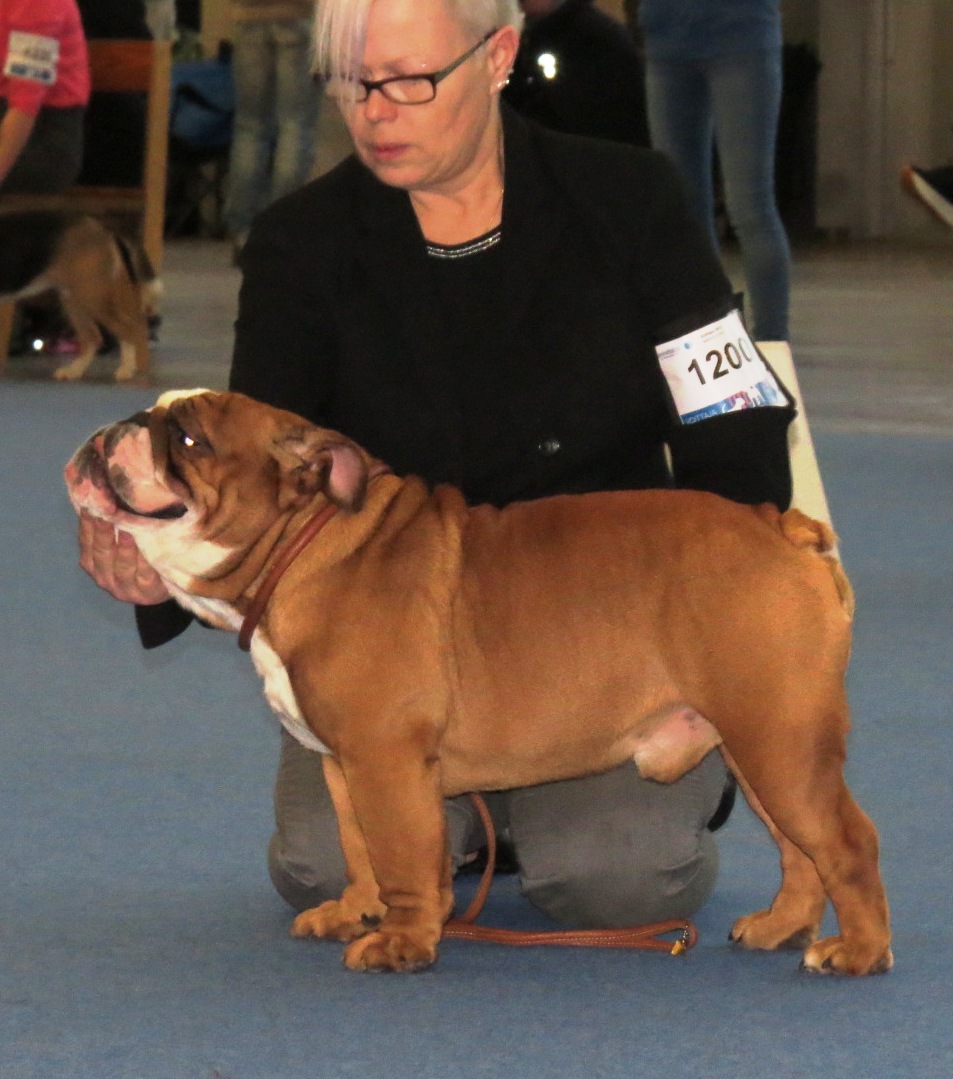
Source: Wikimedia Commons | CC BY-SA 4.0 | Helsinki (953×1079 px – 245 KB)

Source: Wikimedia Commons | CC BY-SA 3.0 | (834×1150 px – 1.05 MB)

Source: Wikimedia Commons | CC BY-SA 3.0 | (1534×1395 px – 457 KB)
Breed Standard Characteristics
- Size specification: 14–15 inches height; 40–50 pounds; compact, powerful frame. Contrasts with the taller Boxer and lighter Beagle.
- Body proportions: Square, stocky build; wide, massive head; short muzzle.
- Head characteristics: Large, wrinkled head; massive; distinctive underbite; wrinkled muzzle.
- Distinctive features: Wrinkled face and muzzle; prominent eyes; folded ears; powerful jaw.
French Bulldog Documentation

Source: Wikimedia Commons | CC BY-SA 4.0 | (4378×2919 px – 8.15 MB)

Source: Wikimedia Commons | CC BY-SA 4.0 | (3003×4500 px – 7.16 MB)

Source: Wikimedia Commons | CC BY-SA 4.0 | (4000×3000 px – 4.78 MB)

Source: Wikimedia Commons | CC BY-SA 2.0 | (1280×1548 px – 451 KB)
French Bulldog Characteristics
- Size specification: 11–13 inches height; 16–28 pounds; smaller, more compact. Similar size range as the Chihuahua (though Chihuahuas are smaller) and Brussels Griffon.
- Distinctive features: Bat ears; smaller, more refined head; less wrinkled than English Bulldog.
- Athletic build: More athletic proportion than English Bulldog; active, playful nature.
- Personality: Playful, affectionate, intelligent; excellent companion dogs; increasingly popular.
American Bulldog Documentation
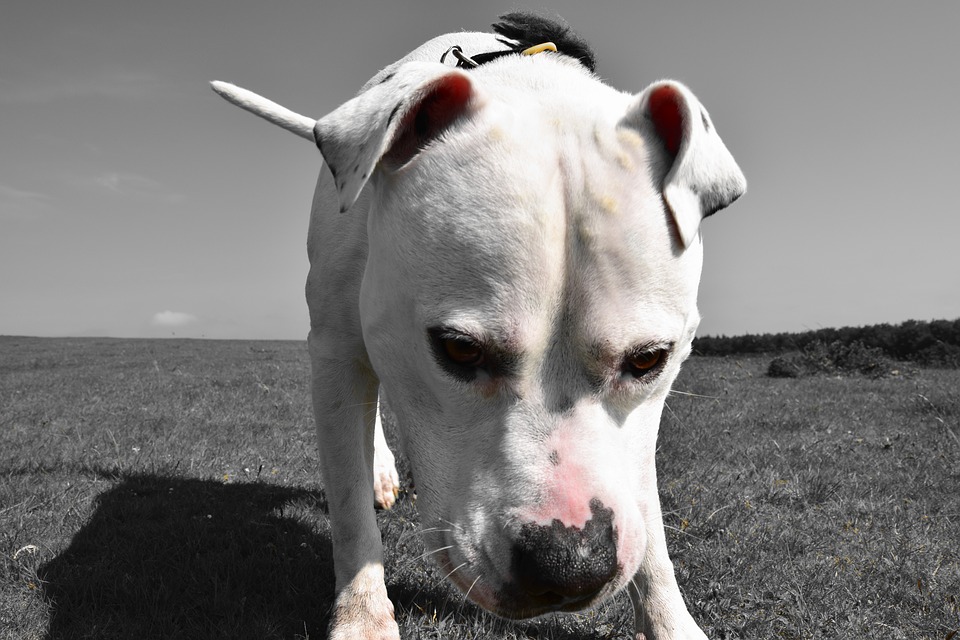
Source: Wikimedia Commons | CC BY-SA 3.0 | (960×640 px – 156 KB)
American Bulldog Characteristics
- Size specification: Larger than English Bulldog; 40–60 pounds; more athletic build. Working capability parallels breeds like the Alaskan Malamute.
- Physical characteristics: More wrinkles than Frenchie; less wrinkled than English Bulldog; strong working capability.
- Purpose: Utility breed; working dog heritage; protection capability; active, energetic.
- Personality: Confident, protective, loyal; active dogs; require experienced owners.
Brazilian Bulldog (Campeiro) Documentation

Source: Wikimedia Commons | CC BY-SA 3.0 | (391×431 px – 45 KB)

Source: Wikimedia Commons | CC BY-SA 3.0 | (2680×2616 px – 1.83 MB)
Brazilian Bulldog Characteristics
- Origin: Brazilian breed; regional variant; distinct development pathway.
- Purpose: Cattle herding and protection work; active, working dog.
- Physical characteristics: More athletic build; less wrinkled face; working dog physiology.
- Personality: Alert, protective, loyal; active, energetic; working dog temperament.
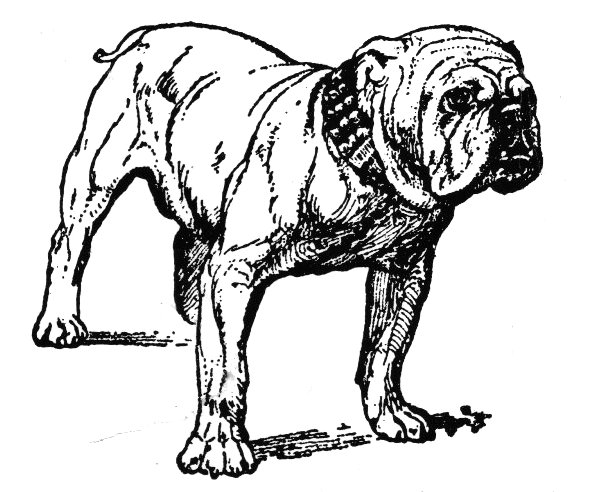
Source: Wikimedia Commons | Public Domain | (590×492 px – 66 KB)
General Conformation
- Head: Large, wrinkled head; massive; distinctive profile; prominent muzzle wrinkles. Contrasts with the narrow head of the Borzoi and dome skull of the Chihuahua.
- Muzzle: Short, broad muzzle; distinctive underbite; powerful jaw structure.
- Eyes: Medium-sized, dark eyes; round shape; set forward; alert expression.
- Ears: Medium-sized, folded or rose ears; frame the face.
- Body: Compact, square proportions; muscular development; power and stability.
- Coat: Short, dense, smooth coat; lies close to body; minimal grooming needs.
Distinctive Head Characteristics
The Bulldog's distinctive head is the breed's most recognizable feature. Characteristic wrinkles, underbite jaw structure, and broad muzzle combine to create an unmistakable expression and profile.
Feature Specification
| Feature | Description | Function |
|---|---|---|
| Wrinkled Face | Distinctive wrinkles and folds on muzzle and face | Breed marker; distinctive appearance; genetic trait |
| Underbite | Lower jaw projects beyond upper jaw | Distinctive bite pattern; breed characteristic |
| Broad Muzzle | Wide, short muzzle; powerful jaw structure | Distinctive profile; breed type marker |
| Large Head | Massive head relative to body size | Distinctive appearance; breed proportion |
Coat Type & Structure
- Coat description: Short, dense, smooth coat; lies close to body; glossy appearance.
- Coat length: Very short; approximately 1/8 to 1/4 inch; uniform throughout body.
- Grooming requirements: Minimal brushing needed; occasional bathing; easy maintenance. See our Cocker Spaniel grooming guide for comparison with higher-maintenance coat types.
Color Variations
- Brindle coloration: Brindle pattern (fawn with brindle overlay); common color; distinctive pattern.
- Fawn coloration: Light tan to deep fawn; solid color; popular choice.
- White coloration: Solid white or predominantly white; striking appearance. Contrasts with the spotted Dalmatian and the solid black Belgian Sheepdog.
- Piebald patterns: Combinations of white with other colors; distinctive markings.
- Red & white: Red coloration with white markings; well-defined patterns.
- Show standards: Color variety acceptable; type and conformation more important in show evaluation.
British Origins & Development
- Geographic origin: Great Britain; developed through selective breeding over centuries.
- Historical purpose: Originally developed as bullbaiting dogs; working dog heritage. See our Dalmatian historical encyclopedia for another breed with rich history.
- Transformation: After outlawing of bullbaiting, transformed into companion dogs; temperament dramatically altered.
Modern Breed Development
- Breed standardization: Formally standardized in late 19th century; breed clubs established internationally.
- International variants: French Bulldogs developed in France; American Bulldogs evolved separately; Brazilian Campeiro developed regionally.
- Contemporary role: Show dogs, family companions, cherished household pets; primarily companion role.
Personality Characteristics
- Affectionate nature: Devoted, affectionate, loyal personality; strong family bonds; human-oriented. Shares devoted nature with the Cocker Spaniel.
- Playful demeanor: Playful, engaging, entertaining personality; enjoy interaction; comic antics evident.
- Determination: Determined, courageous nature; stubborn tendencies; independent thinking. Shares determination with the Dachshund.
Social Behavior
- Family orientation: Excellent family dogs; affectionate with family members; good with children when socialized.
- Protective instinct: Natural protective capability; loyal defenders; alert watchfulness. Shares alertness with the Bull Terrier.
- Socialization importance: Early socialization beneficial; proper training important; responds well to positive reinforcement.
Exercise & Activity Requirements
- Moderate exercise needs: Require 30–40 minutes daily moderate exercise; apartment-suitable; not high-energy dogs.
- Mental enrichment: Require mental challenges; training beneficial; interactive play important.
- Activity preferences: Enjoy moderate play; appreciate short walks; prefer indoor companionship.
Old English Bulldog – 1863 Paris Dog Show Documentation
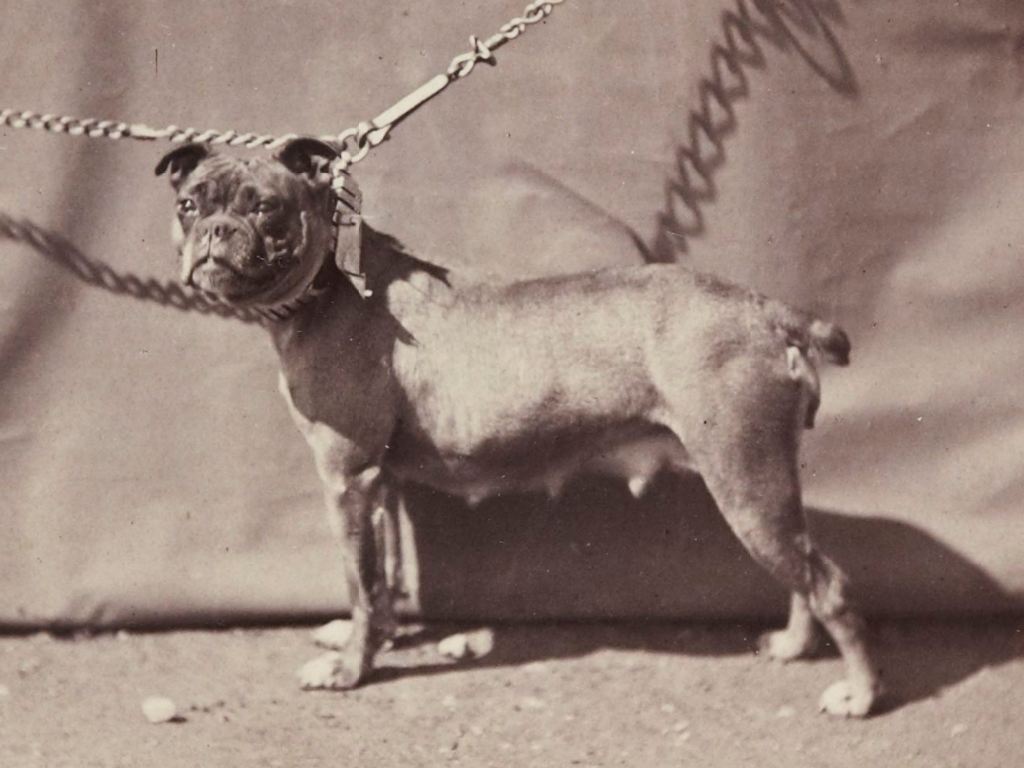
Source: Wikimedia Commons | Public Domain | 1863 (1024×768 px – 1.01 MB)
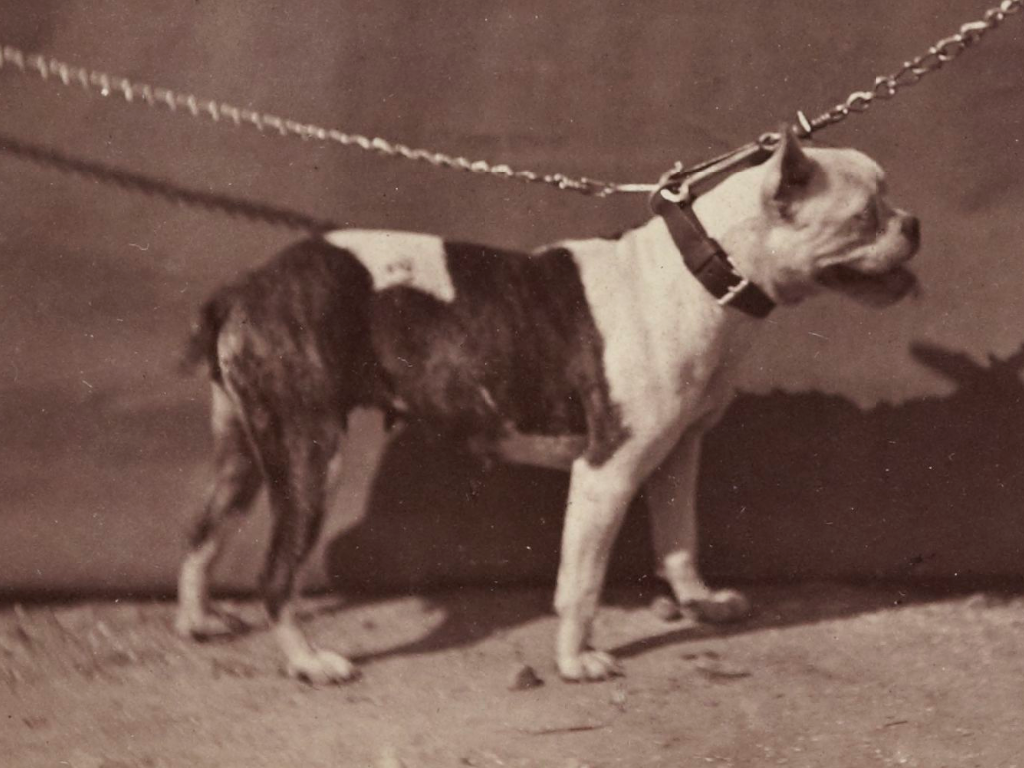
Source: Wikimedia Commons | Public Domain | 1863 (1024×768 px – 972 KB)

Source: Wikimedia Commons | Public Domain | 1863 (1024×768 px – 915 KB)

Source: Wikimedia Commons | Public Domain | (353×313 px – 24 KB)
Historical Significance
- Early dog show records: 1863 Paris dog show documentation shows breed's early formalization and standardization.
- Historic variants: Documentation shows prick-eared variants; breed evolution toward modern standards.
- Breed consistency: Historical photographs show remarkable consistency with modern breed standards.
Historical Greyhound × Bulldog Crossing Studies (1859)

Source: Wikimedia Commons | Public Domain | 1859 (350×329 px – 25 KB)

Source: Wikimedia Commons | Public Domain | (361×308 px – 23 KB)
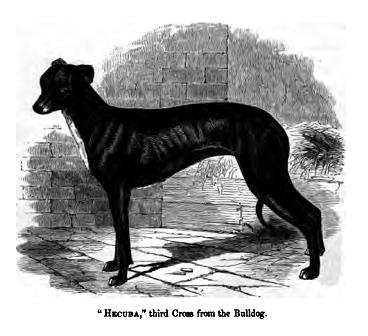
Source: Wikimedia Commons | Public Domain | (368×336 px – 24 KB)

Source: Wikimedia Commons | Public Domain | (368×326 px – 29 KB)
Genetic Research Significance
- Historical documentation: 1859 crossing studies demonstrate early genetic research and breed type persistence.
- Genetic stability: Progressive crosses show breed type characteristics persist through generations.
- Scientific documentation: Early documentation of hereditary trait transmission in dog breeding. Similar historical studies documented for breeds like the Afghan Hound and Bloodhound.
Bull-Type Breed Comparisons

Source: Wikimedia Commons | CC BY-SA 4.0 | (1300×1000 px – 1.23 MB)

Source: Wikimedia Commons | CC BY-SA 4.0 | (1300×1000 px – 845 KB)

Source: Wikimedia Commons | CC BY-SA 4.0 | (1300×1000 px – 1.07 MB)

Source: Wikimedia Commons | CC BY-SA 4.0 | (1300×1000 px – 1.26 MB)
Related Breed Types
- Bull Terriers: Related but distinct breed; different history; egg-shaped head. See our Bull Terrier encyclopedia.
- Pit Bull-Type Dogs: Separate breed group; different standards; distinct characteristics.
- Staffordshire Bull Terriers: Related but distinct; different origin; separate breed standard.
Breed-Specific Health Issues
- Brachycephalic syndrome: Breathing difficulties related to shortened muzzle; temperature sensitivity; veterinary monitoring essential.
- Hip dysplasia: Genetic predisposition; OFA screening recommended for breeding stock.
- Heart conditions: Cardiac issues documented in breed; regular veterinary screening important.
- Skin issues: Breed predisposition; regular skin care; wrinkle care important for English Bulldogs.
- Eye problems: Cherry eye and other conditions documented; veterinary monitoring recommended.
Health Management
- Temperature management: Sensitive to extreme heat and cold; climate control essential; avoid overheating critical.
- Preventive care: Regular veterinary examinations; appropriate vaccinations; health monitoring. See our Cocker Spaniel health guide for comparative preventive care information.
- Wrinkle care: Regular cleaning and drying of facial wrinkles; infection prevention important.
Lifespan & Care
- Life expectancy: 8–12 years with proper care; genetics, diet, environment significantly influence longevity.
- Preventive care: Regular veterinary examinations; appropriate vaccinations; nutrition management important.
Breeding & Health Documentation

Source: Wikimedia Commons | CC BY 2.0 | (6000×4000 px – 4.15 MB)
Welfare Concerns
- Brachycephalic concerns: Shortened muzzle contributes to breathing difficulties and health challenges; significant welfare debate.
- Selective breeding consequences: Extreme physical characteristics result from selective breeding for distinctive appearance; health implications.
- Responsible breeding: Growing emphasis on health over extreme physical characteristics; selective breeding reform movements.
- Ethical considerations: Breed health concerns drive discussions about responsible breeding practices and welfare standards.
Daily Care Routine
- Exercise requirements: 30–40 minutes daily moderate exercise sufficient; apartment-suitable; moderate activity dogs.
- Coat maintenance: Weekly brushing recommended; occasional bathing; minimal grooming requirements; low-maintenance coat.
- Wrinkle care: Regular cleaning and drying of facial wrinkles; essential for preventing infections; hygiene important.
- Mental enrichment: Require mental challenges; training beneficial; interactive play important.
Housing & Environment
- Space requirements: Suitable for apartments; compact size works well. Also see Chihuahua and Brussels Griffon for other apartment-friendly breeds.
- Temperature sensitivity: Sensitive to extreme heat and cold; climate control essential; avoid overheating critical. Contrasts with cold-hardy Alaskan Malamute and Chow Chow.
- Social environment: Thrive with consistent human interaction; family-oriented dogs; require companionship.
Training & Socialization
- Socialization importance: Early socialization beneficial; exposure to diverse people and environments helpful.
- Training methodology: Respond well to positive reinforcement; determined nature requires consistent, patient training.
- Owner requirements: Require owners understanding of breed characteristics; commitment to health monitoring important.
1. What makes Bulldogs unique?
Bulldogs are distinguished by their characteristic wrinkled face, distinctive underbite, powerful compact build, and devoted companion nature. The breed family encompasses multiple varieties (English, French, American, Brazilian) with distinct characteristics.
2. Are Bulldogs good family dogs?
Yes, Bulldogs are excellent family dogs when properly socialized. They are affectionate, loyal, and playful companions. They are good with children and make devoted family members, though they require proper training and early socialization.
3. How much exercise do Bulldogs need?
Bulldogs require 30–40 minutes of daily moderate exercise. They are not high-energy dogs and are well-suited for apartment living. Their moderate exercise needs make them suitable for less active owners.
4. What are their main health concerns?
Primary health concerns include brachycephalic syndrome (breathing difficulties), hip dysplasia, heart conditions, and skin issues. Temperature sensitivity is particularly important due to their shortened muzzles. Regular veterinary care and health screening are essential.
5. Do Bulldogs require extensive grooming?
Bulldogs have short coats requiring minimal grooming—weekly brushing and occasional bathing suffice. However, wrinkle care is essential for preventing infections, particularly important for English Bulldogs.
6. What is the difference between English and French Bulldogs?
French Bulldogs are smaller (11–13 inches), more athletic, have distinctive bat ears, and less wrinkled faces than English Bulldogs. English Bulldogs are larger (14–15 inches) with more pronounced wrinkles and more compact builds.
7. Are Bulldogs heat-sensitive?
Yes, Bulldogs are extremely sensitive to heat due to their brachycephalic (shortened muzzle) characteristics. Overheating can be life-threatening. Climate control, avoidance of hot environments, and careful exercise management are essential.
8. What is their typical lifespan?
Bulldogs typically live 8–12 years with proper care, though this is shorter than many dog breeds. Genetics, diet, exercise, and healthcare significantly influence longevity.
9. Are Bulldogs recognized by the AKC?
Yes, multiple Bulldog varieties are fully recognized by the American Kennel Club. English Bulldogs and French Bulldogs are members of the Non-Sporting Group, while American Bulldogs are recognized separately.
10. Are there health concerns with Bulldog breeding?
Yes, selective breeding for extreme physical characteristics has resulted in significant health concerns, particularly brachycephalic syndrome and other inherited conditions. There is growing emphasis on health-focused breeding practices and reform.
- This encyclopedia is educational in nature and reflects current breed documentation as of March 2026.
- Breed standard information based on AKC official standards; readers should consult official breed club resources for current standards.
- All images sourced from Wikimedia Commons with open licenses (CC BY-SA, CC BY, CC0 Public Domain) with complete attribution provided for each image.
- Health information provided for general knowledge; readers should consult veterinary professionals for specific health concerns.
- Breeding recommendations reflect current best practices; prospective breeders should consult breed clubs and veterinary geneticists.
Primary Scientific References
- Breed Standards: American Kennel Club (AKC) Official Bulldog Breed Standard; FCI Breed Standard
- Historical Documentation: 1863 Paris Dog Show records; breed club archives; breed development records
- Health Research: Orthopedic Foundation for Animals (OFA) studies; brachycephalic syndrome research; cardiac health research
- Genetic Research: Canine genetics studies; 1859 crossing studies; breed population analysis; genetic diversity assessments
- Welfare Research: Breeding ethics studies; brachycephalic breed welfare research; health reform documentation
Complete Image Attribution Summary
- English Bulldog (6 images): Standard specimens, standing poses, show examples, named specimen Ercole, color variations
- French Bulldog (4 images): Outdoor activity, named specimen Apolo, head details, championship examples
- American Bulldog (1 image): Utility breed documentation
- Brazilian Bulldog (2 images): Campeiro variant specimens
- Conformation (1 image): Line art breed standard drawing
- Historical 1863 (4 images): Paris Dog Show documentation, Bois de Boulogne, vintage records
- Genetic Studies (4 images): Greyhound × Bulldog crossing studies (1st–4th cross)
- Comparative (4 images): Bull-type breed comparisons, terrier group, head shape studies
- Welfare (1 image): Brachycephalic health discussion documentation
Copyright Compliance Notice
This encyclopedia prioritizes copyright compliance through exclusive use of Wikimedia Commons images with appropriate licensing (CC BY-SA, CC BY, CC0 Public Domain) and complete attribution. Every image includes caption, file information, license type, dimensions, file size, and usage notes. Flexible gallery grids ensure all images display at full size without cropping. All images used strictly for non-commercial educational breed documentation purposes.
© 2026 – Encyclopedia.guru – Bulldog Dog Breed Encyclopedia (Canis familiaris)
Comprehensive breed documentation covering English Bulldog, French Bulldog, American Bulldog, Brazilian Bulldog with emphasis on distinctive wrinkled face, powerful build, companion temperament, and health considerations | Wikimedia Commons images integrated | Written by Encyclopedia.guru Expert Writing Team | Updated: 2 March 2026