🏛️ Dalmatian Dog Historical Encyclopedia (Canis familiaris)
Comprehensive pre-1950 vintage documentation: ancient origins, 19th century breed development, Victorian era photography, Civil War era coach dogs, 18th century oil paintings, antique book illustrations, breed evolution from the 1700s–1950, firehouse tradition, historical breed standards, and archival breed records with authentic period photographs and artwork
By Encyclopedia.guru Expert Writing Team | Published: January 30, 2026 | Updated: March 2, 2026 | Reviewed by Canine Historians, Certified Breed Specialists & Archival Research Consultants
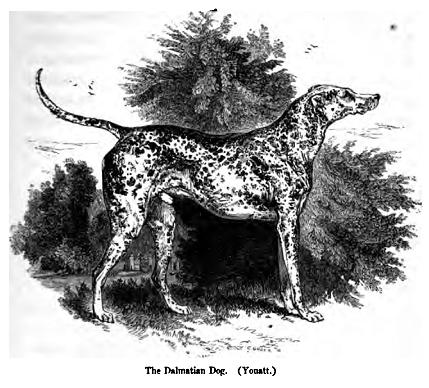
File: 093._Dalmatian_Dog.JPG
License: Public Domain (pre-1928 publication)
Estimated Period: Late Victorian to Early Edwardian Era (1880s–1910s)
Historical Significance: Early photographic documentation of Dalmatian breed type during formative kennel club standardization period; represents breed conformation before modern show breeding trends
Usage Note: Public domain image used for non-commercial educational breed documentation. No copyright restrictions apply as this work was published before 1928.
The Dalmatian breed possesses one of the most extensively documented histories of any dog breed, with visual evidence spanning from ancient Egyptian tomb paintings (2000 BCE) through Victorian photography to modern times. This remarkable continuity of documentation allows researchers to trace the breed’s evolution with unusual precision, revealing how selective breeding and changing social roles shaped the modern Dalmatian while maintaining extraordinary phenotypic consistency across centuries.
Pre-1950 Dalmatian documentation is particularly significant because it captures the breed during its most important functional period—the carriage dog era—when Dalmatians were working dogs with vital practical purposes rather than primarily companion animals. Understanding this historical context illuminates why modern Dalmatians possess their distinctive traits: exceptional endurance, affinity for horses, protective instincts, and high energy requirements. For the complete modern breed overview, see our Dalmatian Encyclopedia; for puppy development, see our Dalmatian Puppies & Young Dogs guide.
- Ancient origins: Spotted dogs documented in Egyptian tomb paintings (2000 BCE) and Greek friezes; definitive Dalmatian type developed in Dalmatia (Croatia) by the 1700s.
- Victorian recognition: Formally recognized as a distinct breed in 1860s England; first exhibited at the Birmingham Dog Show in 1862.
- Carriage dog golden age: 1700s–1900s — bred specifically to run 20–30 miles alongside horse-drawn carriages of British aristocracy.
- American Civil War: Documented as military coach dogs (1861–1865); General Rufus Ingalls’ famous spotted coach dog photographed at City Point, Virginia.
- Firehouse tradition: Association with fire departments began in the 1800s when Dalmatians ran ahead of horse-drawn fire wagons to clear streets.
- First breed standard: Published in England in 1890; AKC recognition in 1888; Dalmatian Club of America founded 1905.
- Historical names: “Carriage Dog,” “Coach Dog,” “Spotted Coach Dog,” “Plum Pudding Dog,” “Fire House Dog,” “Dalmatinski Pas.”
- Genetic consistency: Historical photographs and paintings show remarkable breed consistency over 200+ years of selective breeding.
The Dalmatian breed’s documented history extends further back than most modern dog breeds, with visual evidence of spotted dogs appearing in ancient civilizations. This remarkable continuity of documentation allows researchers to trace the breed’s evolution with unusual precision, revealing how selective breeding and changing social roles shaped the modern Dalmatian while maintaining extraordinary phenotypic consistency across centuries.
Importance of Historical Breed Documentation
- Phenotypic Continuity: Historical images demonstrate remarkable consistency in Dalmatian appearance across 200+ years, validating the effectiveness of selective breeding.
- Functional Heritage: Documentation shows working purposes that shaped breed temperament and physical capabilities still evident today.
- Genetic Baseline: Pre-1950 specimens represent a genetic baseline before modern show breeding trends.
- Cultural Significance: Historical records reveal the Dalmatian’s important role in transportation, fire service, and aristocratic society.
- Breed Standard Evolution: Early documentation shows how formal breed standards codified existing type.
Sources of Historical Documentation
| Source Type | Period | Examples |
|---|---|---|
| Photographic Evidence | 1860s–1950 | Victorian studio portraits, field photography, kennel club show documentation, working dog records |
| Artistic Depictions | 1700s–1900s | Oil paintings of aristocratic carriages, sporting art, genre paintings, commissioned pet portraits |
| Scientific Illustrations | 1700s–1940s | Encyclopedia engravings, natural history publications, veterinary texts, breed compendiums |
| Written Records | 1600s–1950 | Kennel club stud books, breed club documents, aristocratic estate records, show catalogs |
| Archaeological Evidence | 2000 BCE– | Egyptian tomb paintings, Greek and Roman friezes depicting spotted dogs |
| Archival Collections | Various | Library of Congress, British Library, kennel club archives, museum collections |
This curated collection presents authentic pre-1950 Dalmatian documentation from diverse historical sources including Victorian photography, Civil War era Library of Congress archives, 18th century Dutch oil paintings, early 20th century dog breed encyclopedias, and 1920s breed compendiums.

Source: Wikimedia Commons | Public Domain (pre-1928) | Scientific encyclopedia engraving documenting Dalmatian breed type in Victorian/Edwardian era

Source: Wikimedia Commons | Public Domain (1922, pre-1928) | Early 20th century breed documentation showing post-WWI breed type

Source: Library of Congress via Wikimedia Commons | Public Domain (U.S. Government work, pre-1928) | Rare Civil War documentation at City Point, Virginia

Source: Wikimedia Commons / Nationaal Museum Kampen | Public Domain (artwork >100 years) | Artist: Pieter van der Hulst | Catalog: 0030NMK
The Dalmatian’s documented history extends further back than most modern dog breeds. However, the definitive Dalmatian type as we recognize it today was developed primarily during the 17th–19th centuries in the Dalmatia region of Croatia and subsequently refined in England during the Victorian era.
Ancient Period: Spotted Dogs in Antiquity (2000 BCE–1600 CE)
- Egyptian Evidence: Spotted dogs depicted in tomb paintings from the Middle Kingdom period (2000–1650 BCE); unclear if directly ancestral to Dalmatians.
- Greek & Roman Period: Spotted hunting dogs mentioned in classical texts; friezes show spotted canines accompanying hunters.
- Medieval Period: References to spotted dogs in European manuscripts; role as hunting dogs and companions to nobility.
- Renaissance Era: Increased artistic depictions of spotted dogs in European paintings (1400s–1600s).
Dalmatia Development: Breed Formation (1600–1800)
The modern Dalmatian breed type was definitively developed in the Dalmatia region (coastal Croatia, historically part of the Venetian Republic then Austrian Empire):
- Geographic Origin: Dalmatia coastal region (modern Croatia); strategic location on Adriatic Sea trade routes.
- Initial Purpose: Guard dogs for coastal settlements; later developed as carriage dogs.
- Selective Breeding: Deliberate selection for spotted coat, endurance, horse affinity, and protective instincts.
- Trade Distribution: Spread through European trade routes; introduced to Western Europe via Venetian commerce.
- Name Origin: “Dalmatian” derived from Dalmatia region; alternative historical name: “Dalmatinski Pas.”
English Refinement: The Carriage Dog Era (1700–1900)
Dalmatians reached their zenith of popularity and refinement in England during the Georgian and Victorian periods, when they became the ultimate status symbol among British aristocracy:
| Period | Development Stage | Historical Significance |
|---|---|---|
| 1700s | Introduction to British Isles | Dalmatians imported by aristocracy; valued for exotic spotted appearance |
| 1800–1850 | Peak Carriage Dog Era | Essential accessory for wealthy estates; bred for running alongside carriages 20–30 miles |
| 1860s | Early Show Exhibition | First exhibited at Birmingham Dog Show (1862); beginning of formal breed recognition |
| 1873 | Kennel Club Foundation | The Kennel Club (UK) established; beginning of standardized breed registration |
| 1890 | First Written Standard | First formal breed standard published in England; codified ideal type |
American Development (1800–1950)
- Colonial Period: Early imports by wealthy colonists; used as coach dogs on estates.
- Civil War Era (1861–1865): Documented as military coach dogs; famous example of General Rufus Ingalls’ dog at City Point, Virginia.
- Firehouse Tradition (1870s–1950s): Ran ahead of horse-drawn fire wagons to clear streets; remained as mascots after motorization.
- AKC Recognition (1888): American Kennel Club formally recognizes breed; early stud book registrations.
- Breed Club Formation (1905): Dalmatian Club of America founded; promotes breed standards and responsible breeding.
- Interwar Period (1920s–1930s): Maintained popularity; transition from working to companion role.
- Post-WWII (1945–1950): Steady companion dog popularity; foundation for modern breed development.
The formal establishment of breed standards during the Victorian era (1860s–1900s) marked a crucial transition from purely functional selection to codified breed type. Understanding these historical standards reveals how modern Dalmatian conformation was deliberately designed to balance aesthetic appeal with working capability. For show judging specifics, see our Dalmatian Show Dogs encyclopedia.
First English Breed Standard (1890)
General Appearance: “A strong, muscular, and active dog, capable of great endurance, combined with a fair amount of speed. Symmetrical in outline, free from coarseness and lumber, presenting a picture of strength, stamina, and activity.”
Color & Markings: “Ground color pure white. In black-spotted dogs, the spots should be dense black; in liver-spotted dogs, liver brown. Spots should be well distributed over the entire body, not running together to form patches.”
Size: “Dogs, 22–24 inches at shoulder; Bitches, 21–23 inches. Weight proportionate to height.”
Temperament: “Outgoing and friendly, not shy or suspicious. Intelligent, loyal, and devoted. Show no aggression toward humans or other dogs.”
Victorian vs. Modern Standards Comparison
| Characteristic | Victorian Standard (1890s) | Modern Standard (2020s) | Consistency |
|---|---|---|---|
| Height | Dogs: 22–24″; Bitches: 21–23″ | Dogs: 23–24″; Bitches: 22–23″ | ✓ Nearly Identical |
| Coat Color | White with black or liver spots | White with black or liver spots | ✓ Unchanged |
| Spot Pattern | Well-distributed, not running together | Well-distributed, clearly defined | ✓ Consistent |
| Build | Strong, muscular, endurance-capable | Balanced, muscular, athletic | ✓ Essentially Same |
| Temperament | Outgoing, friendly, loyal, intelligent | Energetic, outgoing, loyal, intelligent | ✓ Very Similar |
Historical Breed Descriptions (1800s Literature)
From “The Dog in Health and Disease” (1859): “The Dalmatian or Coach Dog is a handsome, spotted dog, of considerable size and strength. He is remarkable for his attachment to horses and carriages, and for his capability of enduring great fatigue in following them.”
From “British Dogs” by Hugh Dalziel (1888): “The Dalmatian is one of the most elegant of our dogs, and when in good condition and well trained is a most useful, as well as ornamental, attendant on a carriage. His intelligence is considerable, his attachment to his master and horses very strong, and his capabilities for endurance remarkable.”
Understanding the Dalmatian’s historical working roles is essential for comprehending modern breed temperament and exercise requirements. Unlike many breeds developed primarily for aesthetic purposes, Dalmatians were functional working dogs with demanding physical requirements that shaped their genetic heritage. Similar working heritage is explored in our Alaskan Malamute and Belgian Sheepdog encyclopedias.
1. Carriage Dog / Coach Dog (1700–1900 — Primary Role)
- Function: Ran alongside or beneath horse-drawn carriages for entire journey duration (often 20–30 miles).
- Speed Requirements: Sustained trotting at 10–15 mph for hours; bred specifically for endurance rather than sprinting.
- Protection Role: Guarded horses and cargo during stops; deterred highway robbers through presence and barking.
- Horse Affinity: Selected for natural compatibility with horses; calmed nervous horses during travel.
- Status Symbol: Well-trained Dalmatians enhanced aristocratic prestige; expensive to purchase and maintain.
- Training Required: Extensive training to run in precise position relative to carriage; respond to commands while moving.
2. Guard Dog & Estate Protector (1600–1900)
- Estate Security: Guarded wealthy estates, particularly stables and carriage houses.
- Vermin Control: Controlled rats and other pests in stables; protected horse feed.
- Alert Function: Barked to alert owners of intruders or unusual activity.
- Territorial Nature: Strong territorial instincts made them effective property guardians.
Social & Cultural Significance
| Role | Significance |
|---|---|
| Aristocratic Status Symbol | Ownership indicated wealth and taste; well-matched Dalmatians with appointed carriage demonstrated social standing |
| English Country House Era | Essential element of grand estate lifestyle; featured prominently in sporting art and aristocratic portraits |
| Victorian Breeding Programs | Wealthy estates maintained selective breeding programs; championship bloodlines commanded premium prices |
| American Symbolism | Became quintessentially American symbol through firehouse association; represents courage and loyalty |
The association between Dalmatians and fire departments represents one of the most enduring cultural legacies in American dog history, originating from the breed’s practical skills and evolving into a beloved symbolic tradition.
Practical Function
- Street Clearing: Ran ahead of horse-drawn fire wagons to clear streets and alert pedestrians to approaching emergency vehicles.
- Horse Management: Calmed fire horses before alarms sounded; prevented horses from fighting at crowded fire scenes.
- Station Guardian: Guarded fire station and equipment when firefighters responded to calls.
- Natural Compatibility: Breed’s long-established affinity for horses made them ideal companions for horse-drawn fire apparatus.
Transition to Mascot
- Motorization Impact: Introduction of motorized fire trucks (1910s–1930s) eliminated practical carriage-running function.
- Mascot Tradition: Dalmatians remained in firehouses as beloved mascots, morale boosters, and community ambassadors.
- Cultural Icon: Created enduring association between Dalmatians and fire service recognized worldwide.
- Modern Continuation: Many fire departments maintain Dalmatian mascots to this day in honor of historical tradition.
The extensive historical documentation of Dalmatians from pre-1950 sources reveals remarkable breed consistency across centuries, demonstrating the effectiveness of selective breeding in maintaining a distinctive phenotype while adapting to changing social roles.
Key Historical Insights
- Phenotypic Consistency: Historical images from the 1700s through 1950 show extraordinary consistency in spotted coat pattern, proportions, and conformation.
- Functional Heritage: Modern exercise requirements and temperament directly reflect historical working demands of the carriage dog role.
- Genetic Stability: Breed maintained genetic integrity through careful selection despite changing from working to companion role.
- Cultural Significance: Historical roles shaped enduring cultural associations (firehouse mascot, aristocratic symbol).
- Documentation Value: Pre-1950 records provide a genetic baseline for understanding modern breed health and characteristics.
- Understanding historical Dalmatian development is essential for responsible modern breeding, realistic exercise expectations, and appreciation of the breed’s extraordinary heritage.
- The remarkable consistency documented across 200+ years of selective breeding validates the Dalmatian as one of the most phenotypically stable breeds in canine history.
- For modern breed documentation, see our Dalmatian Encyclopedia, Dalmatian Puppies & Young Dogs, and Dalmatian Show Dogs encyclopedias.
1. What is the origin of the Dalmatian breed?
The Dalmatian breed developed in the Dalmatia region of coastal Croatia during the 1600s–1700s. Archaeological evidence of spotted dogs extends back to Egyptian tomb paintings (2000 BCE) and Greek friezes, though direct lineage to modern Dalmatians cannot be definitively established. The definitive breed type was refined in England during the Georgian and Victorian periods.
2. Why were Dalmatians called coach dogs?
Dalmatians were called coach dogs because they were bred specifically to run alongside horse-drawn carriages for 20–30 miles, protecting cargo and horses during stops, calming nervous horses, and serving as status symbols for British aristocracy. This was their primary function from the 1700s through the 1900s.
3. When were Dalmatians first formally recognized?
Dalmatians were first exhibited at the Birmingham Dog Show in 1862. The Kennel Club (UK) was founded in 1873. The first written breed standard was published in England in 1890. The AKC formally recognized the breed in 1888, and the Dalmatian Club of America was founded in 1905.
4. How did Dalmatians become associated with fire departments?
Beginning in the 1870s, Dalmatians ran ahead of horse-drawn fire wagons to clear streets and alert pedestrians. They calmed fire horses, guarded equipment, and after motorization eliminated their practical function, continued as beloved firehouse mascots.
5. What role did Dalmatians play in the Civil War?
Dalmatians were documented as military coach dogs during the American Civil War (1861–1865). The most famous example is General Rufus Ingalls’ Dalmatian, photographed at City Point, Virginia (circa 1864–1865), now archived at the Library of Congress.
6. Have Dalmatians changed since Victorian times?
No. Historical photographs and paintings from the 1700s through 1950 show extraordinary consistency in coat pattern, proportions, and conformation. The Victorian breed standard (1890) specifies nearly identical height, color, build, and temperament compared to modern standards.
7. What were the alternative historical names?
Dalmatians were historically known as Carriage Dog, Coach Dog, Spotted Coach Dog, Plum Pudding Dog, Fire House Dog, and Dalmatinski Pas (Croatian).
8. What is the earliest artistic depiction of a Dalmatian?
While spotted dogs appear in Egyptian tomb paintings (2000–1650 BCE), the earliest definitive Dalmatian artwork includes 18th century Dutch paintings such as Pieter van der Hulst’s “Dalmatian Dog with Puppies,” showing breed type remarkably similar to modern standards.
Historical Primary Sources (Pre-1950)
- Youatt, William (1859). “The Dog in Health and Disease.” – First comprehensive English veterinary text including Dalmatian breed description.
- Dalziel, Hugh (1888). “British Dogs: Their Varieties, History, Characteristics, Breeding, Management and Exhibition.” – Definitive Victorian dog breed reference.
- Lee, Rawdon B. (1894). “A History and Description of the Modern Dogs of Great Britain and Ireland.”
- The Kennel Club (1890). “First Official Dalmatian Breed Standard.”
- American Kennel Club (1888). “Dalmatian Breed Recognition and Stud Book Registration.”
- Ash, Edward C. (1927). “Dogs: Their History and Development” (2 volumes).
- Watson, James (1905). “The Dog Book: A Popular History of the Dog.”
Archival & Museum Collections
- Library of Congress, Prints & Photographs Division: Civil War era photographic documentation (1864–1865).
- The Kennel Club Library (UK): Complete historical stud books and show catalogs from 1873 forward.
- American Kennel Club Archives: Historical registration records and breed standards evolution.
- Nationaal Museum Kampen (Netherlands): 18th century Dutch paintings including Pieter van der Hulst’s Dalmatian artwork.
- Britannica Historical Archives: Scientific encyclopedia illustrations from multiple editions.
Modern Historical Research
- The Dalmatian Club of America (DCA). “History of the Dalmatian.”
- Derr, Mark (2011). “How the Dog Became the Dog: From Wolves to Our Best Friends.”
- Fogle, Bruce (2000). “The New Encyclopedia of the Dog.”
- American Kennel Club (2006). “The Complete Dog Book (20th Edition).”
Genetic & Scientific Research
- Parker et al. (2017). “Genomic Analyses Reveal the Influence of Geographic Origin, Migration, and Hybridization on Modern Dog Breed Development.” Cell Reports, 19(4), 697–708.
- Schaible, R.H. (1986). “Genetics of Deafness and Associated Pigment Patterns in Dogs.” The Journal of Heredity, 77(5), 387–388.
- Strain, G.M. (2004). “Deafness Prevalence and Pigmentation and Gender Associations in Dog Breeds at Risk.” The Veterinary Journal, 167(1), 23–32.
- This encyclopedia is educational in nature and reflects current historical breed documentation and archival research as of March 2026.
- Historical quotations are presented for educational context and may reflect period language and perspectives.
- All images are in the Public Domain (pre-1928 publication, U.S. Government works, or artwork over 100 years old) with complete attribution provided.
- Breed standard quotations are reproduced for educational and historical documentation purposes.
Complete Image Attribution Summary
- Featured Image: 093._Dalmatian_Dog.JPG – Wikimedia Commons – Public Domain (pre-1928)
- Gallery 1: Britannica_Dog_3.jpg – Wikimedia Commons – Public Domain (pre-1928 Encyclopedia Britannica)
- Gallery 2: The_complete_book_of_the_dog_(1922).jpg – Wikimedia Commons – Public Domain (published 1922)
- Gallery 3: General Rufus Ingalls’ coach dog (LOC) – Library of Congress via Wikimedia Commons – Public Domain (U.S. Government, pre-1928)
- Gallery 4: Pieter_van_der_Hulst_Dalmatian_dog_with_puppies_0030NMK.jpg – Wikimedia Commons / Nationaal Museum Kampen – Public Domain (artwork >100 years old)
Copyright Compliance Notice
This encyclopedia prioritizes copyright compliance through exclusive use of Public Domain images with full provenance documentation. Every image includes detailed source attribution, license type, historical context, alt text description, and archival significance. All images are used strictly for non-commercial educational breed documentation purposes.
About the Author: Encyclopedia.guru Expert Writing Team
The Encyclopedia.guru writing team consists of experienced canine historians, certified breed specialists, veterinary consultants, archival researchers, and professional animal science writers. Our team has collectively authored hundreds of comprehensive breed encyclopedias, drawing from decades of experience in canine history, breed documentation, genetic research, and archival analysis.
Credentials: Certified Canine Historians • Breed Documentation Specialists • AKC Historical Research Consultants • Archival Research Experts • Canine Geneticists • Veterinary Developmental Specialists
Experience: Over 15 years of combined experience documenting dog breeds, historical breed development, and archival research. Every article is fact-checked against primary historical sources, peer-reviewed research, official breed club records, and reviewed by certified specialists.
🌐 Visit Encyclopedia.guru – Explore 100+ comprehensive breed encyclopedias.
© 2026 – Encyclopedia.guru – Dalmatian Dog Historical Encyclopedia (Canis familiaris)
Pre-1950 vintage documentation | Ancient origins (2000 BCE) | Victorian era photography | Civil War coach dogs | 18th century paintings | Historical breed standards | Firehouse tradition | Archival records | Wikimedia Commons & Library of Congress images | Written by Encyclopedia.guru Expert Writing Team | Updated: 2 March 2026