🐕 Encyclopedia of Alano Español Dog (Canis familiaris)
Comprehensive breed encyclopedia: Alano Español origins from the ancient Alanic tribes, Spanish Alaunt heritage, conquistador history, breed standard & conformation, coat colors, FCI recognition, temperament, health genetics, and care requirements
✏️ Written by the Encyclopedia.guru Expert Writing Team | Last Updated: March 24, 2026 | Reviewed by Certified Canine Specialists

The Alano Español (Spanish: Perro Alano Español), also known as the Spanish Alaunt or Spanish Bulldog, is a large, powerful, ancient Spanish working breed descended from the war dogs brought to the Iberian Peninsula by the Alan tribe (Alani) during the great Barbarian migrations of the 5th century CE. Among the oldest surviving molosser-type breeds in the world, the Alano Español carries a history spanning fifteen centuries — from Visigothic battle companion to medieval boar hunter, from the feared ally of the Spanish conquistadors in the New World to its modern revival as a recognized breed nearly from the brink of extinction.
The Alano Español was provisionally recognized by the Real Sociedad Canina de España (RSCE) in 2004 and subsequently by the FCI under Provisional Standard No. 346, Group 2 (Molossoid Breeds). It is a breed of extraordinary physical power combined with a notably balanced, self-assured temperament — courageous and loyal without unnecessary aggression, traits refined over centuries of demanding practical work. Today it serves as a guardian, companion, and living connection to medieval Iberian history.
- Ancient Alan origin: Descended from the war dogs of the Alan tribe (Alani) — Iranian-speaking Sarmatian nomads who crossed into the Iberian Peninsula around 409 CE during the fall of the Western Roman Empire; the name “Alano” derives directly from “Alan.”
- Conquistador dog: Used by the Spanish conquistadors as war dogs in the conquest of the Americas from the late 15th century; documented in numerous chronicles of the Conquest; played a significant role in battles against indigenous peoples in the Caribbean, Mexico, and South America.
- Near-extinction survival: By the mid-20th century the breed had nearly disappeared; rediscovered in the 1990s in remote Spanish mountain regions (Basque Country, Navarra, Cantabria); dedicated revival by Spanish breeders led to RSCE recognition in 2004.
- FCI Provisional Recognition: Recognized provisionally by the FCI under Standard No. 346, Group 2, Section 2.1 (Molossoid Breeds, Mastiff type); represents Spain’s official submission of the native breed to international recognition.
- Bull-baiting history: Historically used in alancear toros (bull-baiting), depicted in Francisco Goya’s engravings “La Tauromaquia” showing Spanish bull-fighting dogs; a powerful cultural connection to Iberian history.
- Unique head type: Mesocephalic (medium-headed) to slightly brachycephalic; distinguished from extreme molosser types by its more athletic build; described as combining the power of the mastiff with the agility of a hunting dog; the broad muzzle with undershot jaw is a defining feature.
The Alano Español occupies a unique position in the history of dog breeds: it is simultaneously one of the oldest and one of the most recently officially recognized breeds in the world. While its lineage can be traced to ancient nomadic tribes that entered Europe before the fall of Rome, its modern formal recognition as a breed came only in 2004 after a dedicated revival effort by Spanish enthusiasts who found remnant working dogs in remote Iberian mountain regions.
Cultural & Historical Significance
- Living medieval heritage: The Alano is a direct connection to the medieval working dogs of Spain; depicted in 13th-century manuscripts, documented in hunting texts of Alfonso XI, and illustrated in Goya’s 18th-century engravings.
- Conquistador companion: Spanish records of the Conquest consistently reference Alano-type dogs as instruments of war and intimidation; Christopher Columbus documented dogs on his second voyage; Hernán Cortés and Francisco Pizarro both used Alanos in their campaigns.
- Iberian cattle heritage: Beyond war and hunting, the Alano served as a cattle dog — used to grip and hold cattle by the nose or ears during roundups, a technique called “bite and hold” that shaped its powerful jaw structure and tenacious grip.
- Revival story: The 1990s rediscovery of authentic working Alanos in Spain’s north represents one of the most remarkable breed recovery stories; researchers led by Antonio García Pérez and Carlos Contera documented surviving working dogs that had preserved the ancient type through practical selection.

Source: Wikimedia Commons • File: Spanish_Alano_1.jpg • CC BY-SA 4.0 • 1,213×942 px (209 KB) • Author: Canarian

Source: Wikimedia Commons • File: Alano_espanol.jpg • CC BY-SA 3.0 • 533×800 px (324 KB)
Systematic Classification
| Taxonomic Rank | Classification |
|---|---|
| Kingdom | Animalia |
| Phylum | Chordata |
| Class | Mammalia |
| Order | Carnivora |
| Family | Canidae |
| Genus | Canis |
| Species | C. familiaris |
| Breed | Alano Español (Spanish Alaunt) |
| Spanish name | Perro Alano Español |
| FCI Group | Group 2, Section 2.1 – Molossoid Breeds, Mastiff type |
| FCI Standard | Provisional Standard No. 346 |
| Country of Origin | Spain (Iberian Peninsula) |
| RSCE Recognition | Real Sociedad Canina de España, 2004 |
Breed Naming & Etymology
- “Alano”: From Alani (plural), the nomadic Iranian-speaking tribal confederation that migrated westward with the Vandals and Suebi and entered the Iberian Peninsula in 409 CE; their characteristic dog type became the foundational breed of Spain.
- “Español”: Simply “Spanish”; distinguishes the Iberian type from the Alaunt (the broader medieval European dog type) and from other descendants in the Americas.
- Alternative names: Spanish Alaunt, Spanish Bulldog (descriptive of its broad-headed type), Perro de Presa Español (in some historical references), Alano de Toros.
- FCI classification context: Placed in Group 2 (Pinscher and Schnauzer – Molossoid and Swiss Mountain Dogs), Section 2.1 (Molossoid Breeds, Mastiff type), identifying it as a large working molosser of European origin.

CC BY-SA 4.0 • 2,613×1,871 px (869 KB) • Author: Canarian • 26 Jun 2022

CC BY-SA 4.0 • 2,940×1,892 px (912 KB) • Author: Canarian • 26 Jun 2022
FCI Breed Standard (Provisional No. 346)
| Feature | Standard Description |
|---|---|
| Height (male) | 58–63 cm (23–25 in) at the withers; ideal 60 cm |
| Height (female) | 55–60 cm; proportionate |
| Weight (male) | 34–40 kg (75–88 lbs); well-muscled, not obese |
| Weight (female) | 27–35 kg (60–77 lbs) |
| Head | Broad, flat skull; mesocephalic; well-developed stop; powerful jaws; characteristic broad muzzle with slight undershot |
| Eyes | Medium size; almond to round; amber, hazel, brown; alert expression; not protruding |
| Ears | Medium to large; high-set; drooping (rose or folded); may be cropped in countries allowing it; natural ear preferred |
| Neck | Strong, muscular, medium length; slight dewlap permitted; powerful connection between head and body |
| Body | Slightly longer than tall; deep chest; broad, level back; well-developed loin; tucked-up abdomen; substantial bone |
| Tail | Medium length; thick at base; tapering to tip; natural; carried low at rest, raised to back level in action; not curled |
| Coat | Short, flat, dense; no undercoat; smooth against body; slightly coarser on back; 1.5–2 cm maximum length |
| Movement | Powerful, ground-covering trot; elastic; agile for size; straight tracking; endurance gait |

Head Characteristics
- Skull: Broad, flat, wide between the ears; mesocephalic (medium skull index); well-marked stop; the head is powerful but proportionate — not exaggerated like extreme brachycephalic breeds; strong temporal muscles.
- Muzzle: Broad, deep, strong; slightly shorter than skull length; wide nostrils; black nose preferred; loose-fitting lips; slight underjaw (lower jaw slightly longer than upper) is correct and traditional.
- Jaw & bite: Slight undershot bite (reverse scissors) or level bite; traditional working bite allowing the dog to grip and hold without losing its hold while breathing — this is the functional basis of the grip-and-hold cattle and hunting technique.
- Eyes: Medium to large; almond to round; color ranges from honey-amber to dark brown according to coat color; alert, calm, self-assured expression; not sunken or protruding.
- Ears: Naturally drooping; rose or folded; high-set; medium to large; some historical Spanish working dogs had cropped ears; FCI standard allows both but natural ear is preferred in modern conformation.
- Neck: Powerful, thick, muscular; medium length; slight dewlap acceptable; the powerful neck reflects the breed’s functional heritage of gripping large animals.
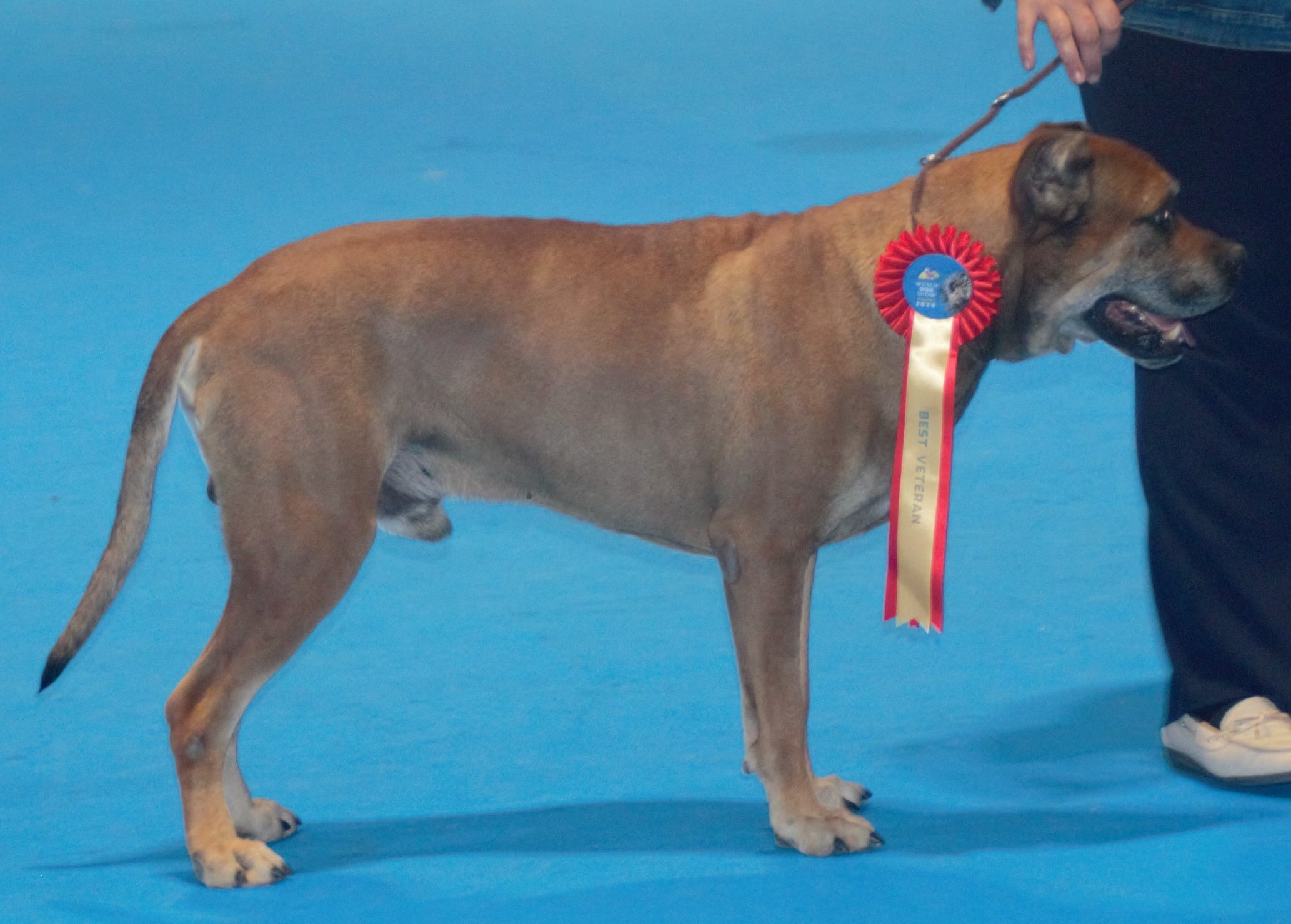
CC BY-SA 4.0 • 2,066×1,479 px (503 KB) • Author: Canarian • 26 Jun 2022
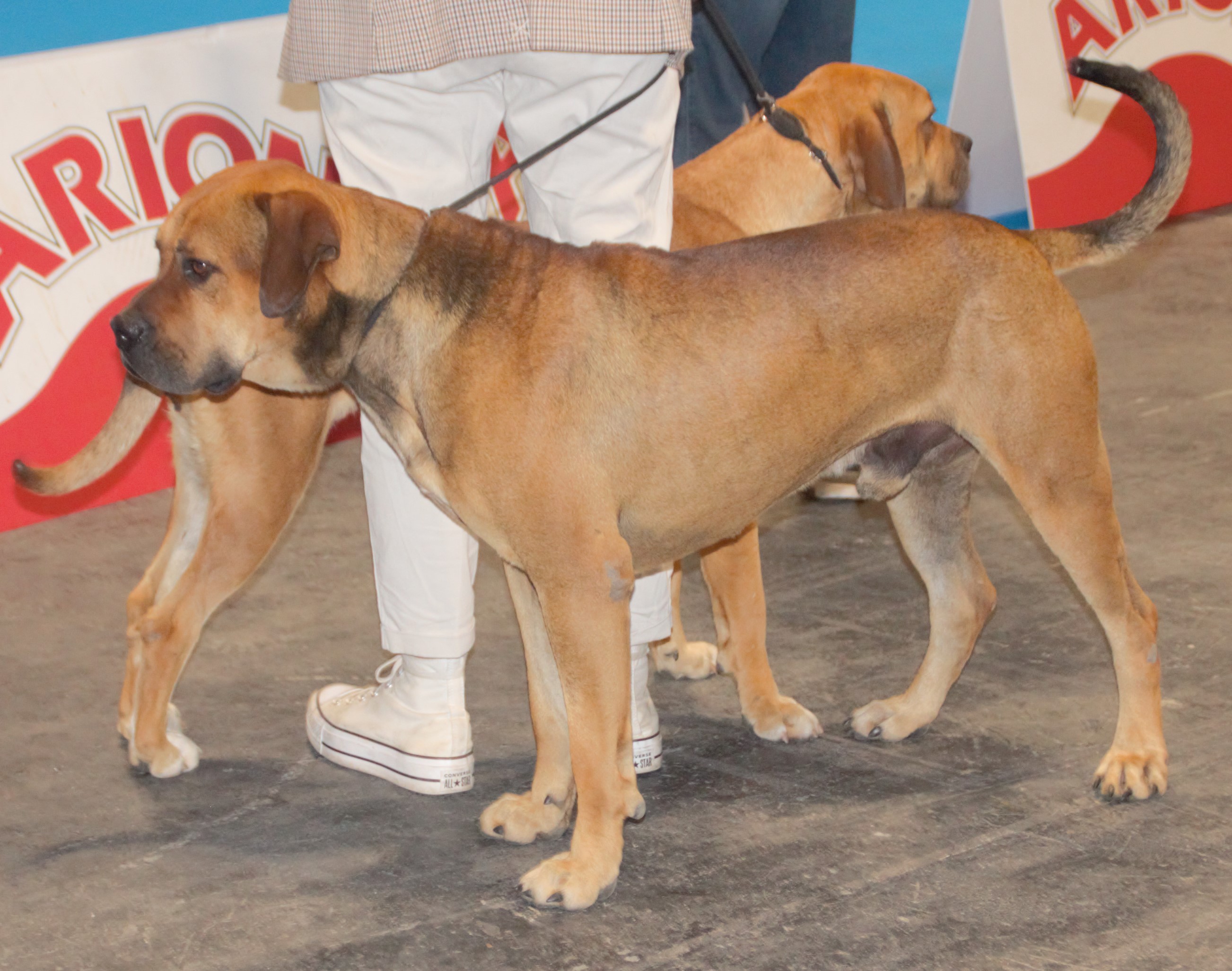
CC BY-SA 4.0 • 2,605×2,054 px (849 KB) • Author: Canarian

CC BY-SA 4.0 • 1,819×1,851 px (549 KB) • Author: Canarian • 26 Jun 2022

CC BY-SA 4.0 • 2,816×2,160 px (1.01 MB) • Author: Canarian

CC BY-SA 4.0 • 2,761×2,290 px (1.16 MB) • Author: Canarian • 26 Jun 2022

CC BY-SA 4.0 • 2,126×1,631 px (607 KB) • Author: Canarian • 26 Jun 2022
Black & Tan Coloration

CC BY-SA 4.0 • 2,347×1,749 px (684 KB) • Author: Canarian

CC BY-SA 4.0 • 2,023×1,700 px (543 KB) • Author: Canarian • 26 Jun 2022
Accepted Colors & Coat Standards
| Color | Description | Black Mask |
|---|---|---|
| Red (all shades) | From light fawn to dark mahogany red; most common historical color | Permitted |
| Red Sable | Red base with sable (black-tipped) overlay; adds depth to coat | Permitted |
| Fawn (all shades) | Light honey to deep golden fawn; traditional and common | Permitted |
| Brindle (atigrado) | Black brindle pattern over any base color; from light to very dark (reverse brindle); most visually striking | Permitted |
| Wolf-gray sable | Gray base with sable overlay; rarer color variation | Permitted |
| Yellow sable | Yellow base with sable overlay; lighter variation | Permitted |
| Black & tan | Black base with tan points; clearly delineated markings on face, chest, legs | N/A (black base) |
| White markings | Tolerated on chest, paws, and muzzle tip; not to exceed 30% of coat surface | — |
| Disqualifying | Solid white; albino; merle; excessive white (>30%); fully unpigmented nose | — |

Wikimedia Commons • File: Alano-espanol-0003.jpg • 328×360 px (16 KB) • Alano Español mit kupierten Ohren

CC BY-SA 4.0 • 2,170×1,620 px (558 KB) • Author: Canarian
Origins: The Alan Tribe
- The Alani: A nomadic confederation of Iranian-speaking Sarmatian peoples from the steppes of the Pontic-Caspian region (modern Ukraine/Russia); renowned as superb horsemen and breeders of powerful war dogs; crossed the frozen Rhine River in 406 CE with the Vandals and Suebi.
- Arrival in Iberia: In 409 CE, the Alans entered the Iberian Peninsula and settled primarily in Lusitania (modern Portugal) and Carthaginensis (central Spain); they brought their distinctive large, powerful dogs — the ancestral Alaunt type.
- Visigothic assimilation: The Alans were subjugated by the Visigoths in the 418 CE; though the people were absorbed, their dog type survived and spread throughout the Iberian Peninsula over subsequent centuries.
Historical Development Timeline
| Period | Key Development |
|---|---|
| 409 CE | Alan tribe (Alani) enters the Iberian Peninsula with their war dogs; foundational stock established |
| 5th–8th century | Alano dogs spread throughout Iberian Peninsula; used as war dogs, hunting dogs, cattle dogs by Visigoths and early Castilians |
| 13th century | Documented in King Alfonso X’s Las Siete Partidas (1265); Alfonso XI’s Libro de la Montería describes Alanos in big-game hunting in detail |
| 15th–17th century | Alanos used by Spanish conquistadors in the Americas; documented by Columbus (1493), Cortés (1519), Pizarro (1532); depicted in Goya’s La Tauromaquia (bull-baiting) |
| 19th–20th century | Gradual decline with end of bull-baiting, changing agriculture, and urbanization; breed nearly disappeared by mid-20th century |
| 1990s | Researchers Antonio García Pérez, Carlos Contera, and Néstor Cienfuegos rediscover authentic working Alanos in remote Iberian mountain regions; breed revival begins |
| 2004 | Official recognition by Real Sociedad Canina de España (RSCE); breed standard published |
| 2007–present | FCI Provisional Standard No. 346 issued; growing international interest; breed clubs established in multiple countries; controlled population growth with health testing emphasis |

Role in the Spanish Conquest
- Columbus’s second voyage (1493): Christopher Columbus brought Alano-type dogs on his second voyage to the New World; among the first European dogs to arrive in the Americas; used to intimidate indigenous populations and track escaped captives.
- Vasco Núñez de Balboa: One of the most documented users of war dogs in the Conquest; is recorded to have executed indigenous people using his Alano named “Leoncillo” (Little Lion); Leoncillo reportedly received a soldier’s pay for his service.
- Hernán Cortés (Mexico, 1519): Cortés’s forces in the conquest of the Aztec Empire employed Alano dogs extensively; Spanish chronicles document their psychological and tactical use against Aztec warriors unfamiliar with such large dogs.
- Bull-baiting (alancear toros): Goya’s La Tauromaquia (1816) series of etchings documents the Alano’s traditional role in bull-baiting — a festive practice where dogs were released onto bulls; the Echan perros al toro print is the most famous visual record of this practice.
- Cattle herding (ganadería brava): Beyond warfare, Alanos were essential in handling fighting bulls on Spanish ranches; the bite-and-hold technique (“presa de toro”) using the nose grip required exactly the jaw structure, tenacity, and controlled aggression bred into the Alano for centuries.

CC BY-SA 4.0 • 1,213×942 px • Author: Canarian
CC BY-SA 4.0 • 2,274×1,603 px • Author: Canarian • Sep 2019
Core Behavioral Traits
- Balanced confidence: The Alano Español is characterized by remarkable psychological stability; self-assured without aggression; calm in the face of stimulation; does not spook easily; the FCI standard specifically calls for a “balanced, obedient, and courageous” dog.
- Profound loyalty: Bonds deeply with its family; protective instinct is natural but controlled; will defend its people when genuinely threatened without being reactive or unpredictable.
- Prey drive: Strong hunting instinct from its boar-hunting and bull-baiting heritage; high prey drive requires management around smaller animals; should be kept on leash in unsecured areas.
- Dog sociability: Can be dominant or combative with same-sex dogs; early socialization with multiple dogs improves tolerance; not ideally suited to dog parks; the working heritage required single-minded focus, not pack cooperation.
- Human-focused: Strongly people-oriented; prefers human company over other dogs; will closely follow its owner; forms an intense bond with primary person(s).
- Intelligence & trainability: Highly intelligent; learns quickly; responds to calm, clear, consistent leadership; requires an experienced, confident owner; strong-willed and may test weak leadership.
Temperament Profile
| Trait | Level | Notes |
|---|---|---|
| Family loyalty | Very high | Devoted; protective; gentle with known children |
| Stranger reaction | Reserved | Aloof, calm; not fearful; watchful |
| Dog sociability | Moderate-low | Can be dominant; requires management; early soc. essential |
| Trainability | Moderate-high | Intelligent; requires consistent experienced handler |
| Prey drive | High | Strong hunting heritage; leash management essential |
| Energy level | Moderate | Needs daily exercise; calm indoors when exercised |
| Guard instinct | High | Natural protector; not a nuisance barker; serious when needed |
| Stability | Very high | Hallmark of the breed; psychologically balanced; not reactive |
CC BY-SA 4.0 • 2,940×1,892 px • Author: Canarian
CC BY-SA 4.0 • 2,613×1,871 px • Author: Canarian
Traditional Working Roles
- Big-game hunting: Primary historical function; used for hunting wild boar (jabalí), deer (ciervo), and bear (oso); the Alano’s role was to chase, catch, and hold the quarry until the hunter arrived; required extraordinary courage, power, and pain tolerance.
- Cattle work (ganadería): Controlled fighting bulls in Spanish ganadería brava ranches; the nose-grip technique — gripping a bull by the nose and bearing it to the ground — required the specific jaw structure, neck strength, and grip tenacity of the Alano; essential before mechanized cattle handling.
- Bull-baiting (alancear toros): Released onto bulls in festive arena events; depicted extensively in historical sources including Goya; this use shaped both the physical type (powerful, low-slung) and the controlled aggression temperament of the breed.
- War dog: Used in European medieval warfare before gunpowder; armored for battle; psychological weapon against cavalry horses and infantry; documented in multiple Reconquista campaigns and Spanish expeditions to the Americas.
- Guard dog: Livestock and property guardian; its large size, courageous nature, and territorial instincts made it a natural guardian of estates, ranches, and villages in medieval Spain.
Developmental Stages
- Birth to 8 weeks: Litters typically 4–10 puppies; born with eyes and ears closed; eyes open at 10–14 days; critical breeder-initiated socialization begins at 3 weeks; exposure to varied sounds, surfaces, and gentle handling essential.
- 8–16 weeks: The most critical socialization window; extensive positive exposure to people of all types, children, vehicles, other dogs, livestock, and varied environments; foundation for the balanced stable temperament the breed is known for; puppy classes highly recommended.
- 3–6 months: Rapid growth; skeletal development ongoing; avoid excessive high-impact exercise; consistent basic obedience begins; the Alano’s intelligence makes early training highly effective; leadership must be established calmly and firmly.
- 6–18 months: Adolescent testing of boundaries; may challenge authority; dominant behavior with other dogs may emerge, particularly in males; continued socialization and training is non-negotiable; physical development approaching adult size but mental maturity still developing.
- 18 months–3 years: Full adult size typically reached by 18–24 months; behavioral maturity by 2–3 years; the mature Alano is notably calm, self-assured, and stable when properly reared; full working ability established.
CC BY-SA 4.0 • 2,605×2,054 px (849 KB) • Author: Canarian
CC BY-SA 4.0 • 1,819×1,851 px • Author: Canarian
Show Ring Evaluation Criteria
- FCI Provisional Standard judging: Under the FCI Provisional Standard No. 346, the Alano Español is evaluated primarily on: correct type (overall impression of power combined with agility), head quality (broad skull, correct jaw, proper bite), body structure (depth of chest, level back, musculature), coat quality and color, and temperament (calm, self-assured behavior in the ring).
- Spanish national shows (RSCE): Since 2004 recognition, the breed competes in RSCE-sanctioned shows across Spain; championship titles accumulate toward international CACIB (Certificate of Aptitude for International Beauty Championship) eligibility under FCI rules.
- Natural ear preference: Modern show standard favors natural, uncropped ears; some older working dogs may still have cropped ears from traditional practice; the rose or folded ear of the natural Alano is considered correct type in the show ring.
- Breed-specific working tests: Some Alano clubs conduct controlled temperament and working aptitude tests alongside conformation shows to assess the working character that defines the breed; these are not required for championship but demonstrate preservation of working essence.
CC BY-SA 4.0 • 2,066×1,479 px • Author: Canarian
CC BY-SA 4.0 • 2,023×1,700 px • Author: Canarian
Health Status Overview
The Alano Español is a recently recovered breed with a small founding population; genetic diversity management is critically important. Responsible breeders prioritize health testing and genetic diversity to avoid inbreeding problems. Average lifespan is 11–14 years, generally good for a large breed.
| Health Condition | Risk Level | Notes |
|---|---|---|
| Hip Dysplasia | Moderate | Common in large breeds; OFA/PennHIP screening essential in breeding animals; avoid over-exercising growing puppies |
| Elbow Dysplasia | Moderate | Important to screen; affects working ability and quality of life; OFA elbow screening recommended |
| Bloat (GDV) | Moderate-High | Deep-chested breed; gastric dilatation-volvulus risk; feeding management (two small meals) essential; prophylactic gastropexy option for high-risk individuals |
| Genetic diversity | Important concern | Small founder population from 1990s revival; breeding outside closely related lines critical; COI (Coefficient of Inbreeding) monitoring essential; international breeding coordination encouraged |
| Entropion/Ectropion | Moderate | Eye lid conformational issues; may affect dogs with particularly loose facial skin; surgical correction if needed |
| Demodectic mange | Moderate | Immune-mediated skin condition; linked to immune function; responsible breeders screen for genetic susceptibility |
| Heat sensitivity | Moderate | Short coat provides less insulation; brachycephalic tendencies may affect heat tolerance; exercise management in high heat essential |
Responsible Breeding Standards
- Health testing minimum: Hip dysplasia OFA/PennHIP; elbow dysplasia OFA; cardiac evaluation; eye examination; demodectic mange family history; published results expected of ethical breeders.
- Genetic diversity priority: Given the small founder population, coefficient of inbreeding (COI) must be monitored; outcrossing to unrelated lines strongly encouraged; international registry coordination between Spanish, European, and North American breeders.
- Temperament selection: The FCI breed standard mandates a balanced, stable, obedient character; extreme aggression or fearfulness are disqualifying faults; temperament testing of breeding pairs is best practice.
- Color genetics: All accepted colors may be combined in breeding; brindle is dominant; black and tan is a recessive trait; solid white and merle are disqualifying and should not be bred.
Whelping & Litter Information
- Litter size: Typically 4–10 puppies; average 6–8; large litters require careful monitoring of individual puppy development and nutrition.
- Whelping: Generally whelp naturally; whelping box should be large; bitch should be monitored; some lines may require veterinary assistance due to puppy head size.
- Early neurological stimulation: Breeder-initiated programs (BioSensor, Puppy Culture) from birth to 8 weeks are valuable for developing confident, stable temperament in Alano puppies.
Exercise & Space Requirements
- Exercise needs: Moderate to high; 45–90 minutes of purposeful daily exercise; hiking, jogging, structured play, off-leash work in secured areas; the Alano’s working heritage requires mental as well as physical challenge.
- Space: Requires a securely fenced yard; not suitable for apartment life without significant daily outdoor exercise; strong and athletic — fencing must be substantial; can clear low fences if motivated.
- Climate: Adapts well to varied climates; the short coat does not provide insulation in extreme cold; in hot climates, exercise should be limited to cooler parts of the day.
Grooming
- Coat maintenance: Very low-maintenance coat; weekly brushing with a rubber curry or short-bristle brush; seasonal shedding present but moderate compared to double-coated breeds; the short flat coat is clean and easy to maintain.
- Bathing: Monthly or as needed; skin folds around the face (if present) require checking and cleaning; the Alano’s coat naturally repels light dirt.
- Nail care: Regular monthly trimming; the Alano’s active lifestyle may naturally wear nails but should not be relied upon exclusively.
- Ear care: Weekly inspection; the drooping ear is more susceptible to moisture and infection than erect ears; clean gently as needed with appropriate ear cleaner.
Nutrition & Feeding
- Diet: High-quality large-breed protein-rich food; life-stage appropriate; monitor body condition — the Alano should be athletic and lean, not obese; obesity exacerbates joint disease.
- Feeding schedule: Two meals daily to reduce bloat/GDV risk; avoid exercise 1 hour before and 2 hours after feeding; elevated bowl usage is debated and not universally recommended.
- Supplements: Joint support (glucosamine/chondroitin) from middle age; omega-3 fatty acids support skin, coat, and joint health.
1. What is the Alano Español?
The Alano Español (Spanish Alaunt, Perro Alano Español) is a large, powerful ancient Spanish molosser-type dog breed descended from the war dogs brought to the Iberian Peninsula by the Alan tribe in 409 CE. It was historically used for hunting large game, controlling fighting bulls, guarding, and as a war dog. After near-extinction in the 20th century, it was revived in the 1990s and officially recognized by Spain’s RSCE in 2004.
2. Is the Alano Español recognized by the FCI?
Yes. The Alano Español has been granted FCI Provisional Standard No. 346, Group 2, Section 2.1 (Molossoid Breeds, Mastiff type). It was submitted to the FCI by Spain’s RSCE following the national recognition in 2004. The breed is working toward full FCI recognition as the population and documentation mature.
3. What does an Alano Español look like?
A large, muscular, athletic dog with a broad flat skull, wide powerful muzzle, slight underbite, deep chest, and short dense flat coat. Colors include red, fawn, brindle, black and tan, and wolf-gray. Males stand 58–63 cm and weigh 34–40 kg. The breed combines the power of a mastiff with the athleticism of a hunting dog.
4. What is the temperament of the Alano Español?
The Alano Español is characterized by extraordinary psychological stability — confident, balanced, obedient, and courageous. It bonds deeply with its family and is protective without unnecessary aggression. It can be dominant with other dogs and has strong prey drive. An experienced, confident owner is essential.
5. What were Alano Español dogs historically used for?
Alano Español dogs served as big-game hunters, cattle controllers, war dogs, and bull-baiting dogs. They accompanied the Spanish conquistadors to the Americas and were used in battles of the Conquest. Francisco Goya documented their bull-baiting role in his La Tauromaquia etching series.
6. Is the Alano Español related to the Alaunt?
Yes. The Alano Español is considered a direct descendant of the Alaunt — the ancient war and hunting dog type of the Alan nomadic tribe. The Alan people entered Iberia in 409 CE bringing their characteristic dogs; these became the foundational stock of the Alano Español. The name “Alano” derives directly from “Alan.”
7. How big is an Alano Español?
Males stand 58–63 cm at the withers and weigh 34–40 kg (75–88 lbs). Females are slightly smaller at 55–60 cm and 27–35 kg. The breed is powerfully built with substantial bone and muscle mass, combining size with athletic agility.
8. What colors does the Alano Español come in?
Accepted colors include red, fawn, brindle (atigrado), red sable, wolf-gray sable, yellow sable, and black and tan. A black mask is permitted in all colors. White markings on the chest, paws, and muzzle are tolerated if not excessive (<30%). Solid white, albino, and merle are disqualifying.
9. How long do Alano Español dogs live?
Alano Español dogs typically live 11–14 years — good longevity for a large breed. Proper nutrition, regular exercise, veterinary care, and breeding for genetic health contribute to longevity. Genetic diversity management is particularly important in this recently recovered breed.
10. Is the Alano Español good with children?
With proper socialization, the Alano Español can be calm and gentle with children in its family. Its large size requires supervision with small children due to accidental knockovers. Early socialization is essential. The Alano’s strong protective instinct makes it a loyal family guardian when properly raised.
CC BY-SA 4.0 • 2,816×2,160 px • Author: Canarian
CC BY-SA 4.0 • 2,761×2,290 px • Author: Canarian
Spanish & Iberian Breeds
- Presa Canario (Dogo Canario) – Canary Islands molosser with Alano Español ancestry; large, powerful guarding breed; FCI recognized; descended partly from Spanish working dogs brought to the Canaries.
- Ca de Bou (Mallorcan Bulldog) – Majorcan island molosser; descended from Spanish bull-baiting dogs of Alano ancestry; FCI recognized in Group 2; shares historical bull-baiting heritage.
- Mastín Español (Spanish Mastiff) – Large Spanish livestock guardian; different in type (livestock protection vs. catch dog) but shares Iberian working heritage with the Alano.
Related European & Global Molossers
- Dogo Argentino – Argentine molosser developed using Alano Español as a primary foundation breed; perhaps the most direct modern descendant of the Alano type in the New World.
- Bullmastiff – English molosser with similar balance of power and stability; different heritage but comparable working guarding function and temperament type.
- Akita Dog (Akita Inu) – Large Japanese working breed; comparable size and dignified, loyal temperament type; interesting contrast in Eastern vs. Western working dog development.
All Dog Breed Encyclopedias
- Affenpinscher – Toy breed contrast illustrating the remarkable diversity within Canis familiaris.
- View All Dog Breed Encyclopedias – Complete directory of 100+ breed encyclopedias at Encyclopedia.guru.
Explore our trusted network of partner websites covering directories, encyclopedias, marketplaces, education, health, finance, and more across Indonesia and beyond.
- This encyclopedia is educational in nature and reflects current breed documentation as of March 2026.
- All 16 images sourced exclusively from Wikimedia Commons MediaSearch (search term: “Alano Español dog”) with verified open licenses (CC BY-SA 4.0, CC BY-SA 3.0, and Public Domain).
- Only dog/Alano Español-related images included; non-dog results (French Bulldog, Catalan Dogo, etc.) excluded per user instruction.
- Historical artwork images (Goya prints) are Public Domain.
- Health information is for general educational purposes only; consult a qualified veterinarian for specific health advice.
Primary References
- FCI: Fédération Cynologique Internationale; Provisional Standard No. 346 – Alano Español (Perro Alano Español); Group 2, Section 2.1.
- RSCE: Real Sociedad Canina de España; official breed recognition 2004; Spanish national breed standard documentation.
- García Pérez, Antonio & Contera, Carlos: Breed revival researchers; 1990s fieldwork documenting surviving working Alanos in northern Spain; foundational breed recovery documentation.
- Alfonso XI: Libro de la Montería (c. 1348); royal hunting compendium documenting the Alano’s role in big-game hunting in medieval Spain.
- Goya, Francisco: La Tauromaquia (1816); etching series documenting Spanish bullfighting traditions including the use of Alano-type dogs in bull-baiting.
Image Attribution Summary (16 Images)
- Hero: Spanish_Alano_2.jpg • CC BY-SA 4.0 • 2,274×1,603 px • Canarian • 7 Sep 2019
- Intro: Spanish_Alano_1.jpg (CC BY-SA 4.0) • Alano_espanol.jpg (CC BY-SA 3.0)
- Breed std: Spanishalanobrindle1 & 5 • CC BY-SA 4.0 • Canarian 2022
- Head: Alano_Español_or_Spanish_Bulldog.jpg • CC BY-SA 3.0
- Coat x9: Spanishalanored1, 2, 3; Spanishalanobrindle2, 3, 4; Spanishalanoblacktan1, 2; Spanish_Alano_2 • All CC BY-SA 4.0 • Author: Canarian
- History: Alano-espanol-0003.jpg • Spanishalanored4 • CC BY-SA 4.0
- Conquistadors (2 Goya): Goya_-_Echan_perros_al_toro & Goya_-_Jogam_cachorros_ao_touro • Public Domain (1816)
About the Author: Encyclopedia.guru Expert Writing Team
The Encyclopedia.guru writing team consists of experienced canine researchers, certified dog breed specialists, veterinary consultants, and professional animal science writers. Specialists in molosser breeds, Spanish dog breeds, FCI breed standards, and medieval Iberian canine history including the Conquistador war dog heritage.
🌐 Visit Encyclopedia.guru – 100+ comprehensive breed encyclopedias.
© 2026 – Encyclopedia.guru – Alano Español Encyclopedia (Canis familiaris)
Spanish Alaunt • FCI Provisional Standard No. 346 • RSCE Recognized 2004 • 16 Wikimedia Commons images with full attribution • Updated: 24 March 2026