🐕 Encyclopedia of Akita Dog (Canis familiaris)
Comprehensive breed encyclopedia: Akita Inu origins in feudal Japan, Hachiko loyalty legend, Japanese Natural Monument status, breed standard & conformation, coat colors, Japanese vs. American Akita, health genetics, and international breed recognition
✏️ Written by the Encyclopedia.guru Expert Writing Team | Last Updated: March 24, 2026 | Reviewed by Certified Canine Specialists
The Akita Dog (Canis familiaris), known in Japan as the Akita Inu (租田獣, literally “Akita dog”), is one of the world’s most majestic and culturally significant dog breeds, originating from the Akita Prefecture in the mountainous Tohoku region of northern Honshu, Japan. Among the six native Japanese dog breeds designated as Natural Monuments of Japan in 1931, the Akita stands as the largest, most powerful, and internationally celebrated — a living symbol of loyalty, dignity, and national pride. Its fame was immortalized by Hachiko, the devoted Akita who waited for his deceased owner at Shibuya Station daily for nearly a decade, becoming one of the most iconic stories of canine loyalty in human history.
Today, the Akita exists in two recognized varieties: the Japanese Akita Inu (preserved to its ancient type) and the American Akita (Great Japanese Dog), a larger, more diverse-colored variant that developed in the United States following World War II. Both share the same fundamental temperament — dignified, loyal, independent, and courageous — and the same signature bear-like head, thick double coat, and magnificently curled tail of the ancient mountain dog of northern Japan.
- Natural Monument of Japan: Designated a Natural Monument of Japan in 1931; one of six native Japanese breeds given this protected status; the largest and most internationally famous of Japan’s native dogs; subject of active national breed preservation since 1927 (AKIHO society).
- Hachiko legacy: The Akita Inu Hachiko (1923–1935) became a global symbol of loyalty and devotion, waiting at Shibuya Station every day for 9 years and 9 months after his owner’s death; bronze statue at Shibuya Station is one of Japan’s most photographed landmarks.
- Two recognized varieties: Japanese Akita Inu (FCI Standard No. 255) and American Akita / Great Japanese Dog (FCI Standard No. 344); the AKC recognizes both under a single Akita breed standard accepting all colors.
- Ancient Japanese origins: Descended from ancient Matagi dogs of northern Japan used for hunting large game including bear, boar, and deer on steep mountain terrain; documented in Akita Prefecture for at least several centuries.
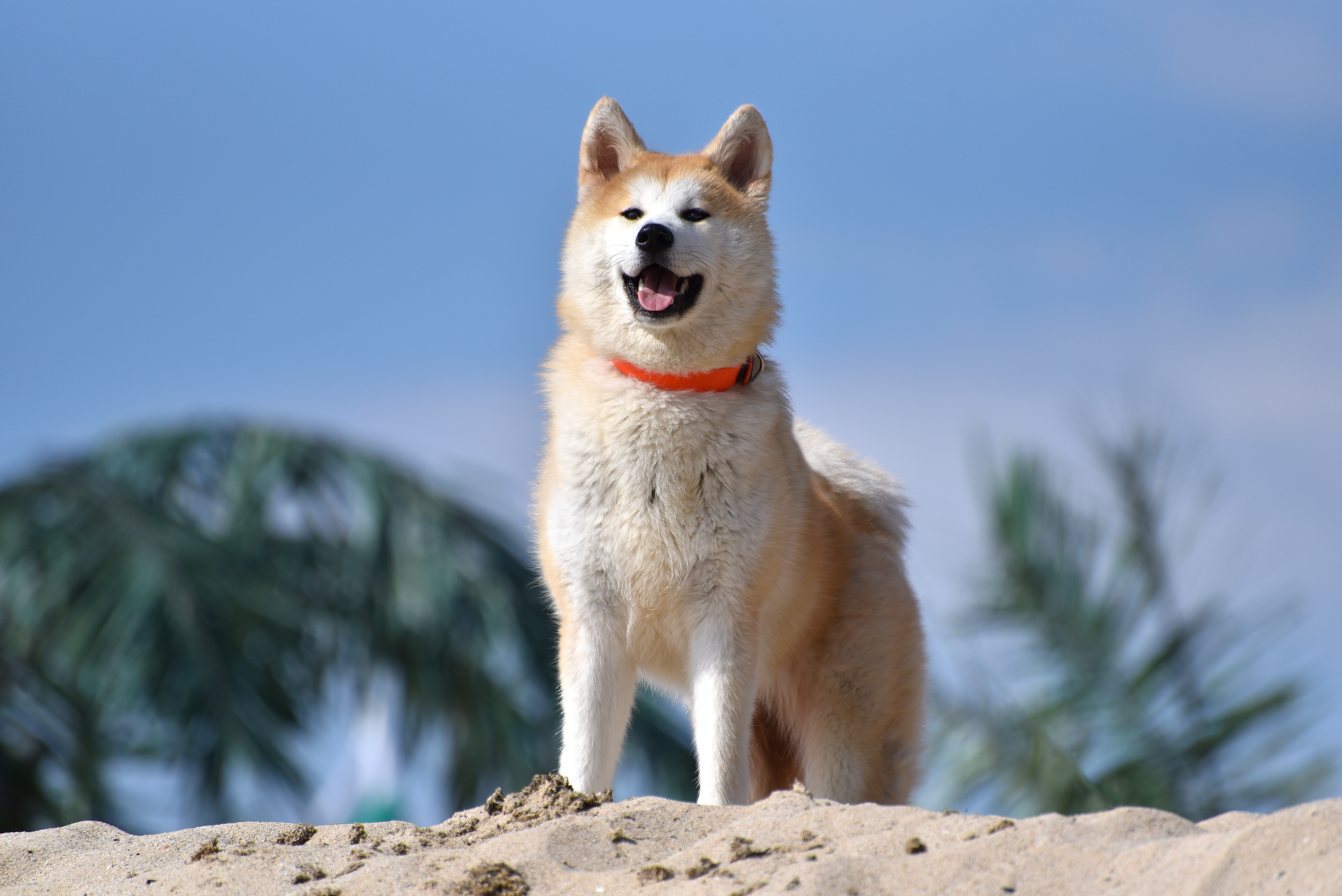
- Bear-like head: Signature broad, bear-like head with small triangular ears, dark brown almond eyes, and powerful jaws; thick neck; deep chest; the head is a defining characteristic distinguishing the Akita from all other breeds.
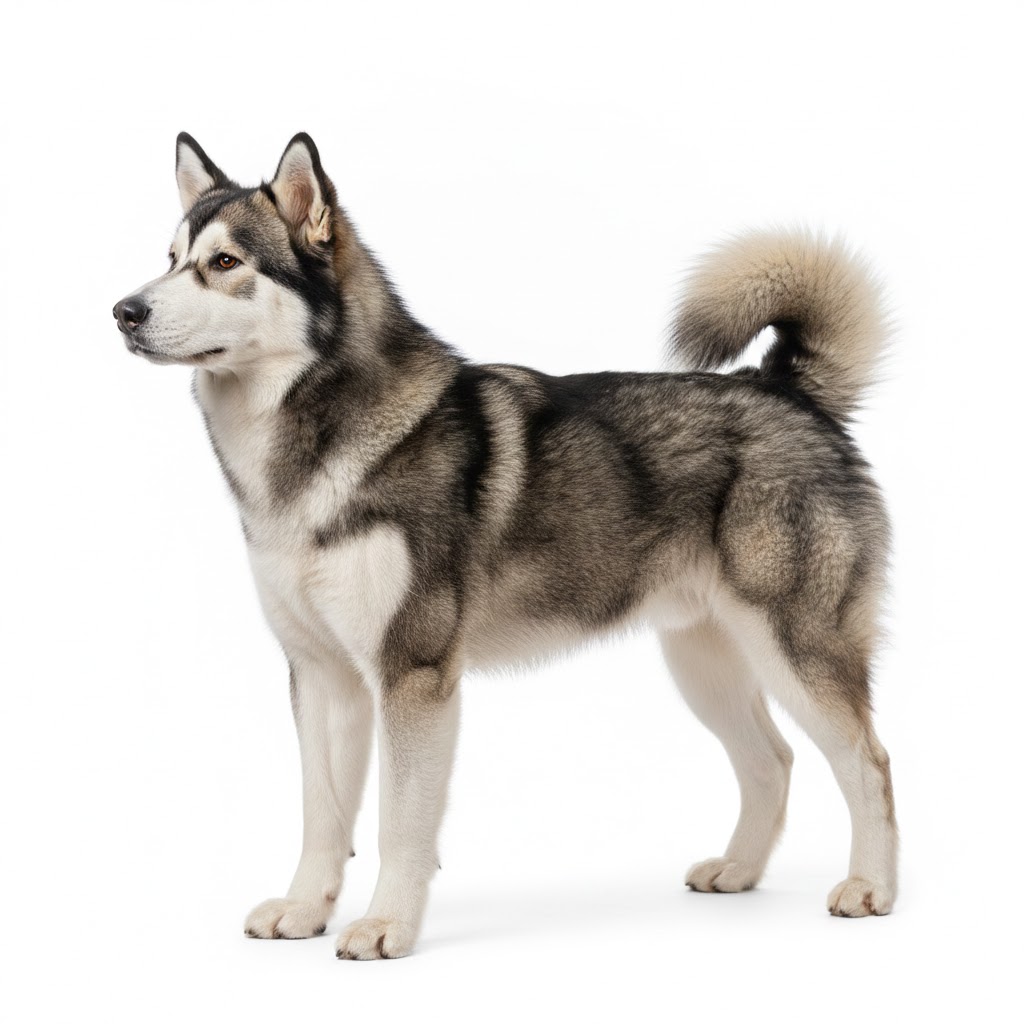
- Curled tail: Characteristic tightly curled tail carried over the back; one of the most iconic visual features of the breed; full, thick, and lavishly furred; may curl in full circle or double curl over the back.
The Akita is among the most regal and historically significant dog breeds on Earth, representing an unbroken lineage reaching back to ancient feudal Japan. Unlike most Western breeds developed in the 19th century, the Akita’s ancestry is measured in centuries, and its cultural importance to Japan is comparable to the Shiba Inu or other national symbols.
Cultural & Historical Significance
- Samurai heritage: In feudal Japan, Akitas were exclusively owned by the shogunate and nobility; commoners were forbidden from owning them; each Akita was attended by its own servant and fed specially prepared food.
- Matagi hunting dog: Originally bred as a Matagi inu (hunting dog) in the mountains of Akita Prefecture; used for hunting bear, wild boar, and deer; the Matagi hunters of northern Japan depended on these powerful, fearless dogs in deep snow terrain.
- National symbol: A gift of an Akita puppy in Japan traditionally represents good health, happiness, and long life; the government sends Akita puppies as diplomatic gifts to foreign dignitaries as a symbol of goodwill.
- Post-WWII development: The breed nearly went extinct during WWII when dogs were confiscated for their fur or to prevent resource consumption; dedicated breeders preserved foundational stock; American servicemen returning from Japan brought Akitas to the USA, leading to the divergent American type.

Source: Wikimedia Commons • File: Akita_dog_Bukemaru_in_Kakunodate,_April_2023_01.jpg • CC BY-SA 4.0 • 4,608×3,456 px (4.52 MB) • Author: Calistemon

Source: Wikimedia Commons • File: Akita_inu.jpeg • 1,151×702 px (127 KB)
Systematic Classification
| Taxonomic Rank | Classification |
|---|---|
| Kingdom | Animalia |
| Phylum | Chordata |
| Class | Mammalia |
| Order | Carnivora |
| Family | Canidae |
| Genus | Canis |
| Species | C. familiaris |
| Common Name | Akita Dog / Akita Inu |
| Japanese | 租田獣 (Akita Inu) |
| AKC Group | Working Group (recognized 1973) |
| FCI Group | Group 5, Section 5 – Asian Spitz and related breeds |
| FCI Standard (Japanese) | No. 255 – Akita |
| FCI Standard (American) | No. 344 – Great Japanese Dog (Akita) |
| Country of Origin | Japan (Akita Prefecture, Tohoku region) |
Kennel Club Recognition
- AKC (USA): American Kennel Club recognized the Akita in the Working Group in 1973; AKC recognizes a single Akita breed accepting all coat colors including American-type colors.
- FCI: Fédération Cynologique Internationale recognizes two separate breeds: Akita (No. 255, Japanese type) and Great Japanese Dog / American Akita (No. 344); FCI prohibits pinto and black mask in the Japanese Akita standard.
- AKIHO: Akita Inu Hozonkai (租田獣保存会), founded 1927 in Japan; the primary Japanese breed preservation society; maintains purebred Japanese Akita Inu registry and breed standards.
- Natural Monument: Designated a Natural Monument of Japan (国定天然記念物) by the Japanese government in 1931; legally protected status under Japanese cultural heritage law.
CC BY-SA 4.0 • 4,608×3,456 px • Author: Calistemon

CC BY-SA 4.0 • 4,608×3,456 px • Author: Calistemon • Apr 2023
AKC Physical Standards
| Feature | Standard Description |
|---|---|
| Height (male) | 26–28 inches (66–71 cm) at the withers; Japanese Akita 25–27.5 in (64–70 cm) |
| Height (female) | 24–26 inches (61–66 cm); proportionate |
| Weight (male) | 100–130 lbs (45–59 kg); American type; Japanese type typically 70–100 lbs (32–45 kg) |
| Head | Massive, broad, bear-like; flat top skull; deep stop; powerful jaws; characteristic Akita head type |
| Eyes | Dark brown; almond-shaped; relatively small; deep-set; expression: calm, dignified, alert |
| Ears | Erect; small relative to head size; triangular; slightly rounded tips; tilting slightly forward; characteristic Akita feature |
| Neck | Thick, muscular; relatively short; no dewlap; carries head high and proud |
| Body | Longer than tall; deep chest; level topline; well-sprung ribs; muscular loin; slight tuck-up |
| Tail | Full, tightly curled tail; set high; carried over back; thick, heavily furred; full single or double curl; one of most distinctive features |
| Coat | Double coat; outer coat coarse, straight, 1–2 inches long; dense undercoat; slightly longer on tail; soft inner coat |
| Movement | Powerful, rhythmic, reaching trot; full extension fore and aft; agile and fluid for large size |

Facial Feature Standards
- Skull: Massive, broad, flat on top; resembles a bear’s head; strongly developed stop; the broad powerful head is considered the most defining characteristic of the breed and distinguishes it from all other dogs.
- Eyes: Dark brown; almond-shaped; relatively small; deeply set; calm, dignified, slightly reserved expression — never protruding or round; eye rims dark.
- Ears: Erect, small, triangular; thick cartilage; slightly rounded at tips; carried slightly forward over the eyes; characteristic feature — ears add to the bear-like appearance when combined with the broad skull.
- Muzzle: Broad at base, tapering slightly; deep; powerful; clean lips; black nose (preferred in most varieties); slight dewlap in some individuals; scissor bite preferred.
- Urajiro: Characteristic cream-to-white markings (urajiro) on the cheeks, jaw, chest, underside of neck, and inside of legs; required in Japanese Akita Inu standard; contributes to the distinctive facial expression pattern.

CC BY-SA 4.0 • 1,420×1,448 px (462 KB) • Author: Canarian • 23 Aug 2020
CC BY-SA 4.0 • Author: Canarian • 2020

CC BY-SA 4.0 • 1,537×1,496 px (528 KB) • Author: Canarian • 23 Aug 2020

CC BY-SA 4.0 • 1,586×1,372 px (531 KB) • Author: Canarian

CC BY-SA 4.0 • 1,325×1,128 px (313 KB) • Author: Canarian

CC BY-SA 4.0 • 1,719×1,363 px (480 KB) • Author: Canarian
Coat Standards Table
| Feature | Japanese Akita Inu | American Akita |
|---|---|---|
| Coat length | Short to medium; 1–2 inches; dense | Short to medium; dense; slightly longer on tail |
| Texture | Outer: straight, coarse; undercoat: soft, dense | Outer: straight, coarse; undercoat: thick, soft |
| Accepted colors | Red, brindle (tora), sesame, white; all with urajiro | All colors permitted; pinto pattern accepted; black mask permitted |
| Urajiro | Required; cream-to-white on cheeks, muzzle, throat, chest, underside, and inside legs | Urajiro preferred but not required in all color patterns |
| Disqualifying colors | Pinto; black mask; any non-standard color | None – all colors accepted |
| Shedding | Heavy seasonal blow-out twice yearly; moderate year-round | Heavy seasonal blow-out twice yearly; moderate year-round |

Wikimedia Commons • File: Akita_dog_circa_1907.jpg • Public Domain • 817×985 px • Meiji 40 (1907)

Wikimedia Commons • File: Akita_Inu_Tochi_II.png • Public Domain (1937) • 717×484 px • Source: 犬:研究・飼育・訓練・医療講座
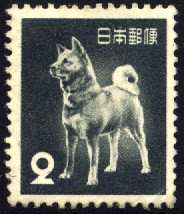
Wikimedia Commons • File: Akita_Stamp.jpg • Public Domain (1953) • 184×214 px • Japanese post stamp, Akita Inu
Ancient Origins
- Matagi heritage: The Akita descends from the Matagi Inu (沖犀獣), working dogs of the Matagi hunters of Tohoku; used for bear, wild boar, and deer hunting in deep-snow mountain terrain for centuries.
- Feudal Japan: By the Edo period (1603–1868), the Akita-type dog was firmly established in Akita Prefecture; during the shogunate era, they were reserved exclusively for Japanese nobility and samurai class.
- Odate City: The city of Odate in Akita Prefecture is considered the breed’s heartland; home of the Akita Dog Museum (租田獣会ş館) and the AKIHO headquarters.
Development Timeline
| Period | Key Development |
|---|---|
| Pre-modern Japan | Matagi hunting dogs in Tohoku mountain region; large Spitz-type dogs used for big game; aristocratic ownership traditions established |
| Meiji era (1868–1912) | Western breeds introduced to Japan; crossbreeding with Tosa and other breeds; some dilution of original type; early photographs document transitional breed type |
| 1927 | Akita Inu Hozonkai (AKIHO) founded in Odate; dedicated breed preservation begins; emphasis on restoring pure Japanese Akita type |
| 1931 | Akita Inu designated Natural Monument of Japan by the Japanese government; legal protection and recognition of national significance |
| 1937 | Helen Keller visits Japan; receives Akita puppy “Kamikaze-Go”; becomes first Akita owner in the USA; introduces breed to the Western world |
| 1944–1945 | WWII near-extinction; dogs confiscated; breed reduced to small numbers; dedicated breeders preserved remnant stock |
| 1945–1950s | American servicemen in occupied Japan bring Akitas to USA; American type begins diverging from Japanese type |
| 1973 | American Kennel Club (AKC) recognizes the Akita in the Working Group |
| 1992 | FCI recognizes Japanese Akita Inu and American Akita as separate breeds under distinct standards |
| 2000s–present | Global breed popularity; competitive show success worldwide; ongoing breed preservation efforts in Japan; popularity in pop culture |
The Story of Hachiko
- Background: Hachiko (委八, 1923–1935) was an Akita Inu born in Ōdate, Akita Prefecture; given to Professor Hidesaburo Ueno (上野稿三郎) of Tokyo Imperial University.
- Daily routine: Each day, Hachiko accompanied Professor Ueno to Shibuya Station and waited for his return; in May 1925, Professor Ueno died of a cerebral hemorrhage while at the university and never returned to the station.
- Faithful waiting: Hachiko continued to appear at Shibuya Station every single day for 9 years, 9 months, and 15 days until his own death on March 8, 1935; he waited at the exact spot where his owner would normally emerge.
- National recognition: Hachiko’s loyalty was reported in major Japanese newspapers in 1932, making him a celebrity; commuters at Shibuya began bringing him treats; he became known as Chū-ken Hachikō (“faithful dog Hachiko”).
- Bronze statue: A bronze statue of Hachiko was erected at Shibuya Station in 1934 while he was still alive; the original was melted down for WWII material; the current statue was re-erected in 1948 and remains one of Tokyo’s most iconic landmarks and popular meeting spots.
- Cultural legacy: Hachiko’s story inspired films, books, and cultural works worldwide; the 2009 Hollywood film “Hachi: A Dog’s Tale” brought the story to international audiences; Hachiko remains the most famous dog in Japanese history.

CC BY-SA 4.0 • 3,024×4,032 px (3.16 MB) • Author: Keiko don95 • 23 Dec 2021

CC BY-SA 4.0 • 496×950 px (149 KB) • Author: Fiver, der Hellseher • 18 May 2016
Core Behavioral Traits
- Profound loyalty: Intensely loyal to their family; bond deeply with their primary person; the loyalty demonstrated by Hachiko is an intrinsic breed trait rather than an individual anomaly.
- Dignified independence: Highly independent; cat-like in cleanliness and self-sufficiency; does not crave constant attention; makes decisions autonomously; not a clingy or needy breed.
- Reserved with strangers: Naturally cautious and reserved with unfamiliar people; not aggressive without cause; proper socialization essential; may be standoffish or aloof with guests — this is correct breed temperament, not a fault.
- Dominance with other dogs: Can be dominant or aggressive with same-sex dogs; strong predatory instincts; not ideally suited for dog parks or multi-dog households without careful management and socialization.
- Courage: Fearless when called upon; historically used for bear hunting; will confront threats to its family without hesitation; courage paired with calm judgment rather than reactive aggression.
- Intelligence: Highly intelligent; learns quickly; can be willful; responds best to respectful, consistent training with clear boundaries; will manipulate an inconsistent owner.
Temperament Profile
| Trait | Level | Notes |
|---|---|---|
| With family | Deeply loyal | Devoted; protective; gentle with children it knows |
| With strangers | Reserved | Aloof but not aggressive; requires socialization |
| With other dogs | Challenging | Same-sex aggression common; needs careful management |
| Trainability | Moderate | Intelligent but independent; positive reinforcement; not for novice owners |
| Barking | Moderate | Not excessive; vocalizes when alert; not a nuisance barker |
| Energy level | Moderate | Needs daily exercise but not hyperactive; calm indoors |
| Prey drive | High | Strong prey drive; hunting heritage; should be leashed in open areas |
| Protectiveness | High | Natural guard dog instinct; territorial; requires boundaries |

CC BY-SA 4.0 • 480×511 px (29 KB) • Adult male Akita Inu & adult female American Akita

CC BY 2.0 • 979×810 px (205 KB) • American Akita: Estava Rain Reckless Road (JWW-15, NO JV-14, NORD JV-14)
Breed Comparison Table
| Feature | Japanese Akita Inu | American Akita (Great Japanese Dog) |
|---|---|---|
| FCI Standard | No. 255 – Akita | No. 344 – Great Japanese Dog |
| Size | Medium-large; males 25–27.5 in, 70–100 lbs | Large; males 26–28 in, 100–130 lbs; heavier build |
| Head | Fox-like; slightly narrower; elegant | Bear-like; broader; more massive |
| Colors accepted | Red, brindle (tora), sesame, white with urajiro | All colors including pinto; black mask permitted |
| Pinto/black mask | Disqualifying fault | Permitted and common |
| Urajiro | Required in all non-white colors | Preferred but not required in all patterns |
| AKC treatment | Single breed, all colors accepted | Single breed, all colors accepted |
| FCI treatment | Separate breed (No. 255) | Separate breed (No. 344) |
| Origin divergence | Ancient Japanese type; preserved by AKIHO | Developed in USA post-WWII from Japanese Akita stock crossed with Mastiff-type and other large breeds |

CC BY-SA 3.0 • 428×640 px (115 KB) • Akita Americano

CC BY-SA 4.0 • 540×960 px (148 KB) • Author: Michele Alessandro Lagala • 29 Mar 2016

Developmental Stages
- Birth to 8 weeks: Akita litters typically number 3–12 puppies; born with eyes and ears closed; eyes open at 10–14 days; rapid growth begins; socialization window opens at 3–4 weeks.
- 8–16 weeks: Critical socialization period; expose to diverse people, sounds, environments, and other animals; foundation for confident, stable adult temperament; early training begins; primary vaccination schedule.
- 3–6 months: Rapid growth phase; adolescent behaviors beginning; independent testing of boundaries; consistent, patient training essential; not yet sexually mature but personality distinctly developing.
- 6–18 months: Significant physical development; dominance behaviors may emerge, especially in males; continued socialization critical; training consistency most important during this phase; adult coat replacing puppy coat.
- 18 months–3 years: Approaching physical and mental maturity; adult weight and height; temperament stabilizing; full physical maturity typically at 2 years; behavioral maturity by 3 years.

CC BY 2.0 • 1,104×1,656 px (219 KB) • BIR Group 5, NORD JV-14, JWW-15

CC BY-SA 3.0 • 395×363 px (336 KB) • Authors: Peter Theakston, Keetanii, Melodorakitas • 5 July 2011
Show Ring Standards & Judging
- AKC shows: Akita competes in the Working Group; judged on total picture of power, dignity, and type; head, tail carriage, and movement are primary judging criteria; color discrimination within the AKC standard is not applicable as all colors are equal.
- FCI shows: Japanese Akita Inu and American Akita/Great Japanese Dog compete separately; Japanese type judged to Fox-headed, urajiro-bearing standard; color faults strictly applied in Japanese ring.
- AKIHO shows (Japan): Akiho-style exhibitions in Japan emphasize strict adherence to Japanese type; points based on head quality, coat condition, and total breed type; the highest honor in the Akita fancy is an AKIHO show champion.
- Westminster Kennel Club: Akita has competed at Westminster in the Working Group since AKC recognition; notable show history in North America; commands attention in the group ring for size and nobility.

CC BY-SA 4.0 • 4,608×3,456 px (4.28 MB) • Author: Calistemon • Apr 2023

CC BY-SA 4.0 • 4,608×3,456 px (3.71 MB) • Author: Calistemon • Apr 2023
Health Status Overview
The Akita is generally a robust large breed but carries specific health risks, including some autoimmune diseases that are particularly associated with the breed. Average lifespan is 10–12 years. With excellent breeding practices, some individuals live to 13–15 years.
| Health Condition | Risk Level | Notes |
|---|---|---|
| Hip Dysplasia | Moderate | Common large-breed concern; OFA screening recommended for breeding animals |
| Progressive Retinal Atrophy (PRA) | Moderate | Hereditary eye disease; DNA testing available; important for breeding programs |
| Hypothyroidism | Moderate-High | Underactive thyroid common in Akitas; thyroid panel recommended annually; manageable with medication |
| Sebaceous Adenitis (SA) | Moderate-High | Autoimmune skin disease; particularly prevalent in Akitas; skin biopsy to diagnose; management requires lifelong care |
| VKH Syndrome | Moderate | Vogt-Koyanagi-Harada syndrome; autoimmune condition affecting eyes and skin; more prevalent in Akitas than most breeds |
| Bloat (GDV) | Moderate-High | Deep-chested breed; gastric dilatation-volvulus risk; feeding management essential; prophylactic gastropexy option |
| Drug sensitivities | Important note | Akitas can react adversely to certain anesthetics and drugs; inform all veterinarians of breed-specific sensitivities before any medical procedure |
| Pemphigus | Moderate | Autoimmune skin blistering disease; more common in Akitas; immunosuppressive treatment |
Health Screening Recommendations
- OFA hips and elbows: Mandatory for responsible breeders; published results in OFA database; preliminary at 12 months, official at 24+ months.
- CAER eye exam: Annual ophthalmologist exam; screens for PRA, cataracts, and other heritable eye conditions.
- Thyroid panel: Annual thyroid testing recommended; early detection of hypothyroidism allows timely management.
- Skin biopsy: If sebaceous adenitis is suspected; early diagnosis improves management outcomes.
- Drug sensitivity alert: Always inform veterinarians and emergency teams that Akitas may have breed-specific drug reactions; this is a critical safety issue during surgery or emergency care.
Responsible Breeding Standards
- Health testing: OFA hips, elbows, PRA DNA test, thyroid, CAER eye exam; sebaceous adenitis skin punch biopsy; cardiac evaluation; published health results are a hallmark of ethical breeding.
- Temperament standards: Stable, confident, non-aggressive temperament; excessive shyness or human aggression must be excluded; correct Akita temperament is dignified and reserved, not fearful or reactive.
- Color genetics (Japanese type): Only red, brindle, sesame, and white with correct urajiro may be bred for Japanese ring; pinto and black mask are genetically possible but disqualifying; AKIHO standard strictly maintained.
- Preservation of type: AKIHO maintains a strict breed registry and type standard for the Japanese Akita Inu; breeders seeking AKIHO titles must demonstrate adherence to traditional Japanese type.
Whelping & Litter Information
- Litter size: Typically 5–10 puppies; average 7–8; large litters require careful monitoring of individual puppy growth.
- Whelping: Akitas typically whelp naturally; whelping box setup important; bitch should be monitored closely; some lines may require C-section due to large puppy head size.
- Early socialization: Breeder-initiated socialization from birth to 8 weeks is critical; puppies handled daily; exposure to household sounds, surfaces, and gentle human contact by 3–4 weeks.
Exercise & Space Requirements
- Exercise needs: Moderate; 30–60 minutes of purposeful daily exercise; long walks, hiking, swimming; not a distance running breed for casual joggers; thrives with varied, engaging activity rather than repetitive exercise.
- Space: Adapts well to suburban homes with a securely fenced yard; not suited to apartments without substantial daily exercise; fencing must be secure — Akitas are strong escape artists and can be dog-aggressive.
- Climate: Thrives in cold climates; double coat provides excellent insulation; can overheat in very hot weather; exercise should be limited in high heat and humidity.
Grooming
- Coat maintenance: Weekly brushing year-round; daily brushing during seasonal blow-out (twice yearly); the thick undercoat sheds heavily; a slicker brush, undercoat rake, and metal comb are essential tools.
- Bathing: Monthly or as needed; the Akita’s coat has natural oils that repel dirt; over-bathing strips natural oils; Akitas are characteristically clean and often groom themselves like cats.
- Nail care: Regular monthly trimming; dewclaws must not be ignored; the Akita’s strong nails require a sturdy trimmer or grinder.
- Ears: Check and clean weekly; the small, erect ears are less prone to infection than drop ears but should still be monitored.
Nutrition & Feeding
- Diet: High-quality large-breed protein-rich food; life stage appropriate; monitor body condition carefully — Akitas can become overweight which exacerbates joint disease.
- Feeding schedule: Two meals daily (not one large meal) to reduce bloat/GDV risk; no vigorous exercise immediately before or after feeding.
- Supplements: Joint support supplements (glucosamine/chondroitin) from middle age; omega-3 fatty acids support coat and immune health.
1. What is the Akita Dog?
The Akita Dog (Akita Inu) is a large, powerful Japanese Spitz-type breed originating from Akita Prefecture in northern Honshu, Japan. It is one of Japan’s six native dog breeds designated as Natural Monuments of Japan in 1931. Distinguished by its bear-like head, erect triangular ears, thick double coat, and magnificently curled tail carried over the back.
2. What is the difference between a Japanese Akita and an American Akita?
The Japanese Akita Inu is the original breed type, preserved to its ancient fox-like appearance with strict color limitations (red, brindle, sesame, white with urajiro). The American Akita is a larger, more heavily built variant developed in the USA after WWII, accepted in all colors including pinto and black mask. The FCI recognizes them as separate breeds; the AKC recognizes both under one standard.
3. Who was Hachiko?
Hachiko was a loyal Akita Inu who belonged to Professor Hidesaburo Ueno in Tokyo. After Ueno died in 1925, Hachiko continued to wait at Shibuya Station every day for 9 years, 9 months, and 15 days until his own death in 1935. His bronze statue at Shibuya Station is one of Japan’s most famous landmarks and a global symbol of canine loyalty.
4. How big is an Akita Dog?
Japanese Akita Inu males stand 25–27.5 inches (64–70 cm) and typically weigh 70–100 lbs (32–45 kg). American Akita males are larger at 26–28 inches and 100–130 lbs (45–59 kg). Females are somewhat smaller in both varieties.
5. Is the Akita a good family dog?
Akitas can be deeply loyal and devoted family companions, but they require experienced ownership. They are protective, dignified, and can be excellent with children they are raised with. They tend to be reserved with strangers and can be dominant with other dogs, especially same-sex. Not recommended for first-time dog owners.
6. What colors does the Akita come in?
The Japanese Akita Inu is accepted in red, brindle (tora), sesame, and white, all with the distinctive urajiro cream-to-white pattern. The American Akita is accepted in all colors including pinto and black mask — colors that are disqualifying faults in the Japanese Akita standard.
7. Is the Akita recognized as a National Monument in Japan?
Yes. The Akita Inu was designated a Natural Monument of Japan in 1931 by the Japanese government. It is legally protected under Japanese cultural heritage law. The Akita Inu Hozonkai (AKIHO) was founded in 1927 to preserve the breed’s pure type.
8. What kennel clubs recognize the Akita?
The AKC (USA) recognizes the Akita in the Working Group since 1973. The FCI recognizes two separate breeds: Akita (No. 255, Japanese type) and Great Japanese Dog (No. 344, American type). AKIHO (Japan) is the primary Japanese breed preservation society. The Japan Kennel Club (JKC) also recognizes the breed.
9. What are common Akita health problems?
Common concerns include hip dysplasia, progressive retinal atrophy (PRA), hypothyroidism, sebaceous adenitis (autoimmune skin disease), VKH syndrome, bloat (GDV), and drug sensitivities. Always inform veterinarians of Akita-specific drug reactions before any procedure involving anesthesia or medication.
10. How long do Akita Dogs live?
Akita Dogs typically live 10–12 years. Some well-cared-for individuals reach 13–15 years. Maintaining a healthy weight, regular veterinary care, genetic health screening in breeding stock, and an active lifestyle contribute to longevity in this large working breed.

CC BY-SA 4.0 • 1,361×1,159 px (304 KB) • Author: Canarian • 23 Aug 2020

CC BY-SA 4.0 • 595×335 px (27 KB) • Author: CurlyCopywriter • 23 Feb 2015
Japanese Native Dog Breeds
- Shiba Inu – Smallest of Japan’s six native breeds; compact, fox-like; similar temperament to Akita; Natural Monument of Japan; internationally popular companion.
- Kishu Ken – Medium Japanese native breed; typically solid white; Natural Monument of Japan; similar Spitz-type heritage to Akita.
- Hokkaido Dog (Ainu Dog) – Northern Japanese native breed; similar Spitz type; used for hunting; Natural Monument of Japan; ancestor shared with Akita.
Related Asian Spitz & Working Breeds
- Chow Chow – Ancient Chinese Spitz-type; similar reserved, dignified temperament; lion-like mane; one of oldest recognized dog breeds.
- Alaskan Malamute – Large Arctic Spitz; powerful working sled dog; similar size and build to American Akita; both in AKC Working Group.
- Samoyed – White Siberian Spitz; similar dense double coat; working heritage; shares ancestral Spitz-type characteristics with the Akita family.
All Dog Breed Encyclopedias
- Akbash Dog – Turkish livestock guardian; white coat; similar large-breed working heritage but entirely different function and temperament from the Akita.
- Affenpinscher – Toy breed contrast; illustrates the remarkable size diversity within Canis familiaris.
- View All Dog Breed Encyclopedias – Complete directory of 100+ breed encyclopedias at Encyclopedia.guru.
Explore our trusted network of partner websites covering directories, encyclopedias, marketplaces, education, health, finance, and more across Indonesia and beyond.
- This encyclopedia is educational in nature and reflects current breed documentation as of March 2026.
- All 18 images sourced exclusively from Wikimedia Commons MediaSearch (search term: “akita dog breed”) with verified open licenses (CC BY-SA 4.0, CC BY 4.0, CC BY 2.0, CC BY-SA 3.0, and Public Domain).
- Only dog/breed-related images included; non-dog results excluded.
- Historical images (circa 1907, 1937, 1953 stamp) are Public Domain.
- Health information is for general educational purposes; consult a qualified veterinarian for specific health advice.
- Always inform veterinarians that Akitas may have breed-specific drug sensitivities before any medical procedure.
Primary References
- AKC: American Kennel Club Akita breed standard; Working Group; recognition since 1973; official breed standard documentation.
- FCI: Fédération Cynologique Internationale; Standard No. 255 (Akita) and No. 344 (Great Japanese Dog / American Akita).
- AKIHO: Akita Inu Hozonkai; founded 1927 in Odate, Akita Prefecture; primary Japanese breed preservation society; official Japanese Akita Inu breed standard.
- Hachiko: Shibuya City and Tokyo Metropolitan historical records; University of Tokyo archives; documented Japanese national cultural heritage.
- Japanese Ministry of Education, Culture, Sports, Science and Technology: Natural Monument designation records, 1931.
Image Attribution Summary (18 Images)
- Hero: Akita_Inu_dog.jpg • CC BY-SA 4.0 • 6,016×4,016 px • BiserYanev
- Intro x2: Akita_dog_Bukemaru (01) CC BY-SA 4.0 • Akita_inu.jpeg
- Breed standard x2: Akita_dog_Bukemaru (01, 03) • CC BY-SA 4.0 • Calistemon, Apr 2023
- Head: Akita_Inu_Face_Daiju.jpg • CC BY-SA 4.0 • 1,375×1,128 px • Mammonny
- Coat x6: Japanese_Akita_red_1, red_2, red_brindle_2, 3, 4, 5 • CC BY-SA 4.0 • Author: Canarian, 2020
- History x3: Akita_dog_circa_1907 (Public Domain) • Akita_Inu_Tochi_II (Public Domain, 1937) • Akita_Stamp (Public Domain, 1953)
- Temperament x2: Akita_inu_in_hat (CC BY-SA 4.0) • Akita_Inu_seated (CC BY-SA 4.0)
- Japanese vs American x4: Akita_Americano_e_Akita_Inu • BIR_Grupp_5 (CC BY 2.0) • Akita_Americano (CC BY-SA 3.0) • Akita_Americano_nero (CC BY-SA 4.0)
- Puppy: Akita_Inu_Eddy.jpg • CC BY 4.0 • 5,760×8,640 px • Do1988
- Show: BIR_Grupp_5 portrait • CC BY 2.0 • Akita_Collage (CC BY-SA 3.0)
- Health x2: Akita_dog_Bukemaru (02, 04) • CC BY-SA 4.0 • Calistemon, 2023
- Related x2: Japanese_Akita_red_brindle_2 (CC BY-SA 4.0) • Akita_Dog_Dez (CC BY-SA 4.0)
About the Author: Encyclopedia.guru Expert Writing Team
The Encyclopedia.guru writing team consists of experienced canine researchers, certified dog breed specialists, veterinary consultants, and professional animal science writers. Specialists in Japanese dog breeds, AKC Working Group breeds, FCI breed standards, and canine cultural history including the Hachiko legacy.
🌐 Visit Encyclopedia.guru – 100+ comprehensive breed encyclopedias.
© 2026 – Encyclopedia.guru – Akita Dog Encyclopedia (Canis familiaris)
Natural Monument of Japan • Hachiko Legacy • AKC Working Group • FCI Group 5 • 18 Wikimedia Commons images with full attribution • Updated: 24 March 2026