🐕 Encyclopedia of Africanis (Canis familiaris)
Comprehensive breed encyclopedia on Africanis: physical characteristics, breed history, African origins, archaeological evidence, cultural significance, temperament, health genetics, and regional distribution across Southern Africa
✏️ Written by the Encyclopedia.guru Expert Writing Team | Last Updated: March 19, 2026 | Reviewed by Certified Canine Specialists

Africanis (Canis familiaris) is an indigenous South African dog breed representing one of the oldest and most genetically distinct canine populations on Earth. Known also as the Zulu dog, Bantu dog, or simply the African dog, the Africanis evolved naturally over thousands of years through natural selection in the challenging sub-Saharan African environment. Unlike most modern breeds, the Africanis was never intentionally bred by humans for specific traits — instead, it represents nature’s own selection for survival fitness, intelligence, and adaptability in African conditions.
The breed is characterized by a lean, athletic medium-sized body, short coat, long narrow snout, erect ears, and a characteristic springy upturned tail. Contemporary Africanis populations are primarily found in rural South African communities, particularly in KwaZulu-Natal, Limpopo, Mpumalanga, and across Botswana and neighboring Southern African nations. The breed demonstrates a loyal yet independent temperament reflecting thousands of years of free-ranging existence alongside African communities. The Africanis Society of Southern Africa was established to document, protect, and promote this remarkable indigenous breed.
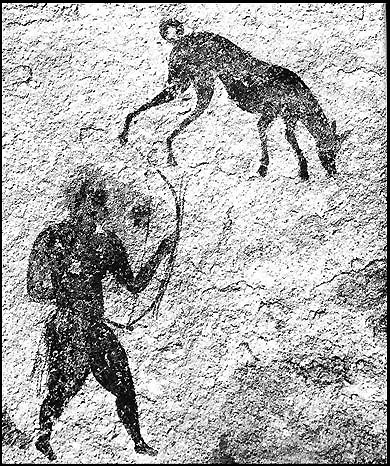
- Ancient African breed: Archaeological and rock art evidence dates the Africanis type to 7,000–10,000 years ago; depicted in Tassili n’Ajjer rock art in Algeria; one of the oldest continuously existing dog populations in the world.
- Natural selection, not human selection: The Africanis evolved through natural selection over millennia in the African environment; no deliberate breed creation; fitness, intelligence, and adaptability shaped the breed naturally.
- Genetic distinctiveness: DNA research confirms the Africanis as a genetically distinct and relatively unmodified population; closer to ancestral dog genomes than most modern purpose-bred breeds; studied for insights into dog domestication.
- Extraordinary health robustness: Low incidence of hereditary diseases compared to most purpose-bred breeds; natural selection eliminated genetic weaknesses over thousands of generations; one of the healthiest dog breed types known.
- Cultural significance: Deeply embedded in Zulu, Xhosa, Sotho, and Tswana cultural traditions; lived alongside African communities for thousands of years; companion, hunter, guardian, and community member.
- Conservation concern: Threatened by cross-breeding with introduced European breeds; pure Africanis populations declining in urban and peri-urban areas; Africanis Society actively working to preserve genetic purity.
The Africanis occupies a unique position in the global canine landscape as a living heritage breed representing millennia of natural evolution in the African continent. Its significance spans multiple dimensions:
- Scientific importance: DNA studies confirm the Africanis as one of the most genetically basal domestic dog populations; insights into dog domestication and evolution; important for canine genetic research worldwide.
- Cultural heritage: Inseparable from the history and culture of Southern African peoples; featured in oral traditions, ceremonies, and daily life of Zulu, Xhosa, Sotho, Tswana, and other groups.
- Conservation value: One of few remaining naturally evolved dog populations; genetic reservoir for disease resistance and adaptive traits; threatened by urbanization and cross-breeding.
- Companion qualities: Loyal, intelligent, and highly adaptable; excellent companion animal for experienced owners; increasingly recognized internationally as a distinctive and valuable breed type.
- Physical distinction: Immediately recognizable by lean athletic build, erect ears, long narrow snout, and springy upturned tail; appearance reflecting generations of natural fitness optimization.

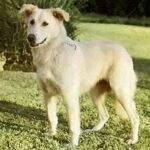
Source: Wikimedia Commons • File: Africanis_a2.jpg • License: CC BY-SA 4.0 • 890×534 px (458 KB) • Long snout, elegant build, short coat, pointed ears, springy upturned tail • CC BY-SA 4.0

Source: Wikimedia Commons • File: Canis_Africanis.jpg • License: CC BY-SA 2.0 • 2,868×2,004 px (1.94 MB) • Author: sKAApGIF • 23 June 2008 • CC BY-SA 2.0 – free to share/adapt with attribution
Systematic Classification
| Taxonomic Rank | Classification |
|---|---|
| Kingdom | Animalia |
| Phylum | Chordata |
| Class | Mammalia |
| Order | Carnivora |
| Family | Canidae |
| Genus | Canis |
| Species | C. familiaris |
| Common Name | Africanis, Zulu Dog, Bantu Dog, African Dog |
| Breed Type | Landrace / Primitive Breed |
| Recognition | Africanis Society of Southern Africa |
Breed Recognition Status
- Africanis Society of Southern Africa: Primary organization documenting, preserving, and promoting the Africanis; established breed documentation standards; actively advocates for recognition and conservation.
- KUSA (Kennel Union of Southern Africa): The Africanis is not currently registered as a conformation breed with KUSA; informal recognition as an indigenous breed type.
- AKC/FCI: Not currently recognized by AKC or FCI as a formal breed standard; classification as a landrace breed falls outside traditional kennel club recognition frameworks.
- Scientific recognition: Recognized in genetic studies and canine evolutionary research as a distinct and genetically important dog population.
Body Structure & Conformation
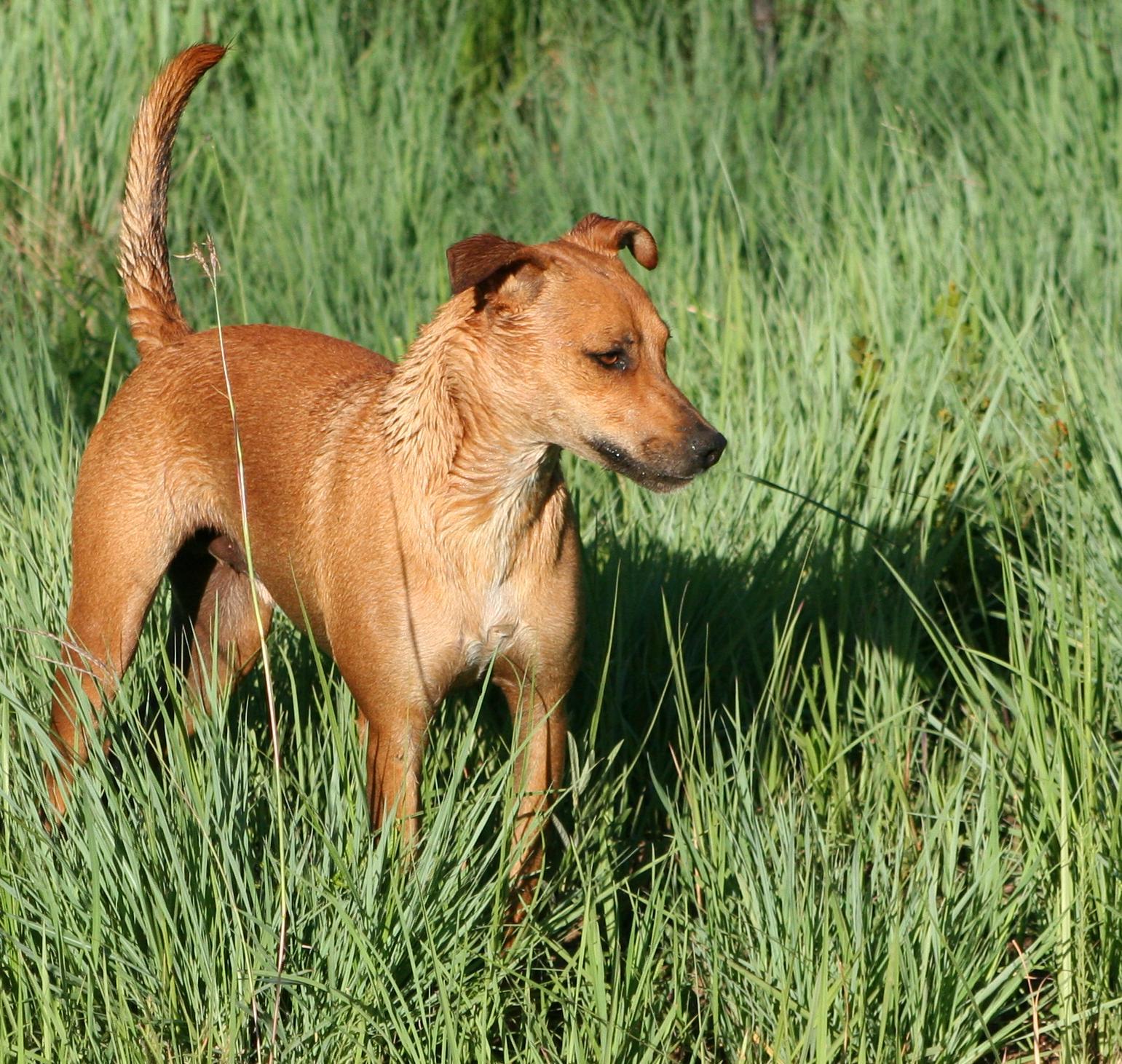
Source: Wikimedia Commons • File: Africanis_(1).jpg • License: CC BY-SA 3.0 • 1,541×1,462 px (447 KB) • Author: Rudolph Botha • 4 Dec 2005 • CC BY-SA 3.0

Source: Wikimedia Commons • File: Africanis_dog_KwaZulu_Natal.jpg • License: CC BY-SA 4.0 • 445×542 px (289 KB) • CC BY-SA 4.0 – free to share/adapt with attribution
Physical Standards Documentation
| Feature | Description |
|---|---|
| Height | 50–60 cm (20–24 in) at the withers; medium-sized; slight variation accepted |
| Weight | 11–20 kg (25–45 lbs); lean and well-muscled; no excess fat |
| Head | Long, narrow; well-defined stop; intelligent expression |
| Snout | Long, narrow; characteristic feature of the breed; well-pigmented nose |
| Ears | Erect or semi-erect; mobile and expressive; highly characteristic |
| Eyes | Medium-sized; dark to amber; alert and intelligent expression |
| Body | Athletic, lean; well-sprung ribs; visible waist; deep chest |
| Tail | Long, springy, upturned; characteristic curved or ring shape; carried upright |
| Legs | Long, well-muscled; built for speed and endurance over varied terrain |
| Coat | Short, close-lying, smooth; low grooming requirement |
Distinctive Physical Features
- Long narrow snout: One of the most characteristic Africanis features; longer and narrower than most other breeds; reflects the breed’s hunting and sensory heritage.
- Springy upturned tail: Carried upright with a characteristic curve or ring; highly distinctive; carried expressively when the dog is alert or excited.
- Lean, athletic build: No excess fat; visibly muscled; built for sustained activity; adapation to the African climate where heat dissipation is critical.
- Erect mobile ears: Highly expressive; mobile and capable of independent movement; excellent hearing adaptation.

Source: Wikimedia Commons • File: Africanis_1.jpg • License: CC BY-SA 3.0 • 1,197×1,429 px (299 KB) • Author: Mikesafrica (Michael Cole) • 29 Jan 2012 • CC BY-SA 3.0

Source: Wikimedia Commons • File: Africanis_2.jpg • License: CC BY-SA 3.0 • 1,359×963 px (359 KB) • Author: Mikesafrica (Michael Cole) • 29 Jan 2012 • CC BY-SA 3.0

Source: Wikimedia Commons • File: Africanis_3.jpg • License: CC BY-SA 3.0 • 2,496×1,664 px (955 KB) • Author: Mikesafrica (Michael Cole) • 29 Jan 2012 • CC BY-SA 3.0

Source: Wikimedia Commons • File: Africanis_4.jpg • License: CC BY-SA 3.0 • 1,949×1,392 px (413 KB) • Author: Mikesafrica (Michael Cole) • 29 Jan 2012 • CC BY-SA 3.0

Source: Wikimedia Commons • File: Africanis_5.jpg • License: CC BY-SA 3.0 • 1,551×1,283 px (488 KB) • Author: Mikesafrica (Michael Cole) • 29 Jan 2012 • CC BY-SA 3.0

Source: Wikimedia Commons • File: Africanis_6.jpg • License: CC BY-SA 3.0 • 1,429×1,023 px (372 KB) • Author: Mikesafrica (Michael Cole) • 29 Jan 2012 • CC BY-SA 3.0
Coat & Color Documentation

Source: Wikimedia Commons • File: Africanis_7.jpg • License: CC BY-SA 3.0 • 1,246×1,045 px (281 KB) • Author: Mikesafrica (Michael Cole) • 29 Jan 2012 • CC BY-SA 3.0

Source: Wikimedia Commons • File: Africanis_January_2012.jpg • License: CC BY-SA 3.0 • 1,024×859 px (441 KB) • Adopted from Zulu village • Author: Mikesafrica (Michael Cole) • 29 Jan 2012 • CC BY-SA 3.0
Color Spectrum Documentation
| Color Type | Description | Frequency |
|---|---|---|
| Tawny / Fawn | Light golden-brown to reddish-brown; most classic Africanis appearance | Most common |
| Black | Solid black; may have tan markings on face and chest | Common |
| Brindle | Tiger-stripe pattern on fawn or red base coat | Common |
| White | Solid white or predominantly white with markings | Less common |
| Tricolor | Black, white, and tan combinations | Moderate |
| Spotted/Parti | Multi-colored patched coat; various combinations | Moderate |
Coat Characteristics
- Coat type: Short, close-lying, smooth; minimal grooming requirement; well-adapted to African heat; occasional seasonal shedding.
- Color significance: Color is not a defining breed characteristic for the Africanis; the Africanis Society does not favor or discriminate based on color; all colors reflect natural genetic diversity.
- Skin adaptation: Skin pigmentation adapted to sun exposure; short coat aids heat dissipation in African climate; very different from the heavy coats of northern European breeds.

Ancient African Origins
- Migration with humans: The Africanis descended from dogs that accompanied human migrations from North Africa and the Middle East into sub-Saharan Africa beginning approximately 7,000 years ago; the breed evolved alongside Bantu-speaking peoples during the great Bantu migrations.
- Natural selection environment: Sub-Saharan African conditions (heat, diverse terrain, disease exposure, food scarcity) shaped the breed over millennia; only physically and behaviorally fit individuals survived to reproduce; producing extraordinary robustness.
- Archaeological evidence: Dog remains found in archaeological sites across Southern Africa document the long presence of dogs in pre-colonial African societies; rock art depictions confirm dog-human relationships dating back thousands of years.
Africanis Running with Zulu Community (1997)

Pre-Colonial & Colonial Period
- Pre-colonial role: Africanis served as hunters, guardians, companions, and livestock protectors in indigenous African communities; integral part of village life; their roles varied by community and region.
- Colonial impact: European colonization brought imported dog breeds from the 17th century onward; cross-breeding began in urban and semi-urban areas; pure Africanis retreated to more remote rural communities.
- Modern recognition: The 20th century saw the first scientific documentation of the Africanis; Johan and Edith Gallant established the Africanis Society in the 1990s; systematic research and conservation efforts began.
Group Portrait Documentation

Source: Wikimedia Commons • File: Africanis_dogs_KwaZulu_Natal.jpg • License: CC BY-SA 4.0 • 445×237 px (134 KB) • CC BY-SA 4.0 – free to share/adapt with attribution

Source: Wikimedia Commons • File: Africanis_dogs_limpopo.jpg • License: CC BY-SA 4.0 • 445×339 px (163 KB) • Nursing Africanis mother and pups • CC BY-SA 4.0 – free to share/adapt with attribution
Tassili n’Ajjer Rock Art (Algeria)

Prehistoric Rock Drawing (Hunter with Dog)
Archaeological Significance
- Tassili n’Ajjer evidence: Rock art from the Algerian Sahara dated approximately 7,000–10,000 years ago depicts dogs strongly resembling the modern Africanis; provides the earliest visual evidence of Africanis-type dogs in Africa.
- Migration trail: Archaeological dog remains track the movement of Africanis-type dogs along ancient human migration routes from North Africa southward into sub-Saharan Africa over thousands of years.
- DNA confirmation: Genetic analyses comparing the Africanis to other world dog populations confirm their ancient lineage and relative genetic isolation from European breed lines introduced post-colonization.
Core Personality Traits

Source: Wikimedia Commons • File: Dogs_looking_at.jpg • License: CC BY-SA 4.0 • 4,032×3,024 px (1.7 MB) • Author: Raviarts • 13 Jan 2026 • CC BY-SA 4.0 – free to share/adapt with attribution
Source: Wikimedia Commons • File: Africanis_featured.jpg • License: CC BY-SA 4.0 • 1,000×600 px (856 KB) • Author: Johan Gallant, Africanis Society • CC BY-SA 4.0
Behavioral Profile
- Loyalty: Deeply loyal to their human family; forms strong bonds with individuals and family groups; protective instinct well-developed; will alert to strangers and defend family if needed.
- Intelligence: High problem-solving intelligence; adaptable to varied situations; learns quickly; mental stimulation important for well-being; can be inventive in solving challenges.
- Independence: Retains the independent decision-making characteristic of dogs evolved to operate without close human supervision; not as immediately compliant as herding breeds; thinks for itself.
- Sociability: Generally good with people and other dogs within their social group; requires proper socialization; can be reserved with strangers but not typically aggressive.
- Gentle nature: Generally gentle and non-aggressive by temperament; responds poorly to harsh treatment; positive reinforcement the only appropriate training method.
Activity & Exercise Profile
| Activity Type | Level | Notes |
|---|---|---|
| Daily exercise | High | 1–2 hours active exercise required |
| Free running | Essential | Securely fenced area recommended; prey drive present |
| Mental stimulation | High | Scent work, problem-solving games, varied walks |
| Endurance activities | Excellent | Hiking, long walks, jogging; bred for endurance |
| Off-leash work | With training | Recall training important; prey drive may redirect focus |
Traditional African Community Role
- Hunting partner: Traditionally used for hunting alongside African hunters; speed, scenting ability, and intelligence valued for pursuing game; cooperative hunting partner in the field.
- Village guardian: Alert watchdog for traditional African homesteads (kraals); early warning system for approaching strangers, predators, and intruders; highly valued for community protection.
- Companionship: Close companion to children and adults in traditional communities; lived freely within village boundaries; integral part of community social structure.
- Livestock guardian: Used to protect livestock from predators; patrol homestead perimeters; reduce baboon and other wildlife crop damage.

Cultural Significance in Southern Africa
- Zulu culture: The Africanis (called “inja” in Zulu) holds important place in Zulu cultural traditions; features in folklore and oral traditions; respected as part of community life.
- Xhosa tradition: Dogs play important role in Xhosa male initiation traditions; guardianship and loyalty valued; culturally embedded relationships.
- Pan-African presence: Africanis-type dogs documented across sub-Saharan Africa from South Africa to Ethiopia; named differently by each culture but sharing common ancestry and characteristics.
South African Regional Documentation
Source: Wikimedia Commons • File: Africanis_a2.jpg • License: CC BY-SA 4.0 • 890×534 px • Highest pure Africanis concentration in South Africa • CC BY-SA 4.0
Source: Wikimedia Commons • File: Canis_Africanis.jpg • License: CC BY-SA 2.0 • 2,868×2,004 px • Near Graaff-Reinet, Eastern Cape • CC BY-SA 2.0
Regional Distribution Map
| Region | Population Status | Notes |
|---|---|---|
| KwaZulu-Natal | High concentration | Core region for pure Africanis populations; rural homesteads; highest genetic purity |
| Limpopo | Significant population | Rural communities; farming areas; mixed with some European breed crossbreeding |
| Mpumalanga | Moderate population | Rural areas; border zones; some urbanization impact |
| Eastern Cape | Documented | Karoo region; Xhosa communities; Graaff-Reinet area documentation |
| Botswana | Documented | Tswana communities; significant population; featured in Africanis Society documentation |
| Zimbabwe/Mozambique | Present | Related populations documented; cross-border distribution follows human settlement patterns |
Africanis Society of Southern Africa
- Founders: Johan and Edith Gallant established the Africanis Society in the 1990s; dedicated their work to documenting and preserving the indigenous Africanis; published extensively on the breed.
- Mission: Scientific documentation of the breed; advocacy for genetic preservation; education of the public and communities about the value of the indigenous breed; opposition to unnecessary crossbreeding.
- Research: Partnered with genetic researchers; documented Africanis populations across Southern Africa; established breed description standards without restrictive show standards.
Conservation Threats
- Cross-breeding: The primary threat to Africanis genetic purity; as rural communities urbanize, European breed dogs are introduced; random cross-breeding dilutes the Africanis gene pool.
- Urbanization: As populations shift from rural to urban environments, free-ranging Africanis come into contact with introduced breeds; urban animal control also reduces free-ranging populations.
- Cultural change: Changing attitudes toward dogs in African communities; younger generations adopting preference for European breed aesthetics; traditional Africanis valued less in some communities.
- Disease: Without veterinary care common in rural settings, disease outbreaks can devastate local populations; rabies, canine distemper, and parvoviridae represent significant threats.
Source: Wikimedia Commons • File: Africanis_dogs_limpopo.jpg • License: CC BY-SA 4.0 • 445×339 px (163 KB) • Natural nursing behavior • CC BY-SA 4.0
Source: Wikimedia Commons • File: Africanis_dogs_KwaZulu_Natal.jpg • License: CC BY-SA 4.0 • 445×237 px (134 KB) • Two pure Africanis heads • CC BY-SA 4.0
Natural Health Robustness
The Africanis is widely recognized by veterinarians and canine researchers as one of the healthiest dog populations globally. Thousands of generations of natural selection eliminated individuals with serious genetic diseases, creating a remarkably robust gene pool.
Health Characteristics
| Health Factor | Status | Notes |
|---|---|---|
| Hip Dysplasia | Very low prevalence | Natural selection eliminated susceptibility; lean build reduces joint stress |
| Genetic diseases | Very low prevalence | No history of deliberate inbreeding; no founder effect bottlenecks |
| Skin conditions | Generally robust | Short coat well-adapted; minimal skin disease typical |
| Parasites | Common concern | Ticks, fleas, worms require management in African environment |
| Infectious disease | Community risk | Distemper, parvovirus, rabies significant risks without vaccination |
| Dental health | Generally good | Active natural diet and chewing behavior promotes dental health |
Veterinary Considerations
- Vaccination: Standard vaccination protocols (distemper, parvovirus, hepatitis, rabies) critical in African environments; important for both individual and community health.
- Parasite control: Tick prevention essential in tick-endemic areas; internal parasite (worm) treatment important; routine screening recommended.
- Spay/neuter: Africanis Society recommends thoughtful management of reproduction to maintain breed purity; spay/neuter of non-breeding animals helps control feral populations.
- Life expectancy: 10–14 years; excellent longevity for the size; genetics and natural origins contribute to robust constitution and long healthy life.
Landrace Breeding Philosophy
- Natural selection preservation: The Africanis Society specifically avoids imposing artificial breed standards that would require selective breeding; the goal is to preserve the natural gene pool, not standardize appearance.
- Genetic diversity priority: Maintaining maximum genetic diversity is the primary breeding philosophy; avoiding inbreeding essential; opposite approach to most formal kennel club breed management.
- Anti-crossbreeding advocacy: Active discouragement of unnecessary crossbreeding with introduced European breeds; education of communities about the value of pure Africanis genetic heritage.
Responsible Breeding Approach
- Health documentation: Breeding individuals should be health-documented; parasite-free; vaccinated; basic health screening encouraged for responsible breeding programs.
- Temperament selection: Stable, confident, non-aggressive temperament prioritized; severe behavioral problems excluded from breeding; overall soundness of mind and body valued.
- Geographic purity: Maintaining regionally pure populations important; mixing of distant populations may disrupt locally adapted genetic traits evolved for specific environments.
Daily Care Essentials
- Exercise requirements: 1–2 hours daily exercise essential; the Africanis is an active breed that requires significant physical activity; best suited to owners with access to outdoor space and active lifestyles.
- Grooming: Minimal grooming requirement; short coat needs only occasional brushing; regular inspection for ticks and parasites important in relevant environments; bath as needed.
- Nutrition: Moderate food requirements; not prone to obesity if exercised adequately; quality balanced diet appropriate; naturally adapted to varied diet from African origins.
- Mental stimulation: Intelligent breed requiring mental engagement; puzzle toys, scent work, varied walking routes; boredom can lead to destructive behavior.
Housing & Environment
- Space requirements: Does best with access to outdoor space; not suited to apartment living without vigorous daily exercise provision; securely fenced yard strongly recommended.
- Climate adaptation: Naturally adapted to African heat; tolerates warmth well; less adapted to extreme cold climates; in cold climates, indoor sleeping recommended.
- Social environment: Flourishes with human company and social engagement; can live with other dogs when properly introduced; early socialization with children and other animals important.
Owner Requirements
- Experience level: Best suited to experienced dog owners or those willing to learn; independent nature can challenge first-time owners; understanding of primitive breed behavior patterns helpful.
- Time commitment: Moderate-high daily time investment for exercise and companionship; relatively low grooming time requirement; routine veterinary care investment.
- Cultural respect: For owners wishing to genuinely connect with the breed, understanding and respecting the Africanis’s African cultural heritage enriches the relationship and ownership experience.
1. What is the Africanis breed?
The Africanis is an indigenous South African dog breed that developed naturally over thousands of years in sub-Saharan Africa. It is a landrace breed, meaning it was shaped by natural selection in its environment rather than deliberate selective breeding programs. It is one of the oldest and most genetically distinct canine populations on Earth.
2. Are Africanis good family dogs?
Africanis are loyal, affectionate with their family, and highly adaptable. Their intelligence and gentle nature make them excellent family companions for experienced owners who understand the breed’s independent origins. They bond deeply with their human family and are naturally alert and protective.
3. Is the Africanis recognized by the AKC or FCI?
The Africanis is not currently recognized by the AKC or FCI as a formal show breed. It is recognized and documented by the Africanis Society of Southern Africa, which works to preserve and protect the breed’s natural genetic heritage without imposing artificial breed standards.
4. What does an Africanis look like?
The Africanis is a medium-sized, lean dog with a short coat, long narrow snout, erect or semi-erect ears, and a springy upturned tail. The body is athletic and well-muscled, built for endurance in the African environment. Height is typically 50–60 cm and weight 11–20 kg.
5. How long do Africanis live?
Africanis typically live 10–14 years. Being a naturally evolved landrace breed, they tend to have robust health and fewer hereditary diseases than many purpose-bred dogs. Proper veterinary care including vaccination and parasite control significantly extends healthy life expectancy.
6. What colors can Africanis be?
Africanis come in a wide variety of colors including tawny/fawn, black, white, brindle, tricolor, and multi-colored combinations. Color is not a defining breed characteristic; the Africanis Society does not favor specific colors. All colors reflect natural genetic diversity.
7. Is the Africanis easy to train?
Africanis are intelligent and eager to please their families, but they retain independence from their free-ranging origins. Positive reinforcement training works best; they respond poorly to harsh treatment. They can learn quickly when properly motivated but may not show the instant compliance of herding breeds.
8. How much exercise does an Africanis need?
The Africanis requires 1–2 hours of daily exercise. As a naturally active breed originally covering large territories in the African environment, they benefit greatly from off-leash running, hiking, and mentally stimulating activities. Insufficient exercise can lead to destructive behavior.
9. Where does the Africanis come from?
The Africanis originated in sub-Saharan Africa, with primary populations concentrated in South Africa, particularly in KwaZulu-Natal, Limpopo, and across Botswana and neighboring countries. Archaeological and rock art evidence from the Tassili n’Ajjer in Algeria suggests the breed type has existed in Africa for 7,000–10,000 years.
10. What is the Africanis Society?
The Africanis Society of Southern Africa is a nonprofit organization dedicated to the scientific documentation, preservation, and promotion of the Africanis as an indigenous South African breed. Founded by Johan and Edith Gallant, the Society advocates for the breed’s recognition, opposes unnecessary cross-breeding, and educates communities about the genetic and cultural value of this remarkable indigenous dog.
- This encyclopedia is educational in nature and reflects current breed documentation as of March 2026.
- Africanis breed information based on Africanis Society documentation, scientific research, and field documentation from Southern Africa.
- All 21 images sourced exclusively from Wikimedia Commons with verified open licenses (CC BY-SA 4.0, CC BY-SA 3.0, CC BY-SA 2.0, CC BY 2.0) with complete attribution and verified URL hashes from Wikimedia Commons MediaSearch (search term: “Africanis dog”).
- Health information provided for general knowledge; readers should consult veterinary professionals for specific health concerns.
- Conservation and breeding recommendations reflect Africanis Society guidelines; prospective owners should contact the Africanis Society for current guidance.
Primary References
- Africanis Society: Johan Gallant & Edith Gallant, Africanis Society of Southern Africa; official breed documentation; research publications on the indigenous African dog.
- Scientific Research: Vonholdt et al. (2010) – Genome-wide SNP analysis of domestic dog populations; Parker et al. (2004) – Genetic structure of the domestic dog; Wayne & vonHoldt (2012) – Evolutionary genomics of dog domestication.
- Archaeological Evidence: Tassili n’Ajjer rock art documentation, Algeria; sub-Saharan archaeological dog remains; African canine migration research.
- Historical References: Pre-colonial African community documentation; Bantu migration research; ethnographic studies of human-dog relationships in Southern Africa.
- Veterinary Sources: OIE (World Organisation for Animal Health) documentation on indigenous breed conservation; SPCA South Africa guidance on Africanis management.
Image Attribution Summary (21 Images)
- Hero & Featured: Africanis_featured.jpg (4/4a/, CC BY-SA 4.0, 1000×600, Johan Gallant/Africanis Society)
- Intro Gallery (2): Africanis_a2.jpg (5/56/, CC BY-SA 4.0, 890×534) • Canis_Africanis.jpg (e/ee/, CC BY-SA 2.0, 2868×2004, sKAApGIF, 23 Jun 2008)
- Physical (8): Africanis_(1).jpg (4/4b/, CC BY-SA 3.0, 1541×1462, Rudolph Botha 2005) • Africanis_dog_KwaZulu_Natal.jpg (6/65/, CC BY-SA 4.0, 445×542) • Africanis_1.jpg (d/df/, CC BY-SA 3.0, 1197×1429, Mikesafrica) • Africanis_2.jpg (5/59/, 1359×963) • Africanis_3.jpg (2/2b/, 2496×1664) • Africanis_4.jpg (8/8c/, 1949×1392) • Africanis_5.jpg (e/e3/, 1551×1283) • Africanis_6.jpg (8/87/, 1429×1023)
- Color/Coat (3): Africanis_7.jpg (e/ea/, CC BY-SA 3.0, 1246×1045, Mikesafrica) • Africanis_January_2012.jpg (3/3f/, CC BY-SA 3.0, 1024×859) • “Vanya”_pure_africanis.jpg (5/5c/, CC BY-SA 4.0, 768×533, Aquarius)
- History (3): Africanis_run_with_zulus.jpg (9/98/, CC BY-SA 4.0, 1323×671, AfriCanis1234, 1997) • Africanis_dogs_KwaZulu_Natal.jpg (9/91/, CC BY-SA 4.0, 445×237) • Africanis_dogs_limpopo.jpg (c/ce/, CC BY-SA 4.0, 445×339)
- Rock Art (2): Il_cane_nell’arte_rupestre…Tassili…jpg (1/10/, CC BY-SA 4.0, 890×592) • Pittura_primitiva_(2696315463).jpg (b/bb/, CC BY-SA 2.0, 390×466)
- Cultural (1): Omorate4.jpg (9/95/, CC BY-SA 2.0, 1600×1067)
- Temperament (reuse): Dogs_looking_at.jpg (7/78/, CC BY-SA 4.0, 4032×3024, Raviarts, 13 Jan 2026) • Africanis_featured.jpg (reuse)
© 2026 – Encyclopedia.guru – Africanis Breed Encyclopedia (Canis familiaris)
Comprehensive breed documentation with emphasis on indigenous African heritage, natural evolution, archaeological evidence, and conservation | 21 Wikimedia Commons images with verified URL hashes, full source attribution, alt text, license, and copyright compliance | Written by the Encyclopedia.guru Expert Writing Team | Updated: 19 March 2026