🐕 Encyclopedia of Affenpinschers (Canis familiaris)
Comprehensive breed encyclopedia on Affenpinschers: breed standard, conformation documentation, coat varieties, toy dog heritage, competition records, breed history, temperament, health genetics, and international breed recognition
✏️ Written by the Encyclopedia.guru Expert Writing Team | Last Updated: March 19, 2026 | Reviewed by Certified Canine Specialists
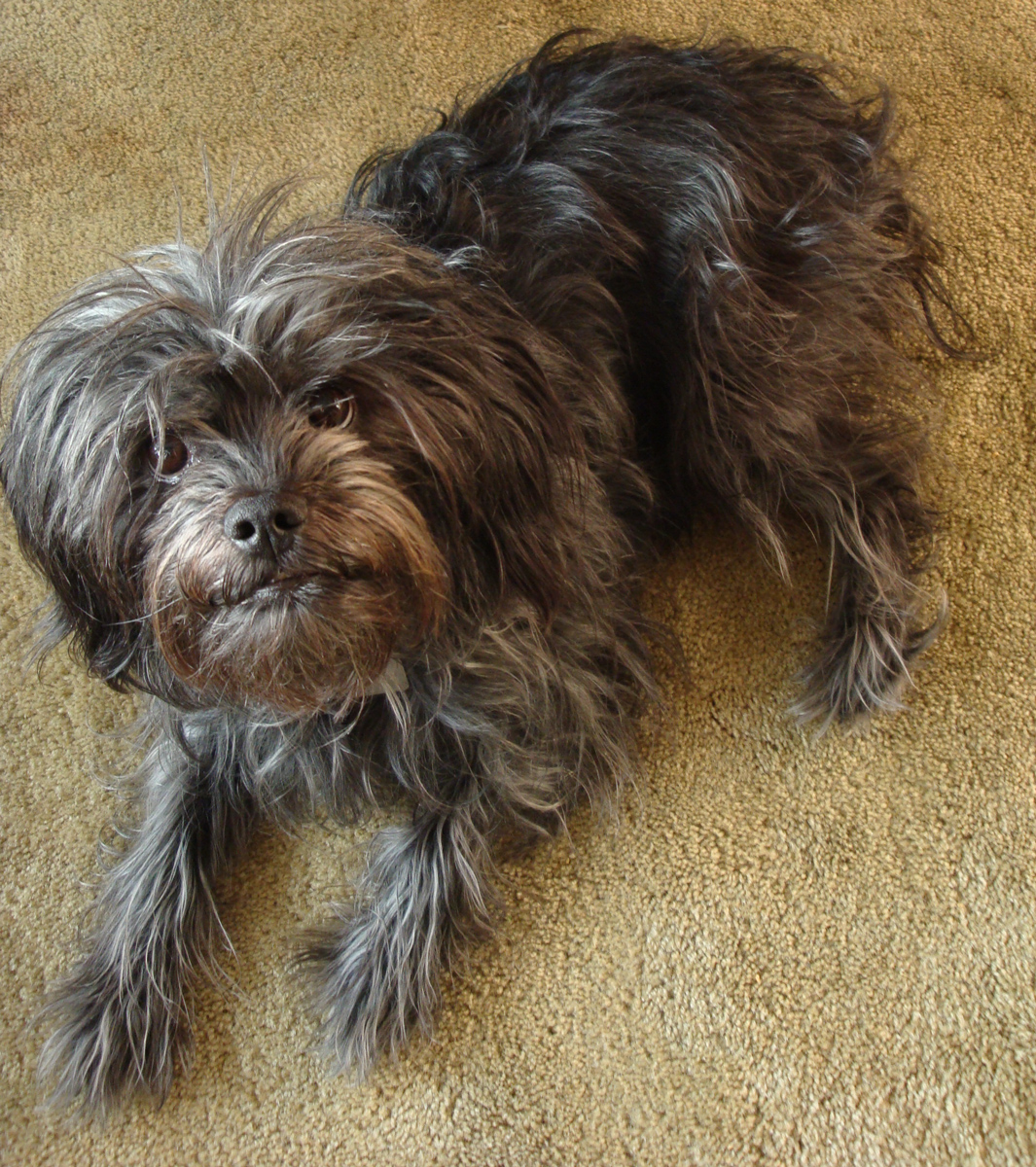
Subject: Affenpinscher specimen exemplifying breed standard conformation and characteristic wiry coat • Copyright: CC BY-SA 3.0 – free to share and adapt with attribution.
Affenpinschers (Canis familiaris) are one of the oldest and most distinctive toy dog breeds originating in Germany, recognized internationally as both a historic working mouser and a beloved companion dog. The breed is instantly distinguished by its flat monkey-like face, wide-set dark eyes, tousled wiry coat, and fearless terrier-like temperament. The name Affenpinscher translates directly from German as “monkey-terrier” (Affe = monkey, Pinscher = terrier), a fitting descriptor for this uniquely expressive small breed. Unlike the more reserved and aloof Afghan Hound, Affenpinschers are lively, curious, and overtly comical in personality.
The breed is characterized by remarkable confidence and courage that belie its small size—traits rooted in centuries of development as a ratter in German homes, stables, and granaries. Contemporary Affenpinschers are maintained through selective breeding emphasizing the breed’s characteristic expression, compact conformation, and spirited temperament. The breed demonstrates fierce loyalty, quick intelligence, and entertaining personality balanced with an independent and sometimes stubborn streak characteristic of working terrier heritage.
- Monkey-like expression: Distinctively primate-like face; flat muzzle, wide dark eyes, tousled wiry coat; uniquely recognizable among all dog breeds.
- Ancient German breed: Documented in Germany as early as the 17th century; ancestral to the Brussels Griffon and Miniature Schnauzer; recorded in German studbook since 1880.
- Working ratter heritage: Originally bred to hunt and kill rodents in kitchens, granaries, and stables; fearless and tenacious despite tiny size; instinctive prey drive retained.
- Westminster Champion 2013: GCH Banana Joe V Tani Kazari won Best in Show at the 137th Westminster Kennel Club Dog Show—historic milestone for the breed.
- Low-shedding coat: Dense wiry coat considered low-shedding; distinctive cape-like mane around head and shoulders; requires regular stripping or trimming to maintain texture.
- Entertaining personality: Famously amusing and comical; dubbed “diablotin moustachu” (mustached little devil) in France; beloved for performing and clowning behavior.
Affenpinschers occupy a distinctive position within modern toy dog fancy, renowned for their monkey-like expression, spirited personality, and rich German heritage. Their significance encompasses multiple areas:
- Breed aesthetics: Quintessential small terrier-type; compact square build; distinctive wiry tousled coat; alert monkey-like expression unlike any other breed.
- Working capability: Historic mouser and ratter; continuing participation in barn hunt, agility, and obedience sports; instinctive vermin-chasing drive retained in modern specimens.
- Breed history: Ancient German origins dating to 17th century; ancestral role in development of Brussels Griffon and Miniature Schnauzer; documented in German breed registries since 1880.
- Show competition: Active presence in AKC Toy Group competition; Westminster Best in Show 2013 champion GCH Banana Joe; valued in international conformation events worldwide.
- Companion animal role: Popular companion for apartment and city dwellers; breed-specific requirements for mental stimulation and consistent training; independent nature important for prospective owners to understand.
Systematic Classification
| Taxonomic Rank | Classification |
|---|---|
| Kingdom | Animalia |
| Phylum | Chordata |
| Class | Mammalia |
| Order | Carnivora |
| Family | Canidae |
| Genus | Canis |
| Species | C. familiaris |
| Breed Group (AKC) | Toy Group |
| Breed Group (FCI) | FCI Group 2 – Pinscher and Schnauzer Types, Section 1 |
Breed Recognition
- AKC Status: Fully recognized since 1936; member of Toy Group; established breed standard documented and maintained by the American Kennel Club.
- FCI Status: Fully recognized since 1955; FCI Group 2 – Pinschers and Schnauzers; Section 1; international breed standard maintained by the FCI.
- Other recognition: Kennel Club (UK), Canadian Kennel Club, United Kennel Club, and all major canine registry organizations worldwide.
Official Breed Standard Overview
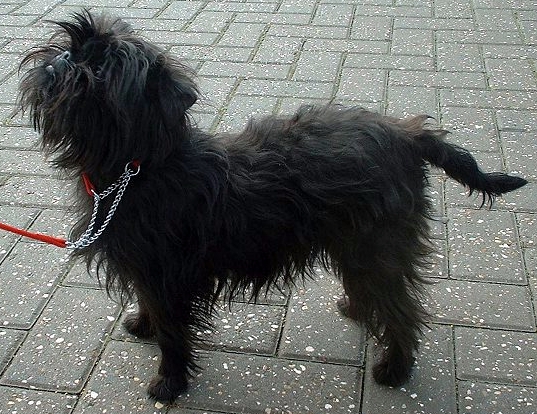
Source: Wikimedia Commons • File: Affenpinscher.jpg • License: CC BY-SA 3.0 • 537×414 px (212 KB) • Author: Caronna • CC BY-SA 3.0 – free to share/adapt with attribution

Source: Wikimedia Commons • File: An_Affenpinscher.jpg • License: CC BY 2.0 • 3,318×2,212 px (2.47 MB) • Author: Lori Branham • CC BY 2.0 – free to share/adapt with attribution
Overall Conformation
| Trait | AKC Standard | FCI Standard |
|---|---|---|
| Body Shape | Square | Square, compact |
| Height | 9–11.5 inches | 25–30 cm |
| Weight | 7–10 pounds | 4–6 kg |
| Head | Round, domed, broad brow | Round, broad |
| Muzzle | Blunt, short, prominent chin | Short, blunt |
| Eyes | Round, dark, wide-set | Round, dark, prominent |
| Coat | Dense, rough, wiry | Rough, wiry, 2.5 cm |
Characteristic Expression
- Monkey-like face: The defining characteristic; round domed skull, short blunt muzzle with good chin turn-up, wide-set round dark eyes, and profuse facial furnishings create the primate-like expression that gives the breed its name.
- Bushy eyebrows and beard: Abundant eyebrows, prominent moustache, and beard are essential breed characteristics; together with wiry coat they frame the unforgettable expression.
- Ears: Small, erect or semi-erect; historically cropped in some countries; uncropped preferred in modern standards and required in many countries.
- Tail: Docked in countries where permitted; naturally carried erect; natural tail accepted in countries banning docking.
Coat Type & Characteristics
- Coat structure: Dense, rough, wiry coat approximately 1 inch (2.5 cm) long on body; forms distinctive cape and mane around head and shoulders; harsh texture essential to breed type.
- Facial furnishings: Longer on head, forming bushy eyebrows, beard, and moustache; these facial furnishings greatly contribute to the monkey-like expression; essential breed characteristic.
- Shedding: Considered a low-shedding breed; wiry coat does not shed like smooth-coated breeds; requires hand-stripping or trimming to maintain correct texture and appearance.
Color Specimens Documentation

Source: Wikimedia Commons • File: Affenmonkeyterrier1.jpg • License: CC BY-SA 4.0 • 1,540×1,469 px (321 KB) • Author: Canarian • CC BY-SA 4.0 – free to share/adapt with attribution

Source: Wikimedia Commons • File: Affenmonkeyterrier2.jpg • License: CC BY-SA 4.0 • 1,273×1,358 px (251 KB) • Author: Canarian • CC BY-SA 4.0 – free to share/adapt with attribution
Source: Wikimedia Commons • File: Affenpinscher_Molly.jpg • License: CC BY-SA 3.0 • 1,065×1,200 px (905 KB) • CC BY-SA 3.0 – free to share/adapt with attribution

Source: Wikimedia Commons • File: Apinapinseri.jpg • License: CC BY 4.0 • 1,480×1,362 px (454 KB) • Author: Canarian • CC BY 4.0 – free to share/adapt with attribution
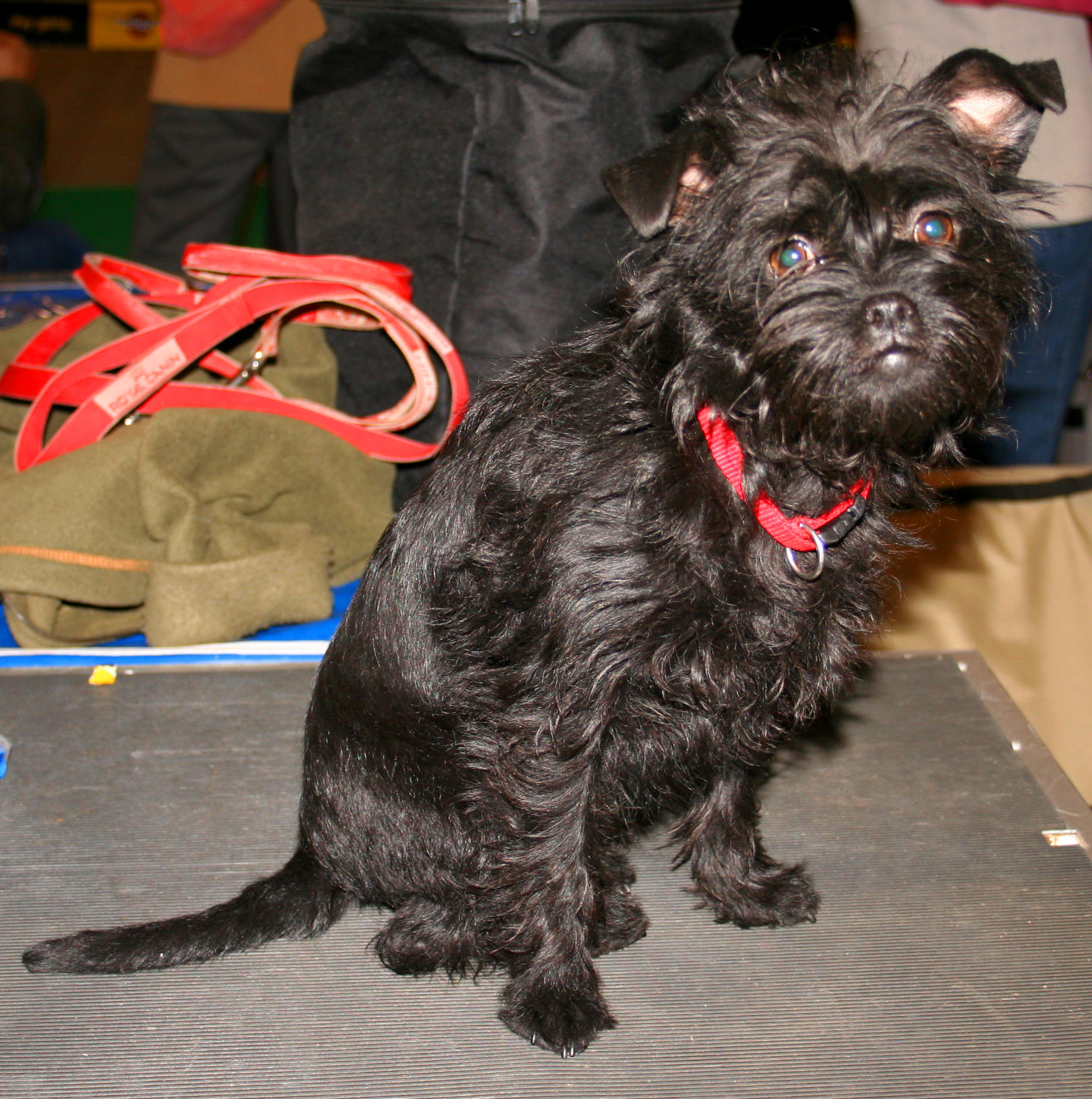
Source: Wikimedia Commons • File: Pinczer_małpi_756.jpg • License: CC BY-SA 3.0 • 2,004×2,016 px (686 KB) • Author: Pleple2000 • CC BY-SA 3.0 – free to share/adapt with attribution
Accepted Color Standards
| Registry | Accepted Colors |
|---|---|
| AKC | Black, gray, silver, red, black and tan, belge (mixture of black, red, brown, and white hairs) |
| UK Kennel Club | Black only (with grey shading permitted) |
| FCI | Black; black with grey shadings; grey, grey with black; red, dark reddish-brown; black and tan; belge |
| Most common | Black (historically documented and most frequently seen) |
Ancient German Origins
- Geographic origin: Germany; developed in Central Europe with earliest documented records from the 17th century.
- Historical purpose: Bred to hunt and kill rats and mice in German homes, kitchens, granaries, and stables; later evolved into companion dogs favored by women of the household.
- Name etymology: Affe (monkey) + Pinscher (terrier/biter); French description “diablotin moustachu” (mustached little devil) reflects the breed’s spirited nature.
Historical Art Documentation (1903)

Source: Wikimedia Commons • File: English_Toy_Terrier_and_Affenpinscher_by_Frances_C._Fairman.jpg • License: Public Domain • 1,024×1,280 px (230 KB) • Author: Frances C. Fairman (1836–1923) • Public Domain – historical artwork, free to use

Source: Wikimedia Commons • File: Illustrirtes_Muster_Hunde-Buch,_page_50.jpg • License: Public Domain • 6,376×8,281 px (5.87 MB) • Author: Jean Bungartz • Public Domain – historical publication, free to use
Historical Photo Documentation (1915)

Source: Wikimedia Commons • File: Affenpinscher_circa_1915.jpg • License: Public Domain • 370×240 px (27 KB) • Source: W.E. Mason “Dogs of all Nations” 1915 • Public Domain – free to use

Source: Wikimedia Commons • File: Affenpinscher_(Monkey_Terrier)_from_1915.JPG • License: Public Domain • 299×193 px (12 KB) • Source: W.E. Mason 1915 • Public Domain – free to use
Historical Show Documentation

Modern Breed Development Timeline
- Breed registry (1880): Recorded in the Deutschen Hundestammbuch (German Dog Studbook) in 1880; breed club (Pinscher-Schnauzer-Klub) established 1895.
- American introduction (1935): First American-born litter whelped June 12, 1935 by Bessie Mally of Cicero, Illinois using imported German breeding stock.
- AKC recognition (1936): American Kennel Club formally recognized the breed; placed in Toy Group.
- FCI recognition (1955): International recognition established under FCI Group 2; current standard confirmed.
Personality Characteristics
- Confident and fearless: Remarkably bold for its tiny size; does not back down from confrontations; terrier-like courage intact from working heritage. Their boldness contrasts with the more cautious Basset Hound.
- Amusing and entertaining: Famously comical and clownish; performs antics for attention; entertaining behavior considered a primary and valued breed characteristic.
- Intelligent and curious: Quick-witted; responds well to training when motivated; strong problem-solving instinct derived from vermin-hunting heritage.
Social Behavior
- Family loyalty: Deeply loyal to their family; can be possessive and protective; bonds strongly with primary caregiver.
- Stubbornness: Can be willful and independent; requires consistent training with positive reinforcement; boredom leads to mischievous behavior characteristic of terrier breeds.
- Socialization importance: Early socialization essential; can be territorial with other dogs; typically good with older children; caution advised with very small children due to breed’s small size.
Exercise & Activity Profile
| Activity Type | Level | Notes |
|---|---|---|
| Daily walks | Moderate | 20–30 min daily sufficient |
| Play sessions | Moderate-High | Interactive play essential for mental health |
| Mental stimulation | High | Puzzle toys, training games, trick work |
| Off-leash exercise | Low | Requires secure fenced area; prey drive present |
| Sport participation | Moderate | Barn hunt, agility, obedience |
Working Ratter Heritage
- Original purpose: Developed specifically to hunt and eliminate rodents from German homes, kitchens, granaries, and stables; highly effective working ratter despite tiny size.
- Instinctive drive: Prey drive toward small animals remains strong; instinctive hunting behavior still evident in modern specimens; excels in barn hunt competitions demonstrating retained working heritage.
- Size evolution: Historically larger farm ratters were selectively bred smaller for city and companion roles; modern toy size maintains original spirit and drive with reduced physical scale.
Contemporary Sport & Work Roles
- Barn Hunt: Natural participation in barn hunt sport; instinctive rodent detection ability; competitive success at national and regional level events.
- Agility: Nimble, quick, and athletic; enthusiastic participant in agility courses; manageable size an advantage in tight technical courses.
- Therapy work: Affectionate nature and manageable size make Affenpinschers effective therapy dogs in hospitals, care facilities, and schools.
- Obedience & Trick Dog: High intelligence enables competitive obedience and AKC Trick Dog title performances; eager to learn when properly motivated by food rewards.
Puppy Development Documentation
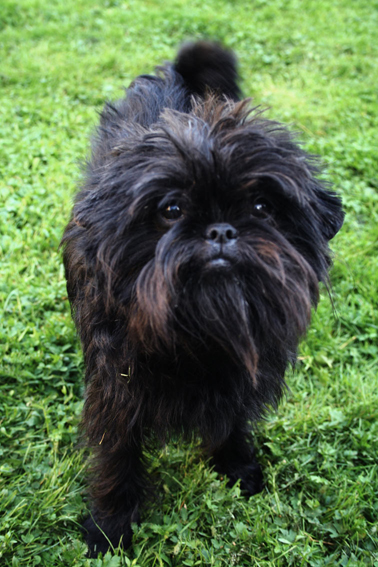
Source: Wikimedia Commons • File: Borismindre.jpg • License: CC BY-SA 3.0 • 378×567 px (263 KB) • Author: Ingunn Axelsen • CC BY-SA 3.0 – free to share/adapt with attribution
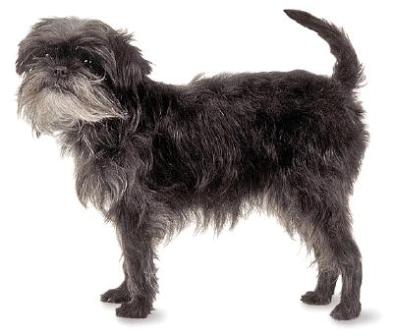
Source: Wikimedia Commons • File: Affenpinscher_dog.jpg • License: CC BY-SA 3.0 • 393×336 px (19 KB) • Author: UMD-Database • CC BY-SA 3.0 – free to share/adapt with attribution
Growth & Development Characteristics
- Growth rate: Rapid growth in first 6–9 months; toy breeds reach maturity earlier than large breeds; most physical growth complete by 12 months of age.
- Coat development: Adult wiry coat texture develops over first 12–18 months; puppy coat softer and less textured; adult characteristic mane and cape develops with maturity.
- Socialization window: Critical socialization period 3–12 weeks; early positive exposure to diverse people, animals, sounds, and environments essential for confident adult temperament.
- Litter size: Small litter sizes typical for toy breeds; 1–3 puppies per litter common; careful whelping support often required by experienced breeders.
Westminster Kennel Club – Best in Show 2013
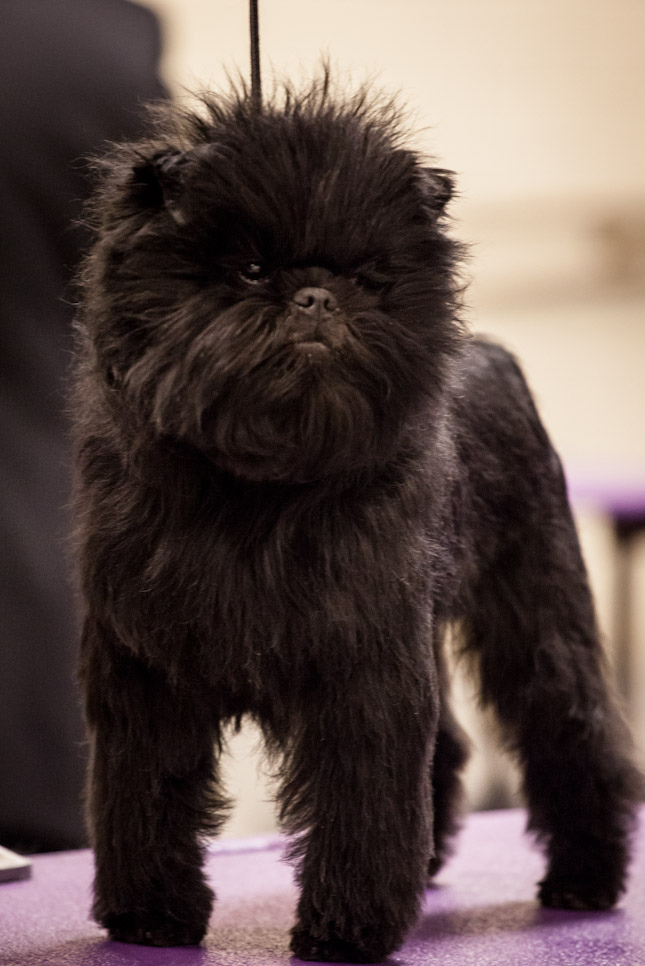
Championship Records & Competition History
- Westminster 2013 Best in Show: GCH Banana Joe V Tani Kazari (known as “Banana Joe” or “Joey”) won Best in Show at the 137th Westminster Kennel Club Dog Show on February 11, 2013—the most prestigious Best in Show win in Affenpinscher history and a defining moment for the breed’s American show history.
- International competition: Strong AKC Toy Group presence; competitive success at European CACIB international championship events; international breed recognition confirms consistent show quality.
- National Affenpinscher Club speciality shows: Breed club events and competitions across North America; National Affenpinscher Club of America annual speciality show is the premier breed-specific competition.
Show Judging Criteria
- Expression priority: Characteristic monkey-like expression is paramount in judging; judges heavily weight facial structure, eye placement, and quality of coat furnishings.
- Overall balance: Square compact body; correct coat texture and length; correct color; soundness of movement; overall balance and breed type all evaluated.
- Temperament: Confident, curious, and alert behavior expected in the show ring; shy or fearful temperament penalized under both AKC and FCI judging criteria.
Indoor Lifestyle Documentation
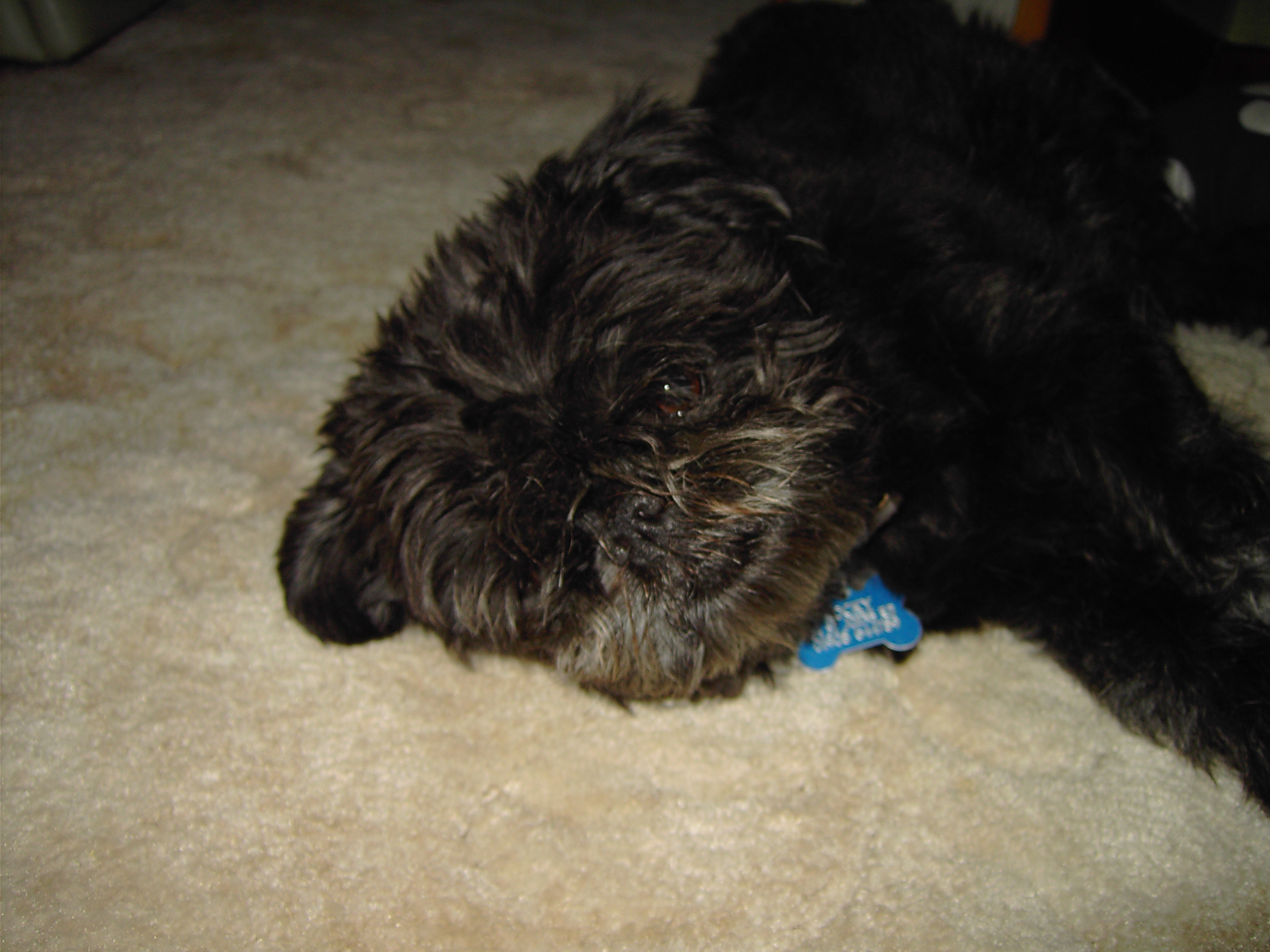
Source: Wikimedia Commons • File: Rocky_In_Frontroom.JPG • License: CC BY-SA 3.0 • 2,816×2,112 px (1.63 MB) • Author: Neostinker • CC BY-SA 3.0 – free to share/adapt with attribution

Source: Wikimedia Commons • File: Jjmarch10.jpeg • License: CC BY-SA 3.0 • 896×659 px (83 KB) • CC BY-SA 3.0 – free to share/adapt with attribution
Behavioral Documentation – Affenpinschers & Hedgehogs

Source: Wikimedia Commons • File: Affenpinschers_and_Hedgehogs_don’t_mix._(47410770131).jpg • License: CC BY 2.0 • 4,288×2,848 px (7.04 MB) • Author: Lori Branham • CC BY 2.0 – free to share/adapt with attribution

Source: Wikimedia Commons • File: Affenpinschers_and_Hedgehogs_don’t_mix._(40445266563).jpg • License: CC BY 2.0 • 3,089×2,684 px (5.25 MB) • Author: Lori Branham • CC BY 2.0 – free to share/adapt with attribution
Dutch National Archives Documentation (1932)

Source: Wikimedia Commons • File: Een_Affenpinscher,_Bestanddeelnr_190-0807.jpg • License: CC BY-SA 3.0 NL • 2,019×2,610 px (487 KB) • Author: Willem van de Poll • CC BY-SA 3.0 NL – free to share/adapt with attribution

Source: Wikimedia Commons • File: Twee_Affenpinschers,_Bestanddeelnr_190-0805.jpg • License: CC BY-SA 3.0 NL • 2,643×2,025 px (396 KB) • Author: Willem van de Poll • CC BY-SA 3.0 NL – free to share/adapt with attribution

Source: Wikimedia Commons • File: Twee_Affenpinschers,_Bestanddeelnr_190-0806.jpg • License: CC BY-SA 3.0 NL • 2,628×2,013 px (387 KB) • Author: Willem van de Poll • CC BY-SA 3.0 NL – free to share/adapt with attribution
Modern Specimen Documentation (Canarian Series)

Source: Wikimedia Commons • File: DocFile_Affen.jpg • License: CC BY-SA 4.0 • 722×838 px (540 KB) • Author: Canarian • CC BY-SA 4.0 – free to share/adapt with attribution
Source: Wikimedia Commons • File: Affenmonkeyterrier1.jpg • License: CC BY-SA 4.0 • 1,540×1,469 px (321 KB) • Author: Canarian • CC BY-SA 4.0 – free to share/adapt with attribution
Source: Wikimedia Commons • File: Affenmonkeyterrier2.jpg • License: CC BY-SA 4.0 • 1,273×1,358 px (251 KB) • Author: Canarian • CC BY-SA 4.0 – free to share/adapt with attribution
International Documentation
Source: Wikimedia Commons • File: Apinapinseri.jpg • License: CC BY 4.0 • 1,480×1,362 px (454 KB) • Author: Canarian • CC BY 4.0 – free to share/adapt with attribution
Source: Wikimedia Commons • File: Affenpinscher.jpg • License: CC BY-SA 3.0 • 537×414 px (212 KB) • Author: Caronna • CC BY-SA 3.0 – free to share/adapt with attribution
Contemporary Affenpinscher documentation from multiple international sources demonstrates consistent breed type across global breeding programs. The characteristic monkey expression, compact square body, and wiry rough coat remain remarkably stable from the earliest historical photographs through modern competition specimens.
Breed-Specific Health Issues
| Condition | Prevalence | Screening |
|---|---|---|
| Luxating Patella | Common (toy breeds) | OFA patellar evaluation |
| Brachycephalic Airway Syndrome | Moderate | Veterinary evaluation; surgical if severe |
| Cataracts / Eye Conditions | Documented | CAER ophthalmologic exam |
| Corneal Ulcers | Moderate (large eyes) | Regular veterinary eye exams |
| Hip Dysplasia | Less common | OFA hip evaluation |
| Mitral Valve Disease | Older specimens | Cardiac screening in mature dogs |
| Dental Disease | High (toy breed) | Daily brushing; professional cleaning |
Health Management Protocols
- Health screening: OFA patellar evaluations; CAER ophthalmologic exams; cardiac screening recommended for all breeding candidates.
- Heat sensitivity: Brachycephalic structure increases heat stress risk; monitoring essential in warm climates; exercise restriction in hot weather; never leave in hot cars.
- Responsible breeding: Health-conscious breeders implementing full screening protocols; National Affenpinscher Club of America health testing recommendations provide guidance.
- Life expectancy: 12–15 years; toy breeds generally longer-lived than large breeds; genetics, diet, and regular veterinary care significantly influence longevity.
Responsible Breeding Practices
- Health screening requirement: Reputable breeders implement comprehensive health screening before breeding decisions; patellar (OFA), eye (CAER), and cardiac evaluations standard minimum requirements.
- Genetic diversity: Small breed population requires careful pedigree management; awareness of inbreeding coefficients important; efforts to maintain genetic diversity and prevent founder effects critical.
- Temperament assessment: Selection for confident, curious, stable temperament; fearfulness or excessive aggression undesirable traits actively avoided in breeding programs.
Breeding Program Development
- Championship breeding: Selective pairing of champion individuals; multi-generational pedigree planning characteristic of serious, quality breeding programs.
- Expression preservation: Breeders prioritize maintenance of the characteristic monkey expression; facial structure, eye placement, muzzle shape, and coat furnishings carefully selected for.
- Coat quality: Correct wire coat texture critical; soft or woolly coats a fault; hand-stripping by breeders from early age helps develop correct texture in show-quality specimens.
- Puppy placement: Show-potential puppies placed with experienced handlers; companion-quality animals carefully placed in appropriate homes with breed education provided to new owners.
Daily Care Routine
- Exercise requirements: Daily walks and interactive play sessions; 20–30 minutes of active exercise sufficient for most specimens; mental stimulation equally important as physical activity.
- Coat maintenance: Regular brushing 2–3 times weekly; hand-stripping 2–3 times yearly to maintain correct wire coat texture; professional grooming assistance commonly used; trimming acceptable for companion animals.
- Dental care: Daily tooth brushing strongly recommended; toy breeds highly prone to periodontal disease; professional dental cleanings under anesthesia important component of preventive care.
- Eye care: Prominent eyes require regular gentle cleaning; monitor for redness, discharge, or signs of corneal ulcers; seek veterinary attention promptly for any eye concerns.
Housing & Environmental Requirements
- Space requirements: Well-suited to apartment and city living; minimal outdoor space required; indoor environmental enrichment important for mental health.
- Climate considerations: Moderate temperature preference; short muzzle increases heat stress risk; should not be exercised in extreme heat; generally adaptable indoor companion.
- Social environment: Thrives with close human companionship; can suffer separation anxiety if left alone excessively; does well as only pet or with compatible dogs of similar size.
Training & Socialization
- Training methodology: Responds well to positive reinforcement and reward-based training; consistent and patient approach required; engaging and varied training sessions prevent boredom and stubbornness.
- Behavioral management: Tendency to bark requires early management; preventing “small dog syndrome” through consistent rules and boundaries from puppyhood is important for well-adjusted adult behavior.
- Socialization importance: Thorough early socialization essential; exposure to diverse people, animals, and environments from puppyhood builds the confident adult temperament the breed is known for.
1. What is the Affenpinscher’s origin?
The Affenpinscher originated in Germany, developed as early as the 17th century. It was bred primarily to hunt and kill rats and mice in homes, kitchens, granaries, and stables before evolving into a prized companion dog.
2. Why is the Affenpinscher called a monkey dog?
The name Affenpinscher translates from German as “ape-terrier” or “monkey dog” (Affe = monkey, Pinscher = terrier). The flat face, wide-set dark eyes, and tousled wiry coat create a distinctive primate-like expression unlike any other breed. The French nickname is “diablotin moustachu” (mustached little devil).
3. How large do Affenpinschers get?
Affenpinschers are small toy dogs standing 9 to 11.5 inches at the shoulder and weighing 7 to 10 pounds. Despite their small size, they are compact, sturdy, and well-boned with a square body proportion.
4. What is the Affenpinscher coat like?
Affenpinschers have a dense, rough, wiry coat approximately 1 inch long on the body, forming a distinctive mane, cape, and facial furnishings around the head and shoulders. The breed is considered low-shedding and requires regular stripping or trimming to maintain correct texture.
5. Are Affenpinschers good family pets?
Yes, Affenpinschers make loyal and entertaining companions. They are affectionate, curious, and famously amusing. They can be stubborn and are best suited to families with older children due to their small size and independent terrier temperament.
6. What colors do Affenpinschers come in?
The AKC accepts black, gray, silver, red, black and tan, and belge in Affenpinschers. The UK Kennel Club standard requires black only with grey shading. The FCI accepts a broader range. Black remains the most common and historically documented color.
7. How much exercise do Affenpinschers need?
Affenpinschers are moderately energetic and require daily walks and play sessions totaling 20–30 minutes. They are highly adaptable to apartment living and their exercise needs are moderate compared to working or sporting breeds. Mental stimulation is equally important.
8. What health issues affect Affenpinschers?
Common breed health considerations include luxating patella, brachycephalic airway syndrome, eye conditions (cataracts, corneal ulcers), hip dysplasia, and heart disease. Dental disease is common in all toy breeds. Health screening of breeding stock is important for preventing hereditary issues.
9. When was the Affenpinscher recognized by the AKC?
The Affenpinscher was officially recognized by the American Kennel Club (AKC) in 1936, placed in the Toy Group. The first American-born litter was whelped on June 12, 1935, by Bessie Mally of Cicero, Illinois, using a pair imported from Germany.
10. Has an Affenpinscher ever won Westminster?
Yes. GCH Banana Joe V Tani Kazari, a male Affenpinscher known as “Joey,” won Best in Show at the 137th Westminster Kennel Club Dog Show on February 11, 2013—a historic milestone representing the pinnacle of American dog show achievement for the breed.
- This encyclopedia is educational in nature and reflects current breed documentation as of March 2026.
- Breed standard information based on AKC and FCI official standards; readers should consult official breed club resources for most current standards.
- All 23 images sourced exclusively from Wikimedia Commons with verified open licenses (CC BY-SA 4.0, CC BY 4.0, CC BY-SA 3.0, CC BY 2.0, Public Domain) with complete attribution for each image.
- Health information provided for general knowledge; readers should consult veterinary professionals for specific health concerns.
- Breeding recommendations reflect current best practices; prospective breeders should consult breed clubs and veterinary geneticists.
Primary References
- Breed Standards: American Kennel Club (AKC) Official Affenpinscher Breed Standard; Fédération Cynologique Internationale (FCI) Standard No. 186 – Group 2, Section 1
- Historical Documentation: W.E. Mason, Dogs of all Nations (1915); Jean Bungartz, Illustrirtes Muster Hunde-Buch; German Deutschen Hundestammbuch breed registry records from 1880
- American History: AKC Library and Archives; Bessie Mally Zwergteufel kennel records; AKC studbook entry 1936; National Affenpinscher Club of America records
- Show Records: Westminster Kennel Club Dog Show archives (Best in Show 2013: GCH Banana Joe V Tani Kazari); AKC championship records
- Health Research: OFA patellar evaluation data; CAER ophthalmologic screening; National Affenpinscher Club of America health surveys and recommendations
- Historical Photography: RKD – Netherlands Institute for Art History; Van de Poll Fotocollectie, Dutch National Archives (1932 documentation)
Image Attribution Summary (23 Images)
- Hero Image (1): Affenpinscher_Molly.jpg • CC BY-SA 3.0 • 1,065×1,200 px (905 KB)
- Breed Standard (2): Affenpinscher.jpg (CC BY-SA 3.0, 537×414) • An_Affenpinscher.jpg (CC BY 2.0, 3,318×2,212)
- Coat & Color (5): Affenmonkeyterrier1 & 2 (CC BY-SA 4.0) • Molly (CC BY-SA 3.0) • Apinapinseri (CC BY 4.0) • Pinczer_malpi (CC BY-SA 3.0)
- Historical Art (2): Frances C. Fairman 1903 (PD) • Illustrirtes Muster Hunde-Buch (PD)
- Historical Photos 1915 (2): Affenpinscher_circa_1915.jpg (PD) • Monkey Terrier 1915 (PD)
- Historical Show (1): Affenpinscher Aeffli RP-F-2001-7-885-70.jpg (PD) • RKD Netherlands
- Westminster 2013 (1): GCH Banana Joe (CC BY 2.0, 645×966)
- Puppies & Development (2): Borismindre.jpg (CC BY-SA 3.0) • Affenpinscher_dog.jpg (CC BY-SA 3.0)
- Lifestyle (4): Rocky_In_Frontroom.JPG (CC BY-SA 3.0) • Jjmarch10.jpeg (CC BY-SA 3.0) • Hedgehog x2 (CC BY 2.0)
- Dutch Archives 1932 (3): Een Affenpinscher 190-0807 (CC BY-SA 3.0 NL) • Twee Affenpinschers 190-0805 & 190-0806 (CC BY-SA 3.0 NL)
© 2026 – Encyclopedia.guru – Affenpinscher Breed Encyclopedia (Canis familiaris)
Comprehensive breed documentation with emphasis on conformation, toy dog heritage, history, competition records, and care requirements | 23 Wikimedia Commons images with verified URLs, full source attribution, alt text, license, and copyright compliance | Written by the Encyclopedia.guru Expert Writing Team | Updated: 19 March 2026